
Grantee Spotlight
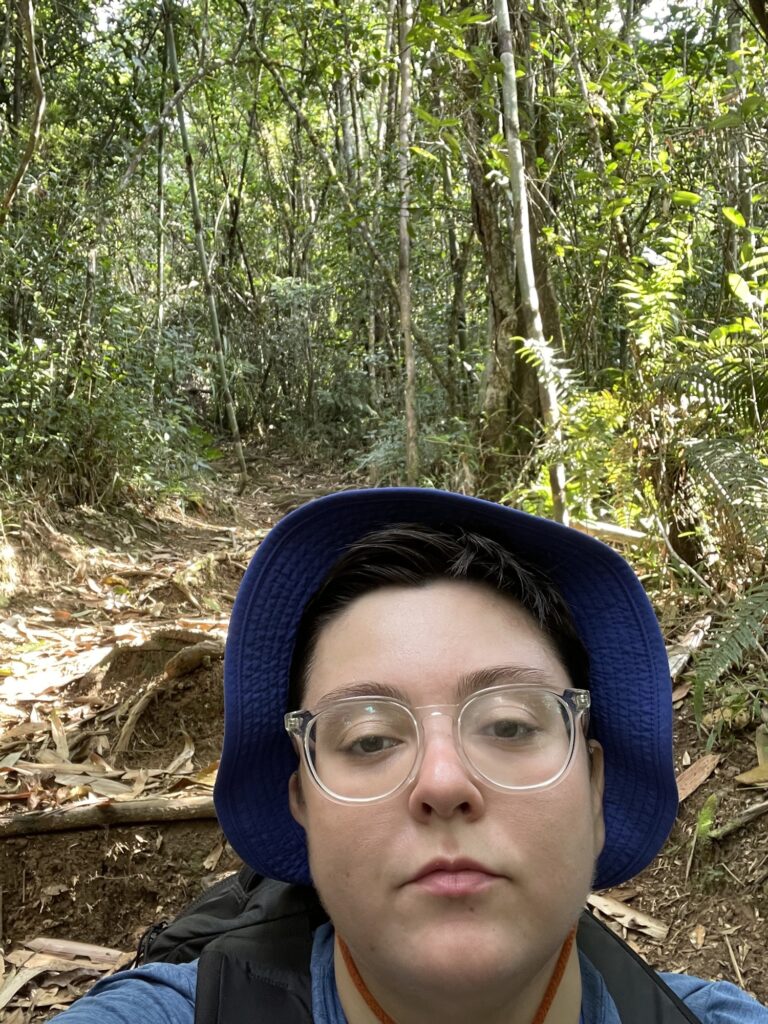
How does a body switch sperm production on for one season, then off again? Rebecca DeCamp is a PhD candidate at Rutgers University whose research with the gray mouse lemur will help us better understand how seasonal changes impact the reproductive cycle. They received a Leakey Foundation Research Grant in 2025 for their project entitled “How seasonal reproduction impacts testis gene expression in primates.”
Tell us about your Leakey Foundation-supported research project
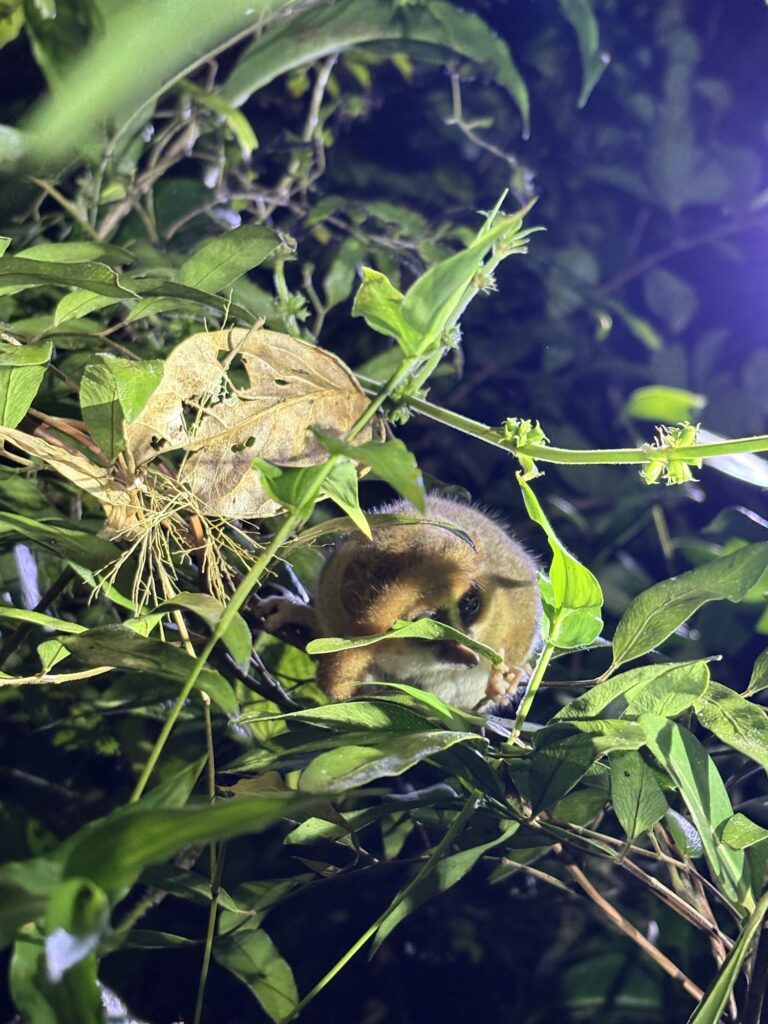
My research focuses on how seasonal changes in the environment, such as temperature and light cycle, affect the reproductive cycle at the molecular level in primates. In particular, I am interested in the changes the testes undergo to increase sperm production in preparation for the breeding season in primates that reproduce seasonally. My study species is the gray mouse lemur, a small, nocturnal primate that lives in Madagascar. In addition to breeding seasonally, males’ reproduction is also influenced by a process called sperm competition, wherein the sperm of multiple males competes within the female reproductive tract for access to her egg. This means that mouse lemurs must produce a lot of sperm in a short amount of time.
My research, therefore, seeks to understand the mechanisms underlying seasonal sperm production in the mouse lemur by investigating which genes in the testes are being “turned on” during the breeding season. With The Leakey Foundation’s support, I hope to establish myself as an expert in the field of mouse lemur research and open new pathways to fund future research on mouse lemurs.
What questions are you most interested in answering with your research, and why?
There are two questions that I am interested in answering through my research. The first is, how are testicular functions related to sperm production operating differently between the breeding and nonbreeding season? Similar studies of other seasonally breeding mammals have shown that there are different ways that the cells in the testes go about stopping sperm production when the animals aren’t breeding, such as destroying developing sperm cells (a process called apoptosis), or inhibiting the developing sperm cells from adhering to the sertoli cells, a specialized cell type in the testis that help the sperm cells develop. I want to figure out how the mouse lemurs’ sperm production is stopped during the nonbreeding season, and resumed during the breeding season, and see how it compares to other seasonally breeding mammals.
The second question is, how are testicular functions not related to spermatogenesis changing between the breeding and nonbreeding season? Not only are the testes producing sperm, but they are also shielding the developing sperm from being damaged by the body’s immune system or unstable oxygen molecules. Since the testes are not producing sperm during the nonbreeding season, I want to know if these functions are also suspended during this time as they are in some other seasonally breeding mammals.
What sparked your interest in studying lemurs?
I have always had an interest in evolutionary biology, but I became particularly interested in lemurs after taking a class about primate evolution during my undergraduate studies at Boston University. During this class, I realized how little we know about the evolution of lemurs due to the lack of fossils of lemur ancestors from Madagascar. Many people describe lemurs as “primitive” primates that haven’t changed much since primates first evolved, however they have had a long time – over 50 million years – to adapt to the ecologically unique island of Madagascar. At the same time as I was taking this class, I was an undergraduate researcher working with Dr. Eva Garrett on the evolution of the sense of smell in primates. My findings from this research showed that the sense of smell became more important for lemurs after their arrival in Madagascar, rather than increased reliance on the sense of smell being a “primitive” trait retained from the common ancestor of all primates. Both of these experiences inspired me to apply to graduate school, to continue studying the evolution of lemurs, using genomics as a tool to understand the evolutionary past.
Is there anything we haven’t asked that you’d like our readers to know about you or your work?
I am a nonbinary, queer scientist. I strive to promote LGBTQ visibility in STEM, especially as the US has become a more hostile place to LGBTQ people, particularly transgender and gender nonconforming individuals. I wish to demonstrate that not only do LGBTQ people belong in science and academia, but that these fields also benefit from the diverse viewpoints that people from different backgrounds bring to their research.
What’s your favorite mind-blowing science fact?
The primate with the largest documented testes relative to body size is the giant mouse lemur, a close relative of my study species!