
In Memoriam
A personal remembrance of Jane Goodall by primatologist Alejandra Pascual-Garrido.
By Dr. Alejandra Pascual-Garrido
Leakey Foundation Grantee
Research Affiliate, School of Anthropology and Museum Ethnography
University of Oxford
and Associated Researcher, ICArEHB,
Universidade do Algarve, Faro, Portugal
Dr. Jane Goodall is synonymous with Gombe Stream National Park — a place in Tanzania that would eventually become a second home to me, where I would be my happiest, and the place where I would have the privilege of meeting Dr. Jane Goodall.
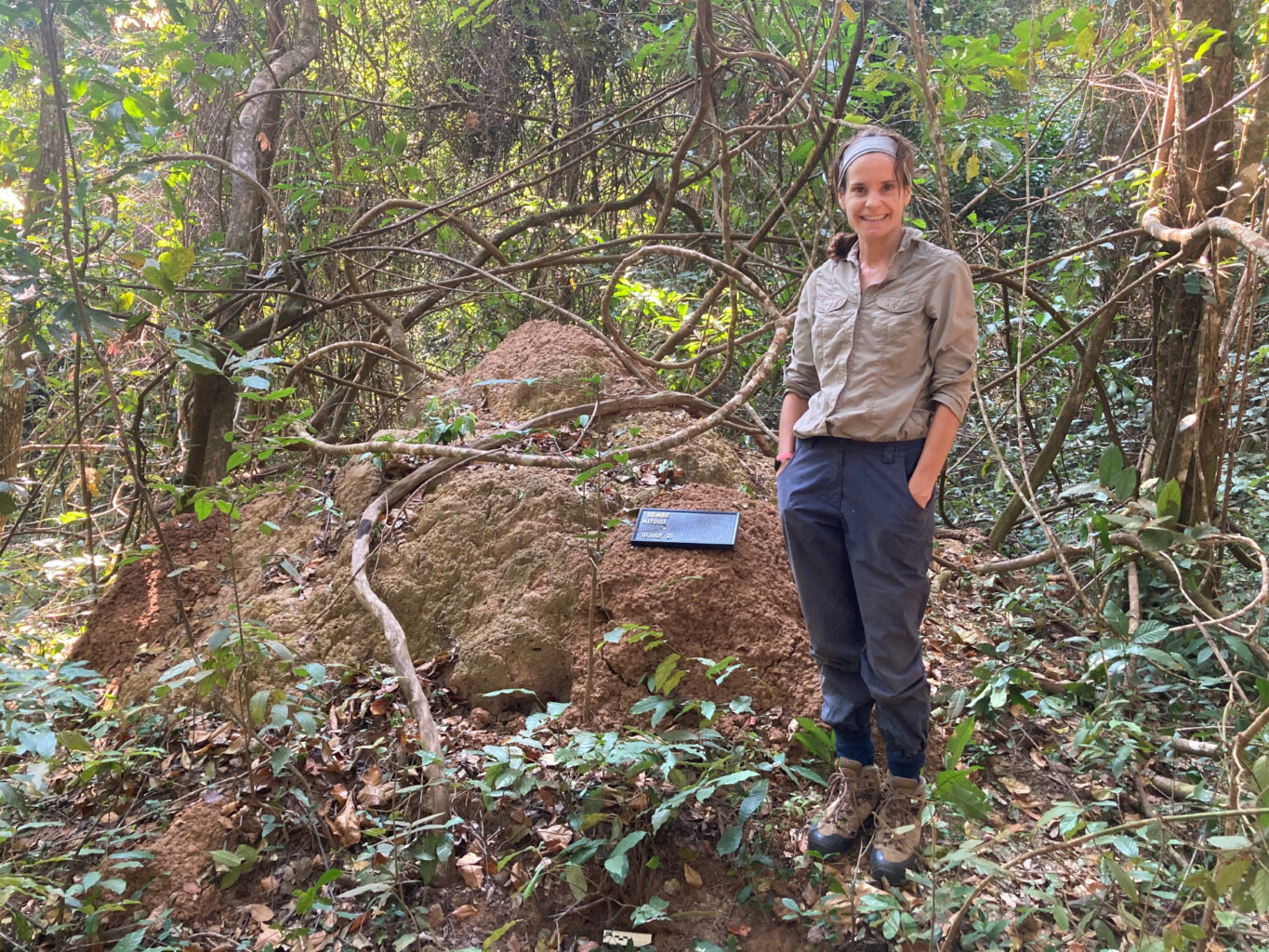
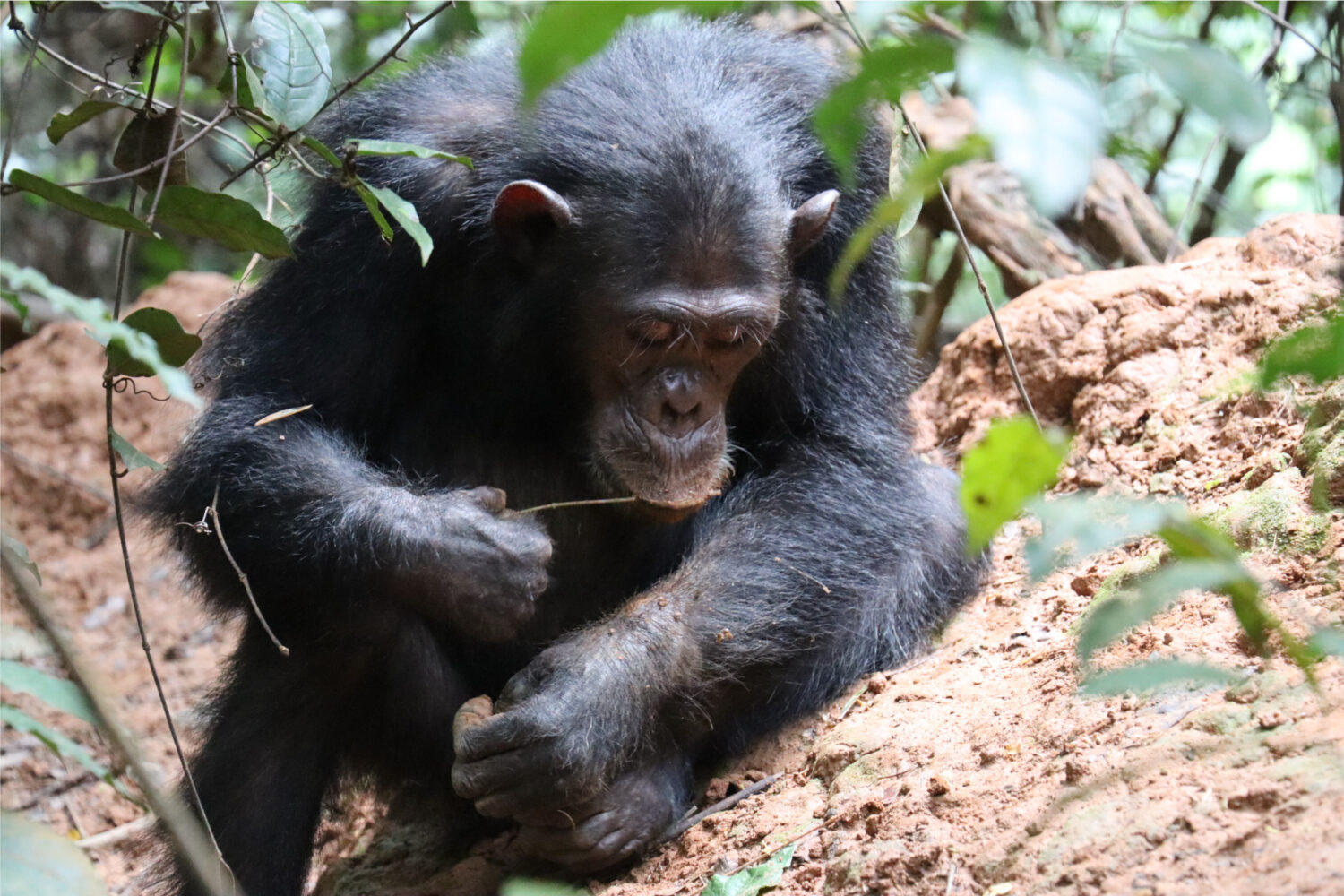
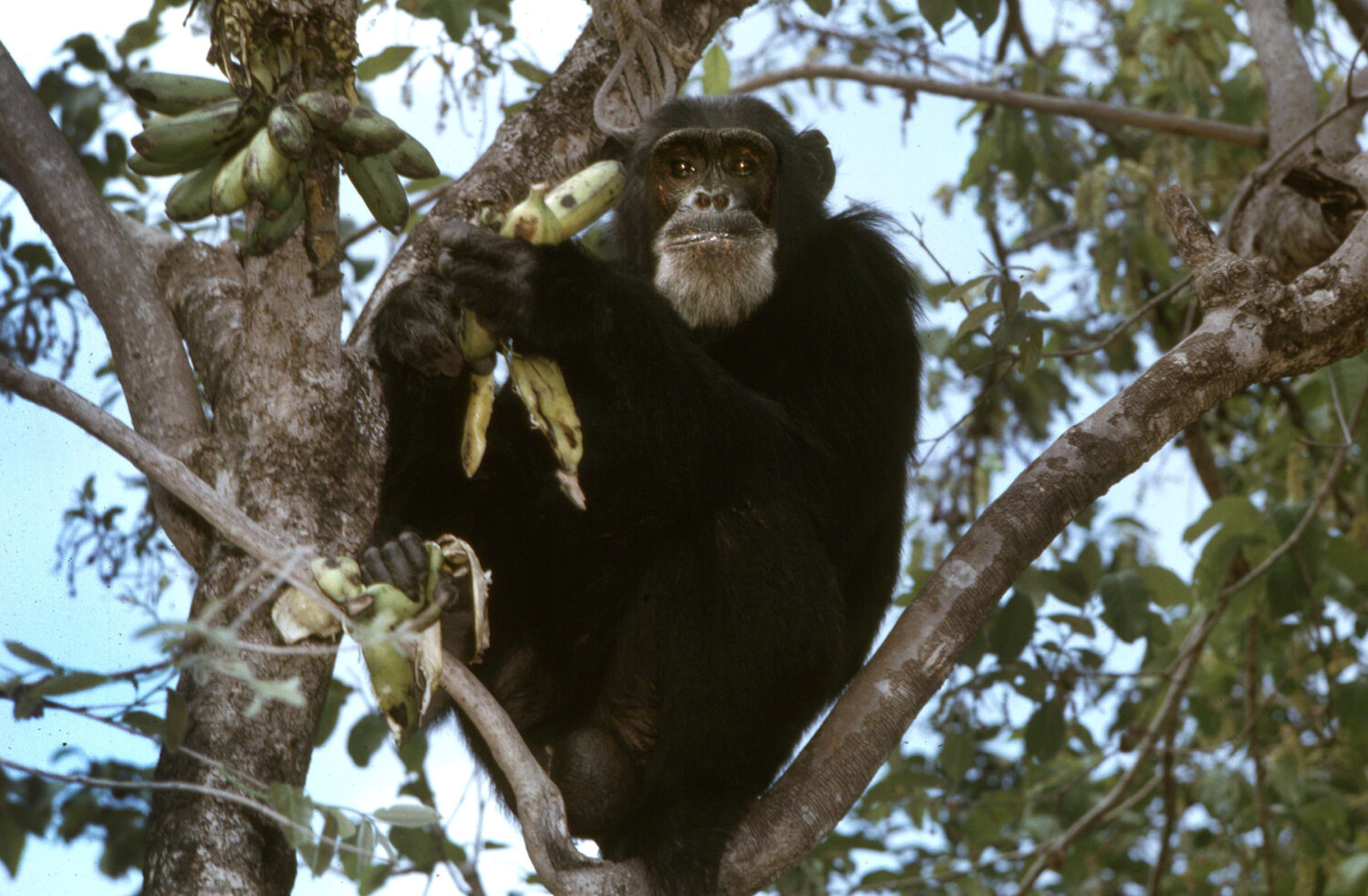
I remember my first day in Gombe, the place where I was due to begin my postdoctoral research on chimpanzee termite-fishing — a topic that made Jane and Gombe famous. It was here that Jane first saw David Greybeard, her favorite chimpanzee, making and using tools to fish for termites, which led Dr. Louis Leakey to proclaim: “Now we must redefine tool, redefine man, or accept chimpanzees as humans”. That moment forever changed the way we understand humanity.
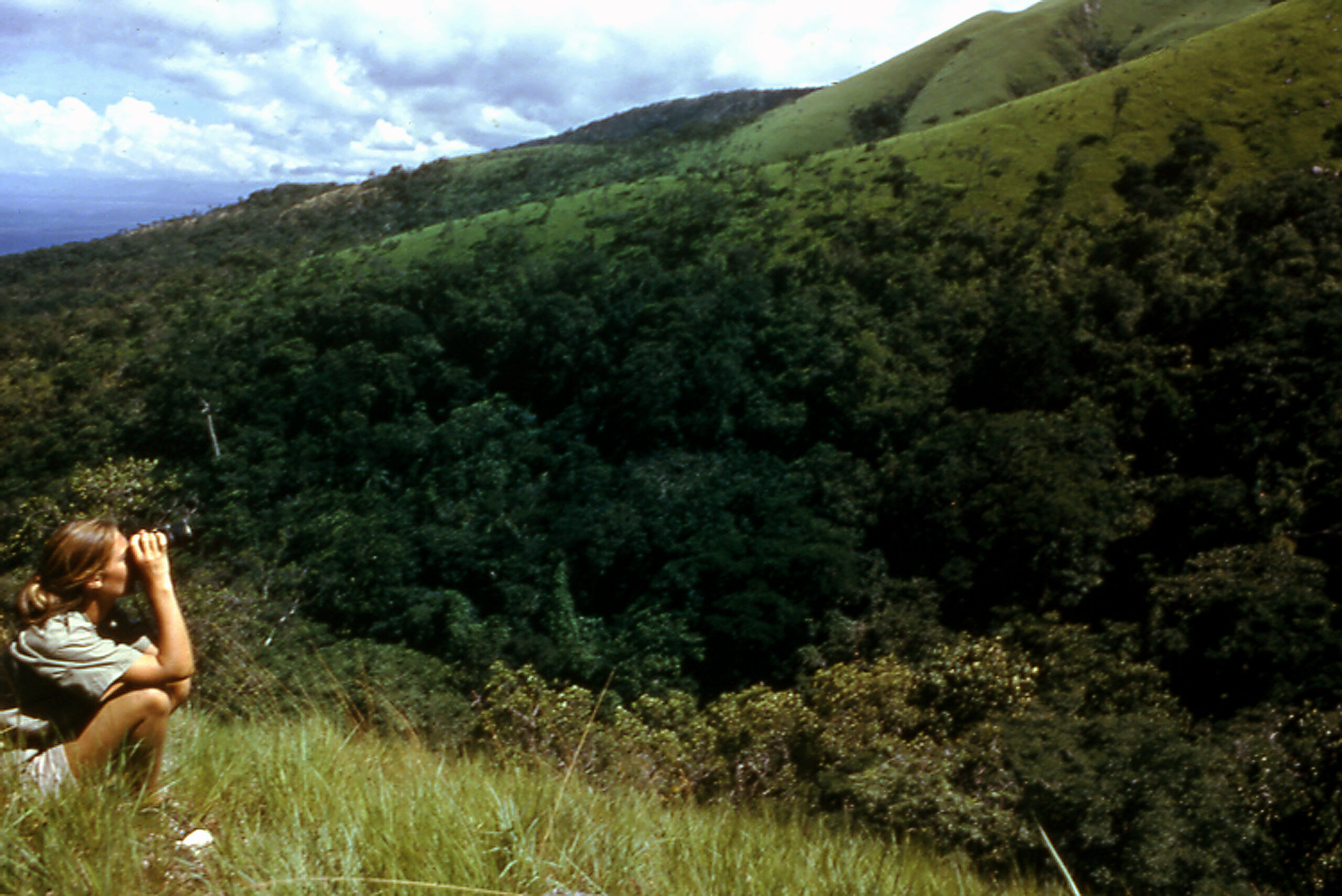
Located on the shores of Lake Tanganyika, the boat trip from Kigoma — the last town before reaching the park — gradually reveals Gombe’s rugged beauty. The mountains, cloaked in dense green forest, rise steeply from the world’s second-deepest freshwater lake, with its crystal clear blue water. Baboons wander along the pebbled beaches. It was exactly as I had imagined from Jane’s books — only now, I was there.
When I started my research in Gombe in 2014, Jane was already an inspirational figure in my life. Like many others, I had been drawn to follow her footsteps after immersing myself in some of her best-known books — ‘In the Shadow of Man’, ‘Through a Window’, and ‘The Chimpanzees of Gombe: Patterns of Behavior’. The latter became my primate bible for my PhD research on tool use among wild chimpanzees in Nigeria’s Gashaka-Gumti National Park.
From the first day, Gombe felt like home — peaceful, welcoming, endlessly fascinating. I could not have imagined how much I would learn from my time there in years to come, nor how profoundly the experience would change me, as it had changed so many others.
Meeting Jane
After a few years in Gombe I had my first opportunity to meet Jane, who was making one of her annual pilgrimages back, a hallmark of the later years of her life. I remember the excitement that rippled through camp: “When is she arriving? Who is she bringing? Which boat?”. Visits such as this provided a firsthand glimpse of her ability to effortlessly inspire, as well as insights into many of her other personal qualities — strength, courage, and tireless dedication that made her a global champion for primates and conservation.
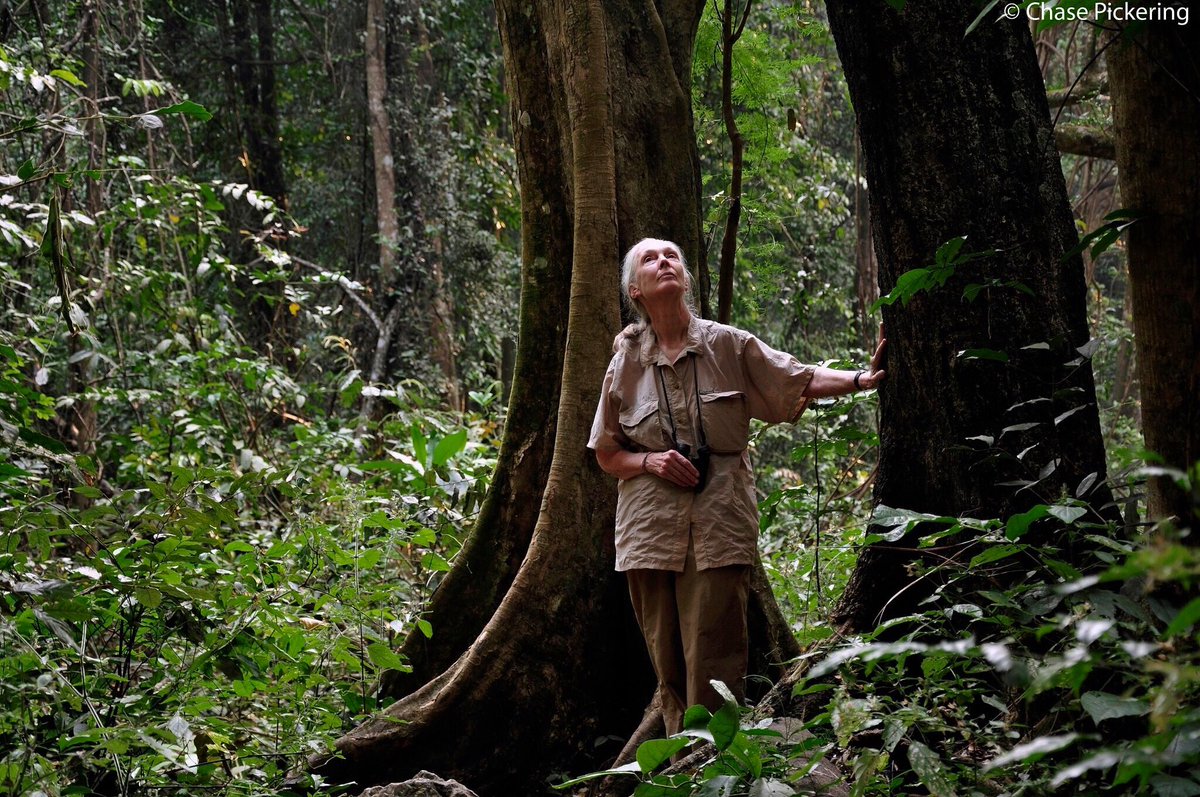
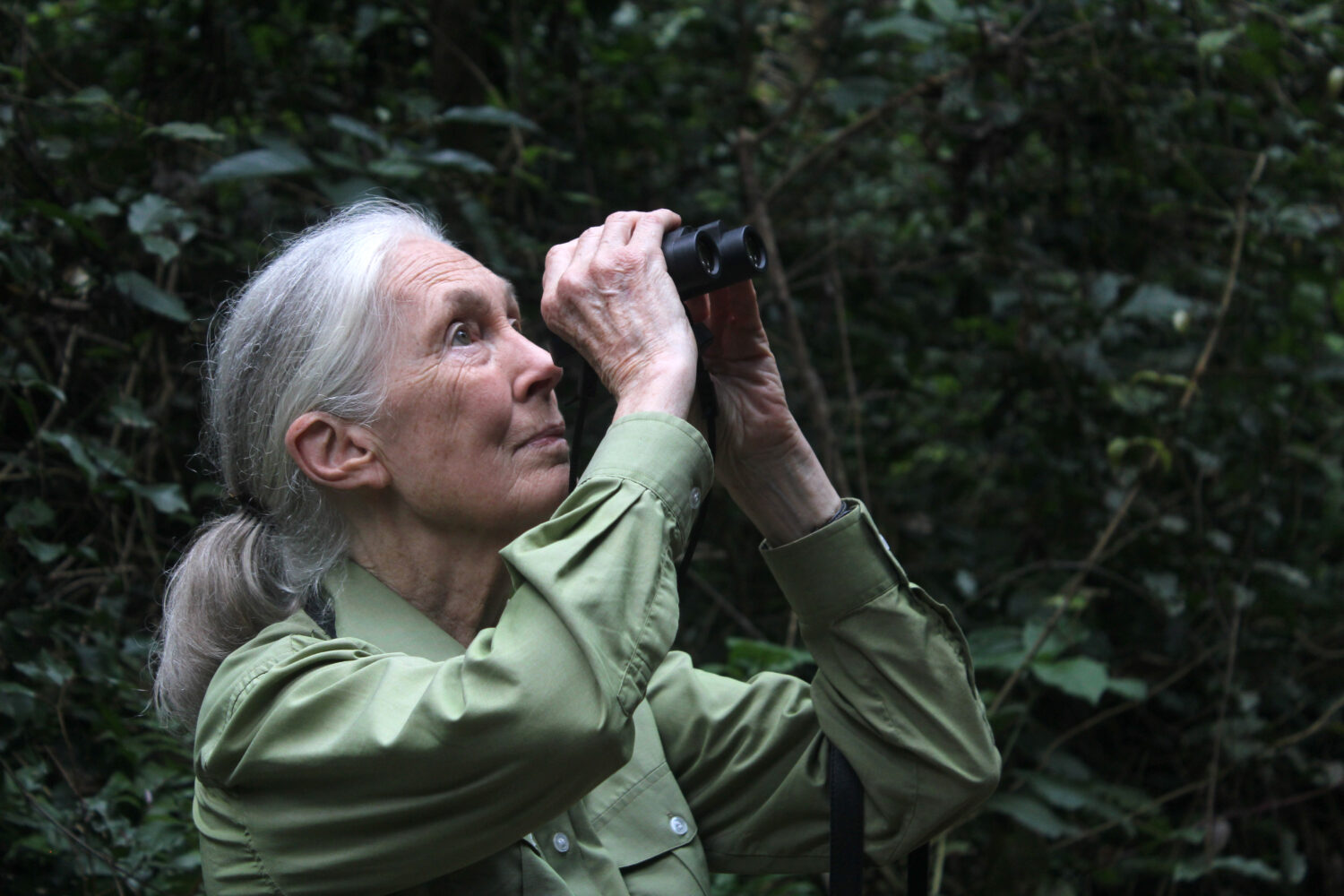
Even well into her late 80s, Jane would still venture into the forest to follow chimpanzees whenever possible — often slipping away from visitors, perhaps seeking solitude and a chance to reconnect with the real Jane, escaping from the role of global icon. I had the privilege to accompany her on one of these quiet walks. She moved gracefully, observing patiently, waiting for the chimpanzees to guide her — while I clumsily followed behind, much noisier in comparison.
At one point, a large fallen log blocked the trail. I hesitated, unsure whether to offer help, but she crossed it with ease — not at all like someone in her eighties. “Jane”, I said, “that was quite a big log you had to cross.” She smiled and replied simply, “That was nothing.” That was Jane — steady, fearless, unstoppable.
Jane made every meeting feel personal. On another occasion, she invited me to her home in Gombe — a time capsule, little changed through her decades in Gombe. The walls were adorned with photographs of chimpanzees, and shelves overflowed with dusty books. Bones and other objects lay all around, each with a story to tell. She was humble and deeply curious about my work, listening intently to my stories and ideas and examining the chimpanzee termite fishing tools I had collected from the forest. It reminded me that no matter who we are, our stories matter — and sharing them connects us.
Compassion, empathy, joy, and hope
Jane’s compassion was one of her most defining traits — deep, genuine, and ever-present. When rising waters from Lake Tanganyika drowned trees over the lakeshore, she couldn’t help but comment, “This is so sad — the trees are dying.” Her empathy extended to every living creature. She found joy in the flutter of butterflies, the songs of birds, the rustle of leaves in the forest.
Even in her twilight years, Jane cherished every opportunity to reconnect with the chimpanzees. One day, her beloved Gremlin — a fifty-year-old chimpanzee Jane had known since infancy — passed by her house with her family. Recognizing her, Jane dropped whatever she was doing at the time and disappeared with Gremlin and her family into the forest. Returning much later, beaming, she simply said, “That was magical.” Her bond with the chimpanzees of Gombe remained as deep and authentic as it had been in the 1960s.
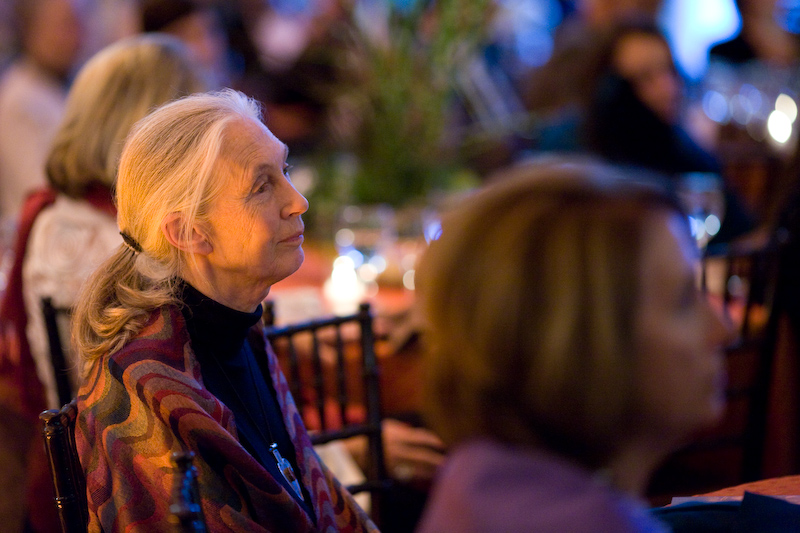
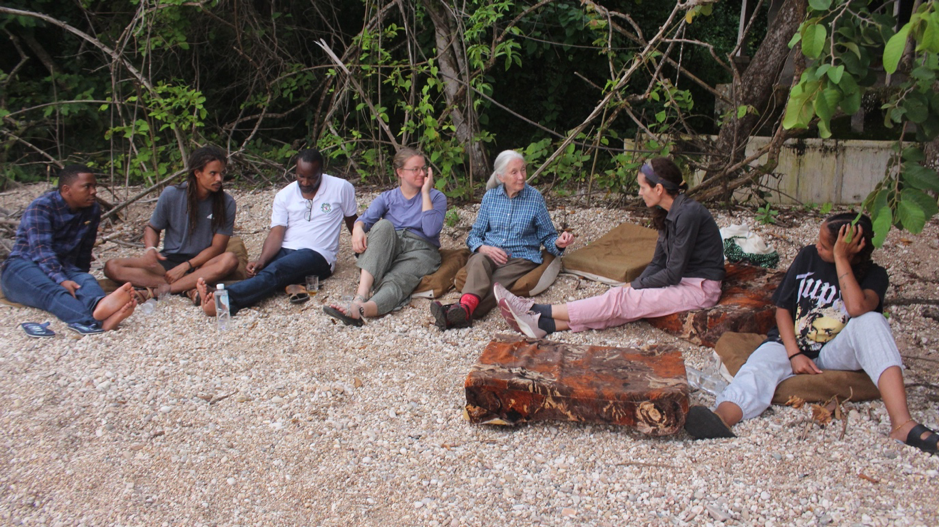
Jane’s presence was powerful yet gentle. Often the quietest person in the room, she nonetheless drew attention the moment she entered. During her visits, she would always arrange an evening talk with the Gombe staff — inspiring, humble, and full of hope. She didn’t just tell her story; she invited others to share theirs. Her gift was making everyone feel seen, valued, and capable of change.
Seeing Jane dismiss help offered by others in various contexts only reinforced the feeling that Jane was young beyond her years, with many more independent years ahead. I felt like Jane would live forever and never expected or prepared for her death.
Alongside her strength, Jane of course embodied hope. I once shared with her my worries about the future — about the destruction of forests and the loss of wildlife. She looked at me and reminded me that “Things can always change.” Her message was clear: “If you lose hope, you sink into apathy and do nothing.”
The last time I saw Jane was in 2024, as she prepared to leave Gombe on yet another of her endless journeys. I said, “Jane, thank you for all that you do.” She smiled and replied, “It’s not only me — it’s all the people behind this.” Then she kissed me goodbye.
A life that changed the world
Dr. Jane Goodall taught me — and countless others — that patience, resilience, and determination can make dreams come true. She bridged the gap between humanity and the natural world, showing us that animals are not objects for our use, but sentient beings with emotions, personalities, and complex societies, each with a role to play. She showed us that every day our lives have an impact — and it is up to us to choose what kind of impact that will be.
With Jane’s passing, Mother Nature lost a powerful ally, and our closest living relatives lost their greatest advocate and friend, the person who understood them so deeply. Her passing marks the end of an era, but also the beginning of a new one — a time to carry her spirit forward through every act of compassion, every forest preserved, and every young person who still believes that, indeed, things can always change.
Jane Goodall: Early days
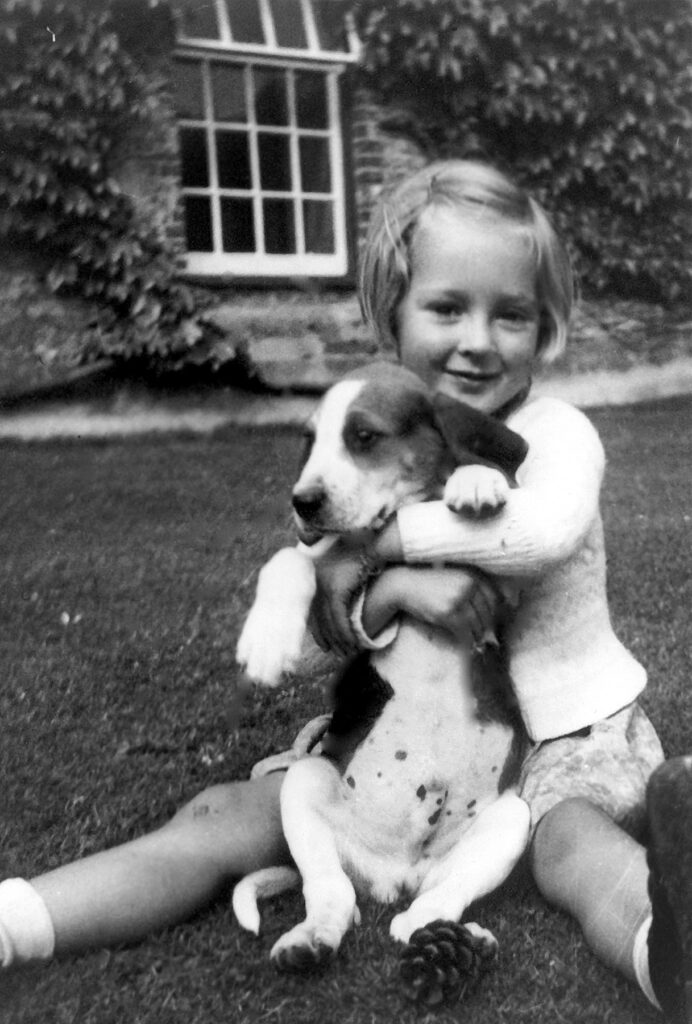
Born in England in 1934, Jane Goodall’s fascination with nature began early. At just two years old, she brought earthworms to bed. Later, she spent hours hidden in a henhouse, patiently waiting to see a chicken lay an egg. Her curiosity was encouraged by her parents, especially her mother, Vanne. Inspired by her childhood heroes Tarzan and Dr. Dolittle, Jane dreamed of living in Africa among wild animals.
In her early twenties, a school friend invited her to Kenya — the opportunity of a lifetime. After saving enough money from waitressing to pay for her boat fare, she set sail for Africa. There, she met Dr. Louis Leakey. Impressed by her knowledge, curiosity, and determination, Leakey hired her as his secretary — a humble beginning to an extraordinary scientific journey.
Leakey was searching for someone to study chimpanzees in the wild, to shed light on our own evolutionary past. He saw in Jane the perfect candidate — untrained in traditional academia, yet full of passion and patience. In 1960, he sent her to what was then the Gombe Stream Chimpanzee Reserve in Tanzania. With only a notebook, binoculars, and unwavering resolve, she began the work that would transform our understanding of humanity’s closest living relatives.
Changing how we see our primate cousins and ourselves
Jane’s approach was revolutionary. She immersed herself in the chimpanzees’ world, patiently gaining their trust until they allowed her to follow and record their daily lives. Through long, solitary days in the forest — often surviving on biscuits — she became the first person to spend extensive time with wild chimpanzees.
Breaking scientific conventions, she gave them names rather than numbers — David Greybeard, Flo, Goliath — because she recognized them as individuals with personalities and emotions. Though criticized at first, her approach became the foundation of modern primatology. Her meticulous observations revealed human-like behaviours such as complex social structures, deep family bonds, empathy, playfulness, deception, as well as darker sides: aggression, hunting, and even warfare.
Then came the discovery that redefined humanity. In 1960, she saw David Greybeard strip a twig to fish termites from a mound — the first recorded instance of tool use by a non-human animal, and most likely one of the most important discoveries in primatology and science.
In 1966, Jane earned her PhD in ethology from the University of Cambridge — one of the few people ever admitted without a prior degree — and continued her groundbreaking research at Gombe.
Jane’s lasting legacy
In 1965, she founded the Gombe Stream Research Center, which remains today a training ground for students and hosts researchers from around the world. Her leadership inspired generations of women to enter primatology — a field now predominantly female, thanks in large part to her influence. Today, Gombe remains the world’s longest-running field study of any animal, with over 300 scientific publications to date.
Her books — In the Shadow of Man and Through a Window — brought the lives of Gombe’s chimpanzees into homes around the world. When the matriarch Flo died, The Times of London even published her obituary — the first ever for a non-human animal.
In 1977, Jane established the Jane Goodall Institute (JGI), dedicated to research, education, and conservation. Later, she launched Roots & Shoots, a youth program empowering young people to create positive change for people, animals, and the environment. Her TACARE initiative (Lake Tanganyika Catchment Reforestation and Education Program) brought community-based conservation to Tanzania, establishing a model that many would seek to follow.
In the 1980s, flying over Gombe, Jane saw how deforestation was devastating chimpanzee habitat outside the park. From that moment, she expanded her mission beyond research — becoming a global voice for conservation and hope. Until her final years, she continued traveling for around 300 days a year, inspiring people everywhere to take action for our shared planet.
Epilogue
Dr. Jane Goodall transformed the way we see nature — and ourselves. Her life reminds us that empathy, curiosity, and courage can change the world. Her voice may be silent now, but her message still echoes through every leaf, every forest, every wild animal, and every act of kindness toward the living world.