
Grantee Spotlight

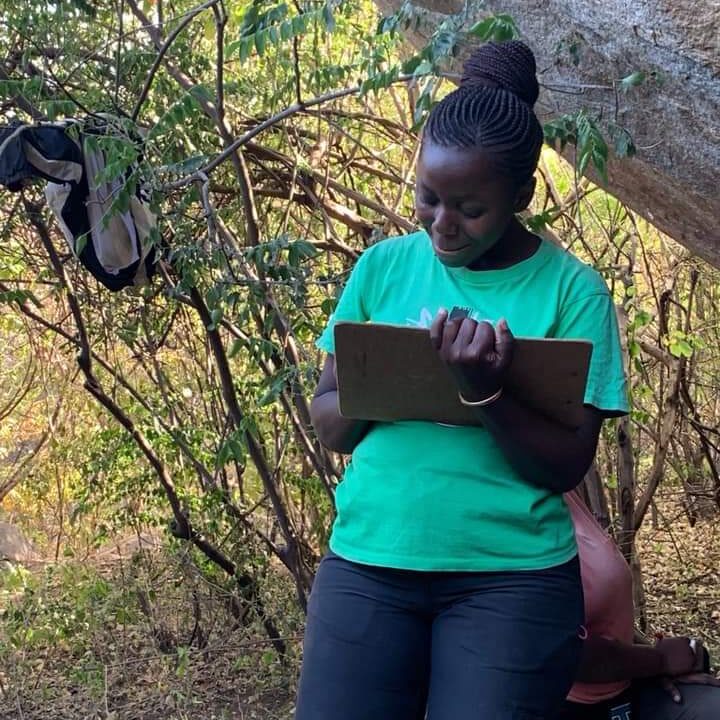
Husna Mashaka is a Leakey Foundation Baldwin Fellow and recipient of the 2024 Francis H. Brown African Scholarship. She is a PhD student at Arizona State University in the School of Human Evolution and Social Change and a Graduate Teaching Associate at the Institute of Human Origins. Husna’s research uses phytoliths, microscopic plant particles preserved in sediments, to reconstruct the ancient environments of eastern Africa. She compares modern and fossil plant remains to track the transformation of grasslands and other plant communities over time.
Husna’s fascination with paleobotany began unexpectedly during fieldwork, when she collected soil samples without fully realizing the stories they held. This curiosity deepened through training at Koobi Fora Field School. It has since grown into a passion for understanding the intricate connections between climate, vegetation, and human activity.
By tracing the microscopic evidence plants leave behind, Husna’s work reveals how environmental shifts ripple through ecosystems, shaping plants and animals, including us. Her research offers valuable lessons about climate resilience and adaptation that are urgently needed and relevant today.

Questions and Answers with Husna Mashaka
Tell us about your Leakey Foundation-supported project.
My research focuses on understanding the relationship between ancient environments and human activities in eastern Africa over thousands of years. To do this, I study tiny plant particles called phytoliths, which remain in soil and sediments as plants decay. I am expanding on my previous work by comparing plant life from modern and ancient sources.
I am particularly interested in how grasslands and other plant communities have changed over time in Tanzania. This work will be conducted in Kisese II in central Tanzania. By examining plant remains from this site, I hope to understand how changes in vegetation influenced human behavior and how ancient people adapted to their environment. This will contribute to our understanding of how climate and environmental changes have impacted human societies and animal life over the centuries. Ultimately, my research aims to enrich our knowledge of eastern Africa’s ecological history and its influence on human evolution.
Why did you choose to study ancient plants?
My main interest has always been understanding how climate change impacts the environment. I have considered pursuing various careers, but ever since I learned about paleobotany (studying ancient plants), I’ve felt that this is what I want to do. I was introduced to this field when I worked at an archaeological site in Tanzania, collecting soil samples for phytolith analysis without initially understanding its significance.
In 2018, I took part in the Koobi Fora Field School and chose a project that involved using similar methods to study microbotanical remains, such as pollen and phytoliths. Since then, I have been captivated by what these microscopic remains can reveal about environmental change, particularly the history of vegetation over millions of years.
What big questions guide your research?
I have always been interested in understanding how climate change affects our environment. My passion for nature and keen observations prompted me to connect the dots and realize the impact of climate and human activities on our planet. This realization led me to the field of research in paleobotany, paleoenvironmental studies, and paleoecology. Through fieldwork, I aim to understand why ecosystems are undergoing rapid changes and to explore the past to see how climate change has shaped our environment over a million years. My ultimate goal is not just to gain knowledge of the past but to draw lessons that can guide the present and shape the future.

How did you feel when you learned you’d been selected for a Francis H. Brown African Scholarship? What will this funding help you do?
The first time I heard about the Leakey Foundation was when I was a master’s student. I was thrilled and grateful for the recognition when I received the Francis H. Brown African Scholarship. This financial support will allow me to focus on my research without worrying about funding. It also provides opportunities for collaboration and access to essential resources.
It opens doors to new possibilities, allowing me to share my findings and advance our understanding of human evolution. The grant is a powerful motivator. It affirms the impact of my work and encourages me to continue pursuing groundbreaking research with vigor and commitment.
Why is research like yours so important today?
My research focuses on studying the relationships between humans and their environments in eastern Africa over a thousand years. To reconstruct past environments, I use phytoliths as a proxy. Phytoliths have been crucial in uncovering the evolution of grasslands, the domestication of crops, the diets of extinct animals, and the impact of human activities on the environment. My research is essential because it helps us better understand how humans have shaped our environments and vice versa. It also provides insights into the ecology and behavior of ancient plant and animal species, enabling us to understand the complex interactions within ecosystems better.