
Grantee Spotlight
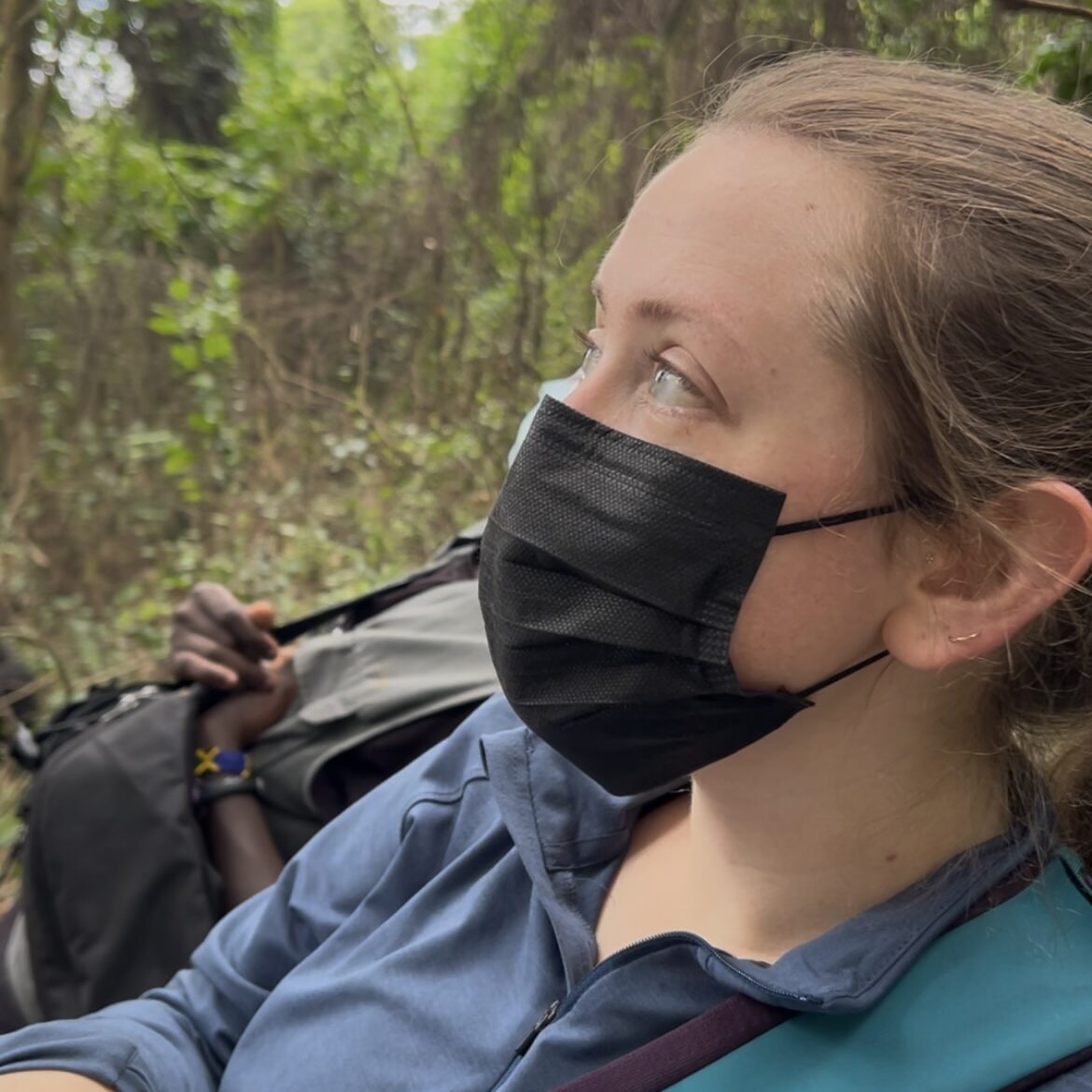
Abby McClain is a behavioral ecologist interested in how death and loss in social groups can inform what we know about social bonds in nonhuman animals. She is a PhD candidate at the George Washington University, where she studies chimpanzees in Gombe National Park, Tanzania. Abby’s Leakey Foundation-supported research project examines the impact of the death of a close community member or “bond partner” on the behavior, physiology, and long-term health of the Gombe chimpanzees.
Her research measures the effects of loss, using decades of near-continuous behavioral and demographic data collected by Jane Goodall and others at Gombe, combined with behavioral observations and in-field analysis of hormones from urine samples.
Results from her project will shed light on the evolution of social bonds and could help us understand how grief and loss shaped human social adaptations.
Questions and answers with Abby McClain
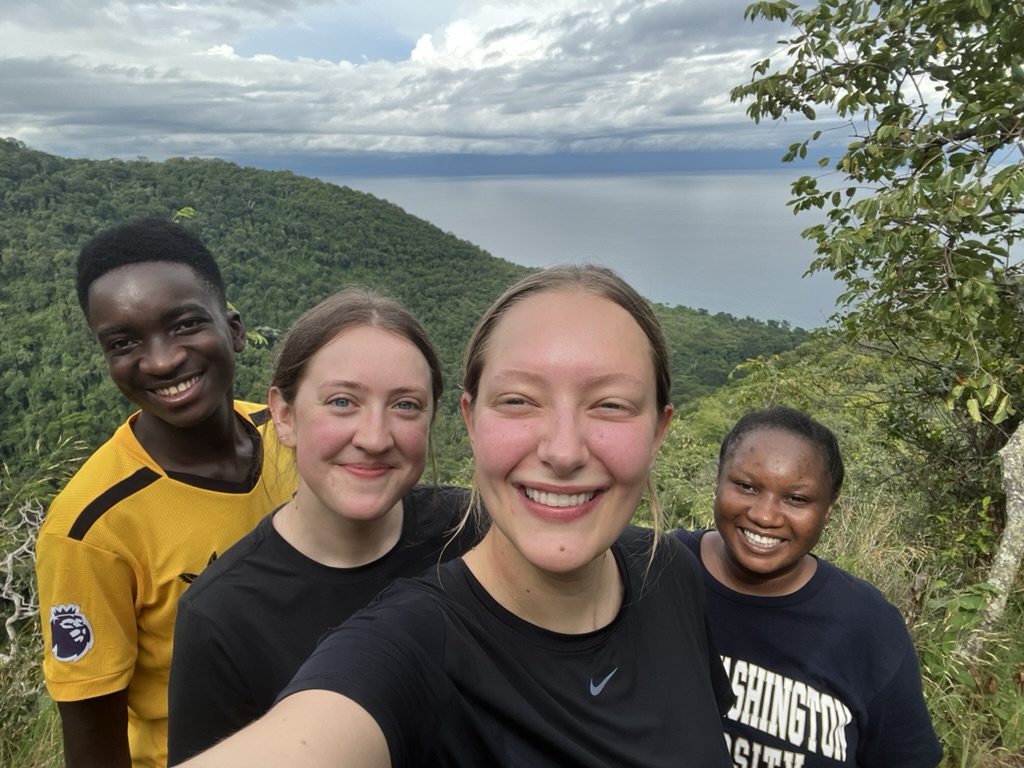
Tell us about your Leakey Foundation-supported project.
Social bonds in humans are important not just for our overall happiness and well-being, but our friendships actually act as important biological mechanisms to reduce stress. Most people will also be familiar in some capacity with the strong emotional and stressful feelings that accompany the loss of a friend or loved one. Not only does death generate strong feelings of grief in humans, but it also creates a hole in our social networks, which can result in further stress or isolation. In this way, how we respond to death can actually reveal a great deal about the behavioral and physiological impact of social bonds in our lives.
My project explores how death and loss in chimpanzee social groups can inform our understanding of their social bonds. For example, does suddenly losing a close bond partner result in an increase in the stress hormone cortisol? Or, after losing a bond partner, do chimpanzees change how they interact with other group members to try to compensate for the loss of a social ally.
What big questions guide your research?
The study of how nonhuman primates experience and respond to the death of conspecifics is a new field. I am excited to be able to contribute to its continued exploration.
I am carrying out my project with the population of wild chimpanzees at Gombe National Park in Tanzania. It is the longest-running great ape field site in the world, made a household name thanks to Dr. Jane Goodall’s historic work there. The Gombe chimpanzees are an especially valuable group for my project due to the 60 years of continuous data collection by teams of Tanzanian and international researchers.
While there is lots of interest in this research topic, because primates tend to be long-lived, many datasets are simply too young to holistically examine the influence of death on social bonds at the necessary scale, so it is exciting for me to get to carry out my study at a site with so much detailed banked data. I am also particularly excited about the physiological analysis portion of my project, which will involve setting up an in-situ hormone analysis pipeline in the field and allow us to measure the level of the stress hormone cortisol for the first time at Gombe. I will be using a tool called the Byonoy Absorbance 96 Plate Reader, which is just a little bit bigger than an iPhone and can run a standard cortisol assay, all powered by a connection to a laptop.
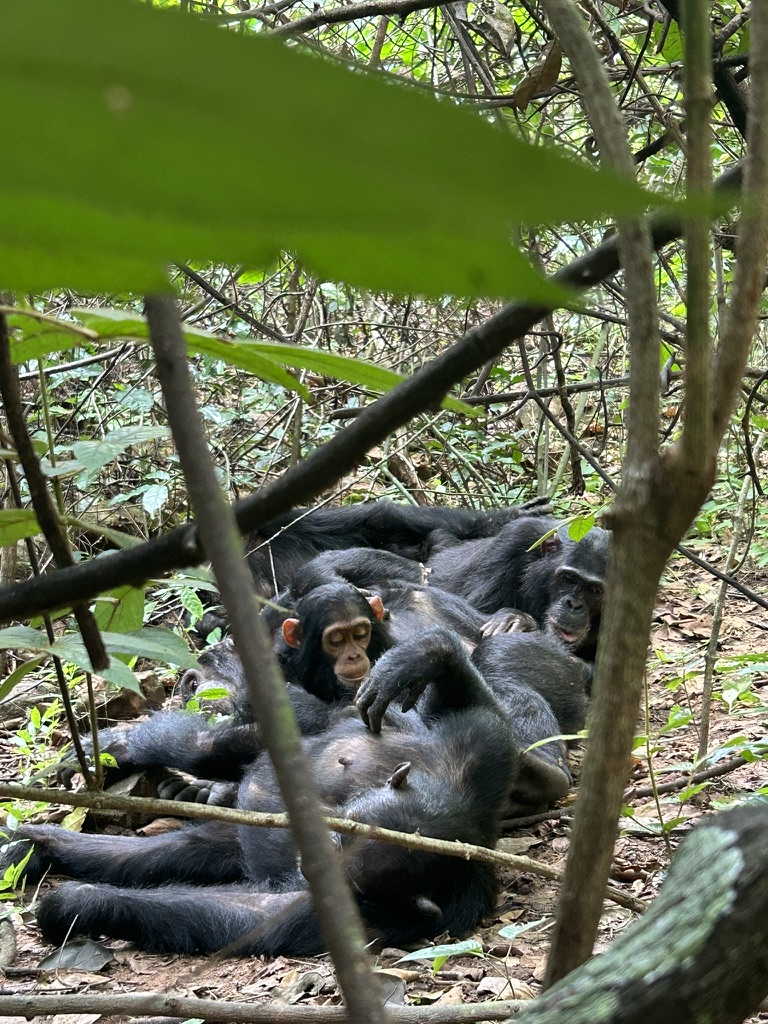
How did Jane Goodall’s observations of death, loss, and grief among the Gombe chimpanzees influence your research ideas?
Some of the foundational observations of death and grief in nonhuman primates, or really wild animals at all, were made by Jane in the early 60s. An account that impacted Jane and really sticks with me is when Flo, a matriarch at Gombe, died in the early 70s:
“This was the saddest thing. [Flint’s] mother was very old and she died. Actually, she was about to cross a stream and she just… Her heart gave out, I think, and first he set off and he travelled with the others, but then he came back – came back to where his mother had been. We’d moved the body by then, and he just sat there. And then he climbed up into a tree where they had made a nest, a night nest, about five days before, and very slowly he walked along the branch. And he got to this nest and he stood there and he looked at it. And then he turned around and walked back, walked down and curled up close to where she’d been and died. Died of a broken heart. There’s nothing else you can say, really.”
She had a profound way of seeing and connecting others to the inner lives of chimpanzees that has really empowered me as a scientist to connect with my research in a deeper way. Her vision highlights how inextricably linked we are to the environment and the other animals we share the world with. It links empathy and action to science and conservation in a really beautiful way and is a vision that everyone at Gombe is committed to carrying on in her honor.
What does it mean to you to conduct research at Gombe National Park?
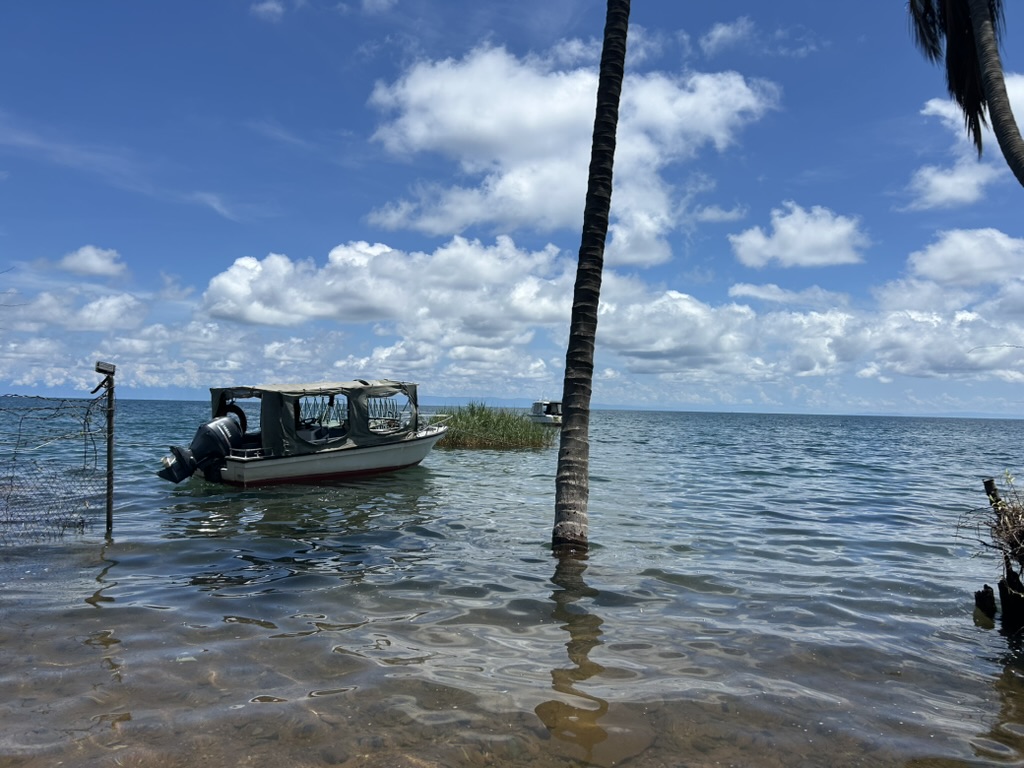
Before I even knew I wanted to be a scientist, I knew about Gombe. It is such a historic site not only for the primatology community but for millions of people everywhere who got their first glimpse at the inner world of animals through Jane Goodall’s pioneering work at the site. So, suffice it to say, landing in Kigoma and taking the two-hour boat ride along the shore of Lake Tanganyika to reach the site was entirely surreal for me. It is a stunningly beautiful place to work (and a bit humbling when you get to trekking up the slopes after the chimpanzees). It also has the most welcoming and dedicated community of researchers that you could ask for. Researchers working day in and day out, literally from dusk to dawn, to keep the legacy of the site and of Jane’s vision alive. It has been really meaningful for me to get to be even a small part of that legacy.
How did you become interested in doing field research?
Like many people who decide to dedicate themselves to field science, I have always felt that understanding how the natural world works is about as close to magic as you can get. Growing up on a farm in hilly Southern Indiana gave me a head start on my fieldwork aspirations. As a child, I spent time sticking long pieces of grass down holes to catch crawdads or making crowns out of cicada shells with my sisters. I spent the better part of one spring trying to perfect my mourning dove call, thinking if I could get it just right, I could have a conversation with the birds – you might guess that this attempt was unsuccessful.
After working as an undergraduate researcher in Dr. Michael Wasserman’s Primate Environmental Endocrinology Lab, I became interested in behavioral endocrinology and what understanding biological mechanisms could tell us about behavior. After a brief stint at the Indiana Department of Natural Resources doing fieldwork for their herpetology and nongame mammals teams, I decided I wanted to find a graduate research program where I could combine my endocrinology, behavior, and field research interests, which is what led me to apply to Dr. Carson Murray’s Primate Behavioral Ecology lab at the George Washington University.

Can you elaborate on why the endocrinology/hormone component of your project is especially exciting to you?
If you’ll allow me to nerd out for a moment, something that I find fascinating is the interlinking of stress physiology and social behavior. The same stress response system that produces cortisol, the primary stress hormone, also releases small amounts of oxytocin, the so-called “bonding hormone.” In humans, this might help mechanistically explain why we seek out social support in times of stress and grief. When we do engage in social behavior, the positive effects of bonds help us physiologically regulate our stress response.
Support from The Leakey Foundation has made it possible to establish an in situ cortisol analysis pipeline at Gombe, which is something I’m really excited about. Historically, we have had to export samples, so being able to process samples in the field will help us expand the kinds of physiological questions we can ask and answer in real-time, strengthening the long-term capacity of immunoassay techniques at the field lab as we train field researchers in the on-site protocol.

Can understanding the impacts of loss in this way help humans in our lives today?
Absolutely. Why do we drop everything for our friends when they’re going through a breakup, or seek comfort in community after a loved one dies? Humans are chemically wired to rely on friendship in times of stress, and when someone in our social network dies, this mechanism helps us compensate for the loss. Primates as an order are overwhelmingly social beings. By understanding how chimpanzees respond to loss socially and physiologically, we can get a clearer idea of the fundamental evolutionary role social bonds may play in our lineage.
Why is research like yours so important?
A frequently exchanged phrase between my friends is “the meaning of life is love and friendship.” One of the best parts of being an anthropologist is getting to think about the role sociality plays in not only our lives but also after our deaths. While it may present as a rather depressing topic – death – I think it is so interesting and so beautiful to get to investigate what death can tell us about social bonds, especially in nonhuman primates. Death is something that evokes such a visceral response in humans, even just thinking about it abstractly. Given our parallel evolutionary trajectory with great apes, I think it is a valuable effort to try to understand what a primate perspective on death can do to contextualize our understanding of sociality and loss.
Follow Leakey Foundation grantees Abby McClain and Sims Patton on Instagram at the_primate_diaries.