
Grantee Spotlight
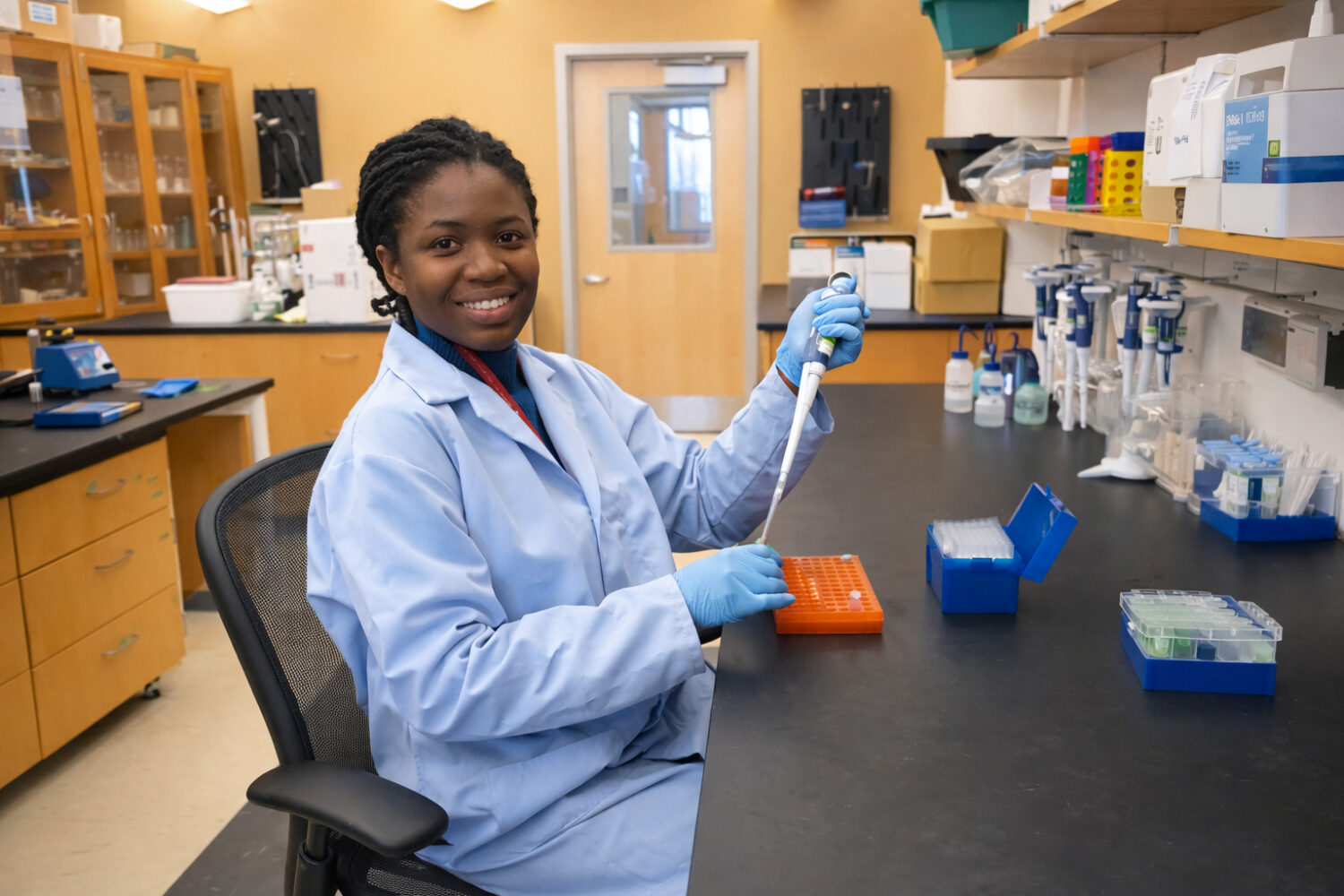
Olayemi Ajayi is a PhD candidate at the University of Cincinnati whose research will help us understand how animals respond on a molecular level to changes in their environments, like drought and variation in rainfall.
She graduated from Obafemi Awolowo University, Ile-Ife, Nigeria with BS, and MS in Zoology. In 2025, she received a Leakey Foundation grant to support her research using the thick-tailed galago, Otolemur crassicaudatus, to investigate how environmental variation influences epigenomic variation. Olayemi’s work will shed light on how primates, including humans, can adapt to our rapidly-changing climate.
Questions and answers with Olayemi Ajayi
Tell us about your Leakey Foundation-supported research project
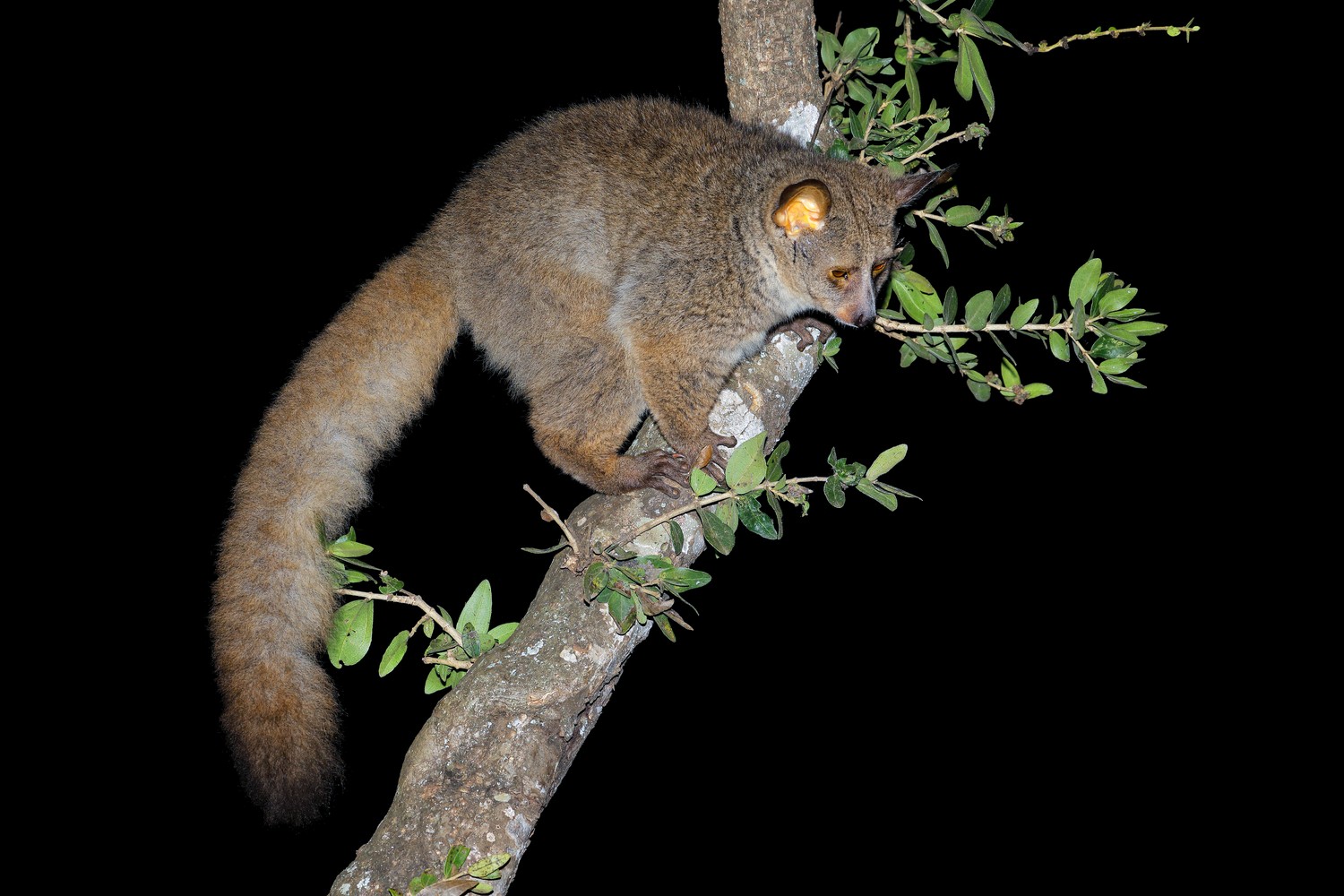
My research asks how wild primates respond at the molecular level to environmental change, especially rainfall and habitat variation. I work with the greater thick-tailed galago (also called bushbaby), a small nocturnal primate living in South Africa. I want to understand how changes in the environment of the thick-tailed bushbaby shape both their genetic and epigenetic variation, and how these, in turn, explain differences in health and survival.
What questions are you most interested in answering with your research and why?
My research aims to understand how environmental variation, specifically extreme rainfall events such as droughts and heavy rains, alters gene regulation in the thick-tailed galago. First, I want to understand how temporal rainfall variation influences epigenetic variation in greater thick-tailed galago. Environmental conditions can change dramatically over time, yet individual animals must continue to survive and reproduce. By examining whether DNA methylation patterns are associated with annual rainfall variation among individual galago. We can learn how the epigenome helps thick-tailed galago respond to an unpredictable environment at the molecular level. Second, I want to know whether these epigenetic differences are biologically meaningful. Do the changes allow individual galago to cope or succumb to stressful environmental conditions such as droughts or floods? This question looks at the functional relevance and evaluates the biological significance of methylation patterns across rainfall years in individual galago.
Lastly, I am asking if there is a relationship between epigenetic variation, gene expression, and phenotype. I will use both DNA methylation and RNA-seq data, along with measures of body condition, to investigate whether epigenomic differences also correlate with differences in health or physical condition. This question is important because it helps us understand how gene regulation influences health and survival in natural populations. Overall, this research has applications for improving our understanding of how humans and other nonhuman primates cope with rapid environmental change and their evolutionary responses to such events.
What sparked your interest in studying primates?
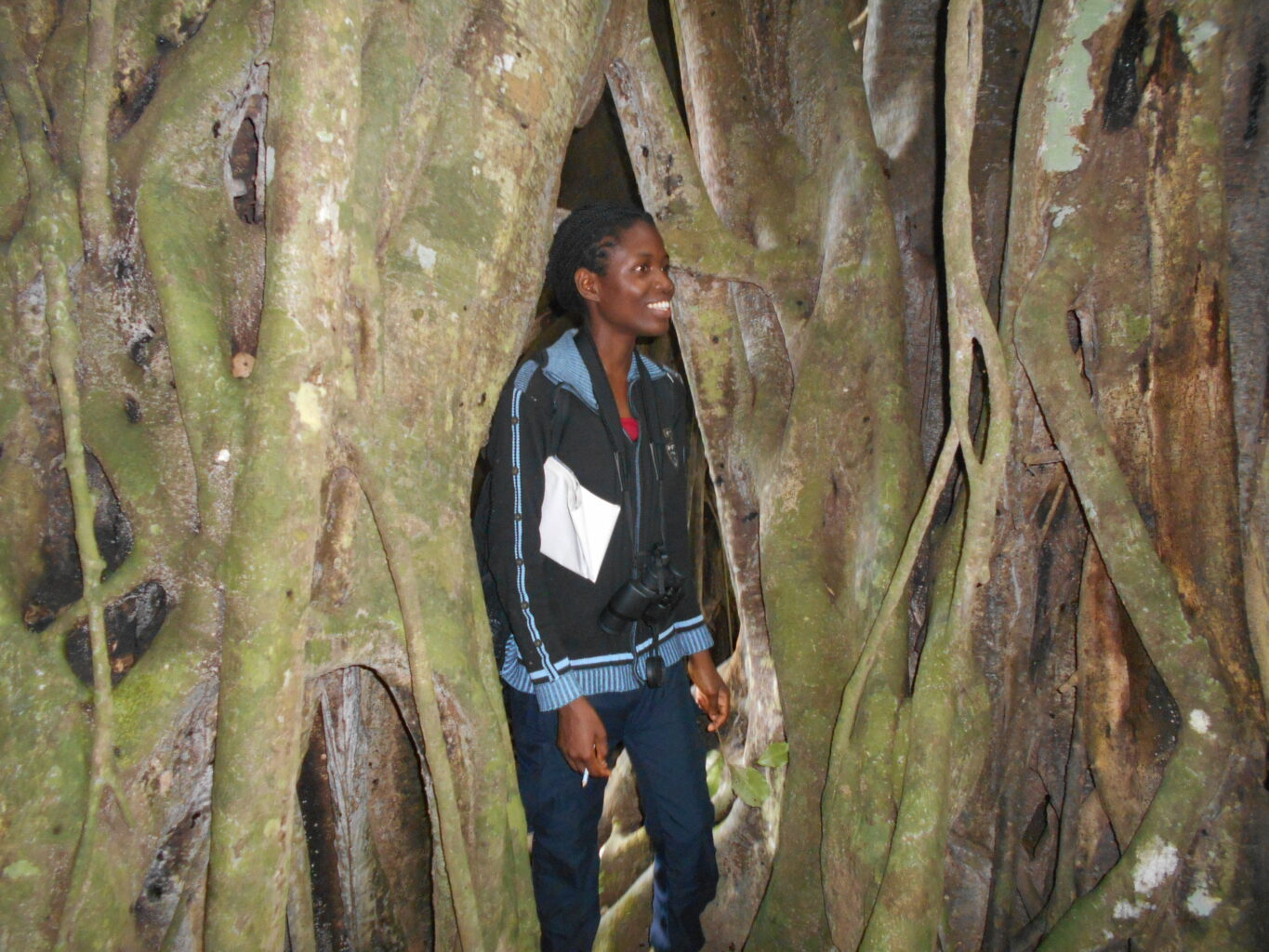
While pursuing a Bachelor of Science in Zoology, I went on a school field trip in my third year to the Kainji Lake National Park, Nigeria’s oldest national park. Seeing and observing animals in their natural environment solidified my interest in animal conservation and science. I decided to pursue my master’s degree and conduct research in the Omo forest reserve to understand how bird species living in natural versus human-modified habitats differ. That project deepened my love for animal conservation and made me see firsthand how human activities are causing animals to lose their natural habitats, resulting in population declines and a decline in the abundance and diversity of animal species in the forest.
Determined to make an impact, I volunteered as a biodiversity monitoring officer, collecting data on animal species across the reserve’s diverse habitats (natural forests, farmlands, human camps, abandoned farmlands, etc.). This led me to primate research, and wanting to understand why some species cope and thrive in human-modified habitats, while others succumb and do not survive environmental changes. My interest in learning more about this led me to pursue a doctoral degree in biology for my current research on the galago.
How did you feel when you learned you received your Leakey Foundation grant?
I was very honored and grateful to learn that I received the Leakey Foundation Research Grant. It was a very big moment of relief for me because it meant my work is important. Knowing that The Leakey Foundation believed in this project and in my potential as a researcher was very affirming for me.
This grant will allow me to generate the first epigenomic and gene expression data on the wild greater thick-tailed galago, an understudied nocturnal primate species. The results of this work will lay a solid foundation for my future work in environmental epigenomics, life history evolution, and the conservation biology of nocturnal strepsirrhine primates. Support from The Leakey Foundation also motivates me to do more and to continue contributing to science as someone hoping to become an independent researcher soon.
What surprising discovery or challenging obstacle have you encountered in your work so far?
One of the biggest challenges I have experienced so far is that research is usually not straightforward. Collecting and preserving high-quality blood samples under field conditions requires flexibility and planning. At times, I have had to modify protocols for DNA and RNA extraction to fit the realities of working with field-collected samples.
Working with South African galago as an international graduate student has also been a valuable learning experience. The process has shown me how much coordination is required to conduct ethical research across countries, from navigating permit requirements to transporting samples responsibly. Although these processes can be time‑consuming, overcoming these challenges has strengthened my research skills and deepened my appreciation for field‑based science.
My research and studies on human origins help us understand how molecular mechanisms, like the epigenome, helps bridge the gap between genetics and the environment. Allowing us to understand how the epigenome allows us to acclimatize to a changing environment.
Olayemi Ajayi
Why should people care about human origins research?
People should care about human origins research because it helps us understand where we come from, who we are, and can offer insights into our future and who we can become. As humans, we are among the most flexible species on Earth and have colonized more habitats than any other species in a short period. Our unique ability to adapt to different environmental conditions has been shaped by our ability to respond to environmental variations. Understanding how we have come to be and what is changing is very important if we want to keep thriving in the ever-changing world we are in today.
Unlike years past, the world is changing more than ever; climate change and human activities are altering the environment. Genetics and environment cannot explain all the differences in our ability to survive in our changing world. My research and studies on human origins help us understand how molecular mechanisms, like the epigenome, helps bridge the gap between genetics and the environment. Allowing us to understand how the epigenome allows us to acclimatize to a changing environment.
By investigating how environmental variation influences epigenomic plasticity in nonhuman primates, such as the greater thick-tailed galago, my research provides a comparative framework for understanding similar mechanisms in humans.
How can research like yours help us with a significant challenge we face today?
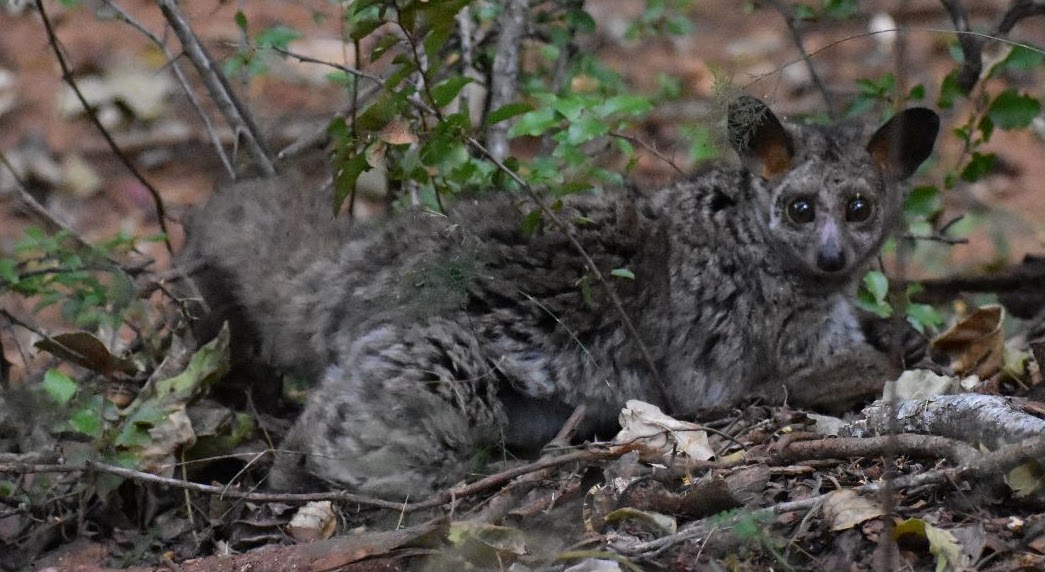
By studying gene regulation and gene expression in wild greater thick-tailed galago experiencing natural environmental fluctuations, my work helps clarify how short‑term biological mechanisms through the epigenome can support acclimatization without genetic change. This is especially relevant today, as climate change is occurring faster than many species can evolve.
Is there anything we haven’t asked that you’d like our readers to know about you or your work?
I believe in the power of science to change the world, and I am deeply committed to mentoring and teaching young scientists, especially women and students from underserved communities. If you want to connect, feel free to reach out.
What’s your favorite mind-blowing fact related to human origins, evolution, or your field?
The environment your grandparents lived in can influence your health and fitness today. This idea comes from epigenetics, where factors such as nutrition, drought, stress, and toxin exposure can leave epigenetic marks that affect future generations. These inherited factors can shape traits such as metabolism and disease risk, but your lifestyle can either reverse or worsen many of these effects. Even when not in your DNA, you can still be at risk due to your grandparents exposure. Epigenetics in action!!!