
In Memoriam
A personal remembrance of Jane Goodall by Richard Wrangham
By Richard Wrangham
Ruth B. Moore Professor of Biological Anthropology Emeritus, Harvard University
Founding Director of the Kibale Chimpanzee Project
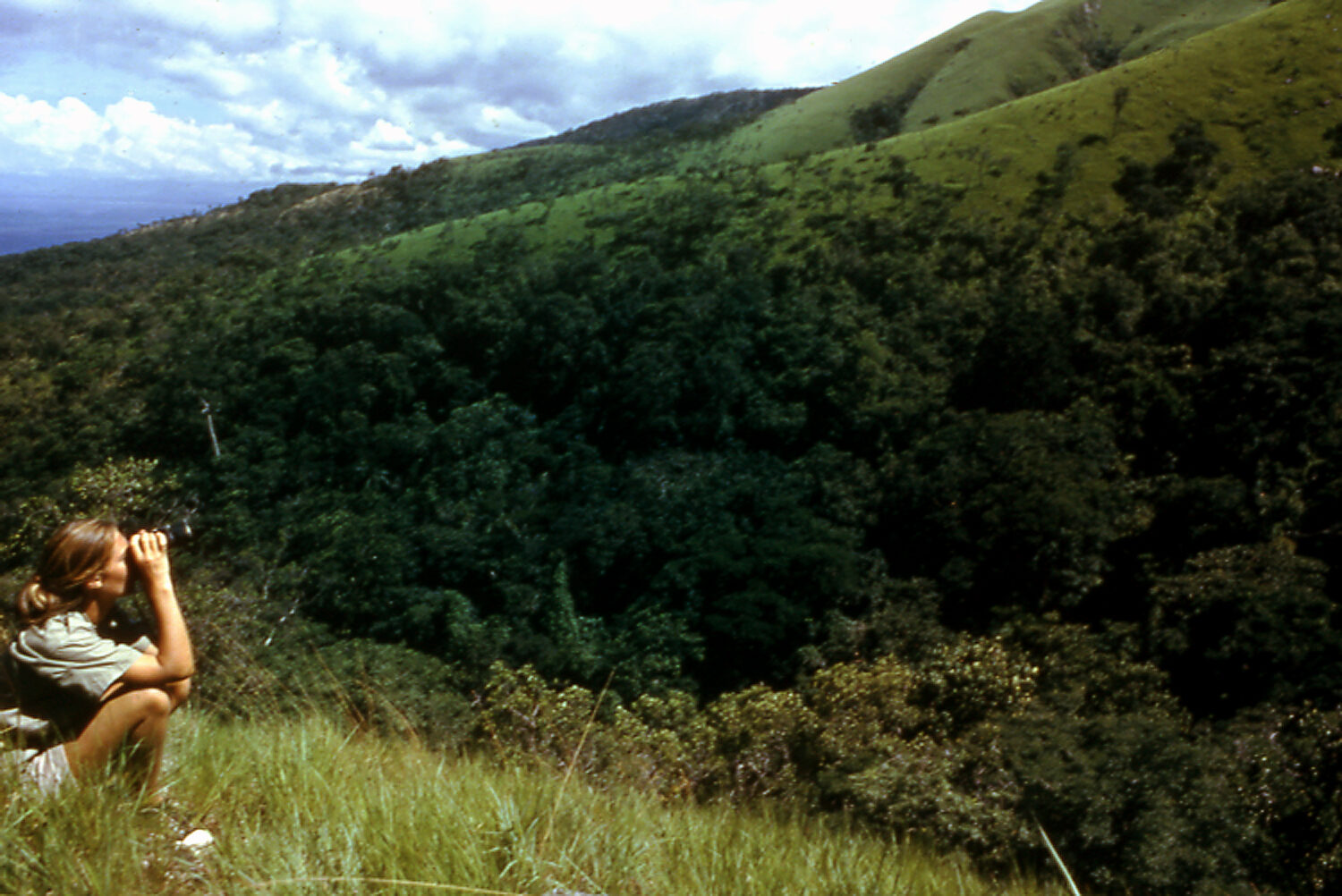
I have known Jane Goodall since 1970, when she gave me the opportunity of a lifetime to join her study of chimpanzees in Gombe National Park, Tanzania. Like many others who were similarly blessed, that experience changed my life. Of course, it was thrilling to be immersed in the lives of individual wild chimpanzees (who also happened to occupy a really beautiful habitat). But even more importantly, Jane showed what a truly inspired person could achieve.
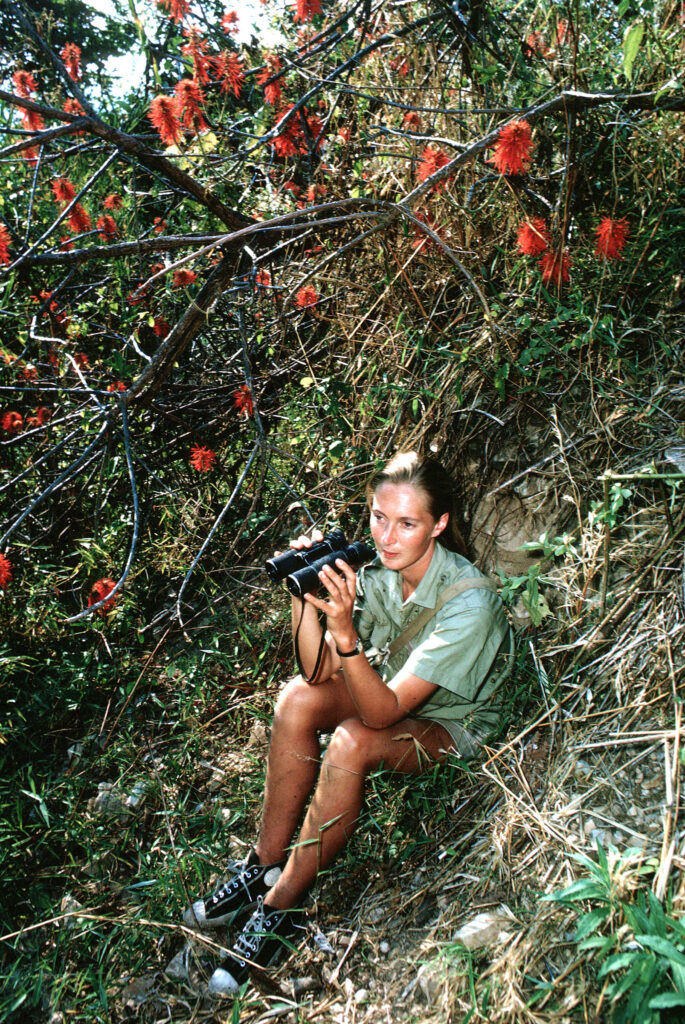
Until 1986, her focus was almost entirely on research. In the 1960s, she famously became the first person to spend long days in the wild with chimpanzees, an experience that opened a door into the inner world of this fascinating species. A gifted observer and writer, she broke the mold of field ethologists by insisting on writing about individual personalities and evidence for rich mental processes in a wild non-human species.
A brilliant and open mind
It is a remarkable testament to her abilities that, despite challenging received wisdom for how to study wild animals, she turned her observations not merely into brilliant popular literature but also into first-class science. Her 1986 book The Chimpanzees of Gombe, which summarized 25 years of research, was a masterpiece of documentation, insight, and theoretical sophistication.
At a personal level, what Jane taught me was to always keep your mind open to new observations as much as to new ideas.
Jane Goodall’s transformation of the conventional pictures of anonymous animals into colorful individual social beings helped pave the way for a major change in the standard practices of research on animals, especially in captivity. That achievement helped seriously improve the standards of care for animals in medical research. Her effect on conservation in the wild was equally important.
By enthusing the world about chimpanzees, Jane galvanized popular interest in them and their conservation, as evidenced by several conservation awards she received in the 1970s and early 1980s from distinguished organizations such as the San Diego Zoological Society, the New York Zoological Society, and the World Wildlife Fund.

An epiphany that changed the world
Jane’s impact on chimpanzee futures shifted into intense activity in 1986. She had convened a symposium of researchers at the Chicago Academy of Sciences to celebrate the publication of her 1986 book. One of the speakers was Geza Teleki. Teleki showed convincingly that wherever there was data, the population trends for wild chimpanzees were alarmingly downward. Jane Goodall has often described that moment as an epiphany for herself, which I well remember from her reaction at the time.
In subsequent decades, Jane became an ambassador for chimpanzees across the continent, the unchallenged leader and spokesperson for a species whose large body size, low population densities, slow reproductive rate and occupation of forests make them exceptionally vulnerable to the consequences of human activity. By founding the Jane Goodall Institute and setting up branches in numerous countries, she provided assistance to many different populations. The example that I know best is Uganda, where I study chimpanzees in Kibale National Park.
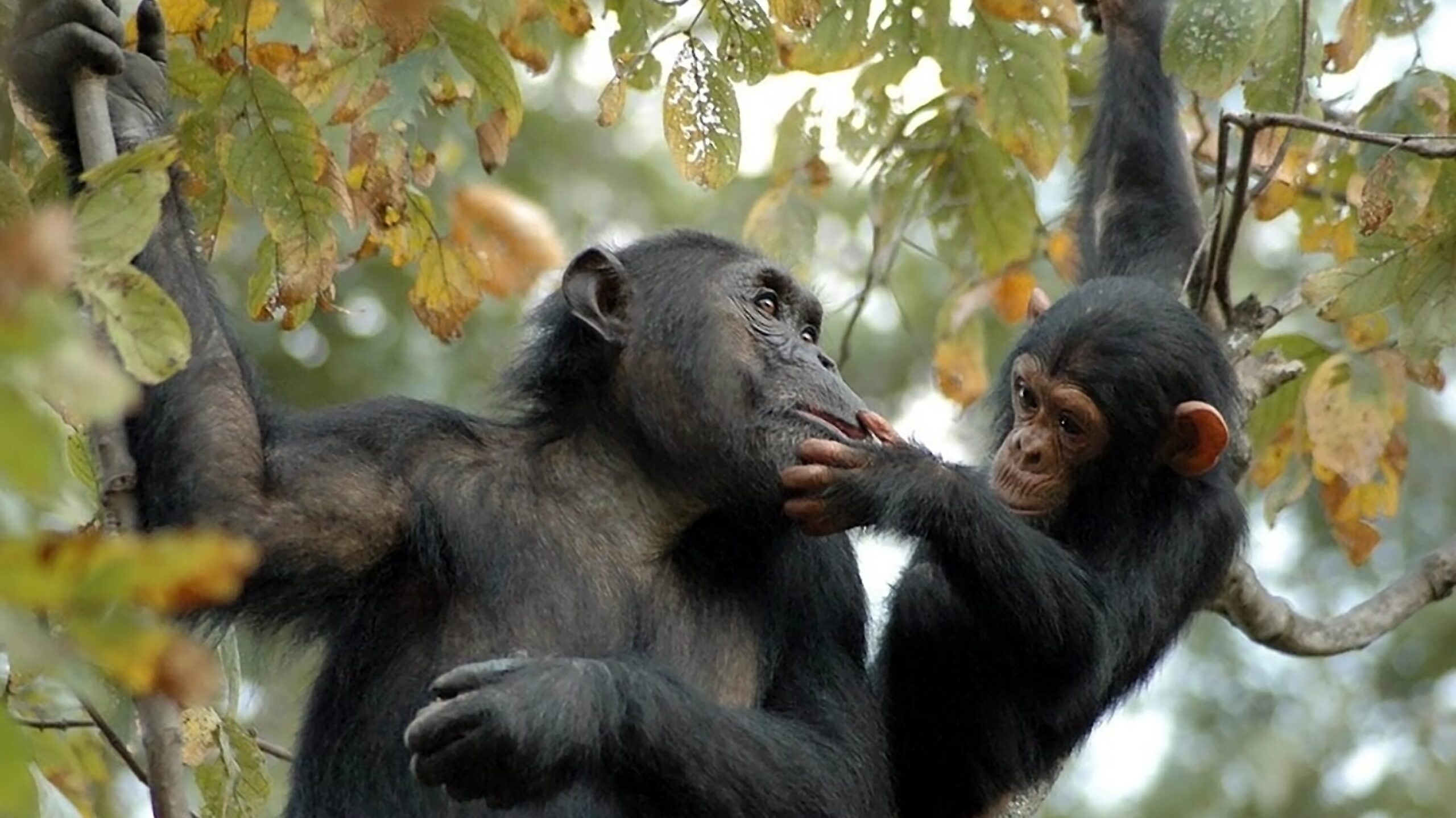
The Jane Goodall Institute (JGI Uganda) has been critical in creating the Ngamba sanctuary, where illegally-held orphan chimpanzees can be cared for and allowed to roam through an island forest. This ‘care’ work is vital in showing government ministries and the public that conservation aims have an ethical integrity that goes beyond just protecting an area of habitat from human use. JGI Uganda has worked with chimpanzee populations in Budongo and Kibale to reduce the rate of snaring and to educate children in wildlife conservation. JGI Uganda has also been active in helping to protect populations of chimpanzees living in ungazetted areas. Similar multiple initiatives by JGIs have been particularly prominent in Tanzania and the Congo Republic.
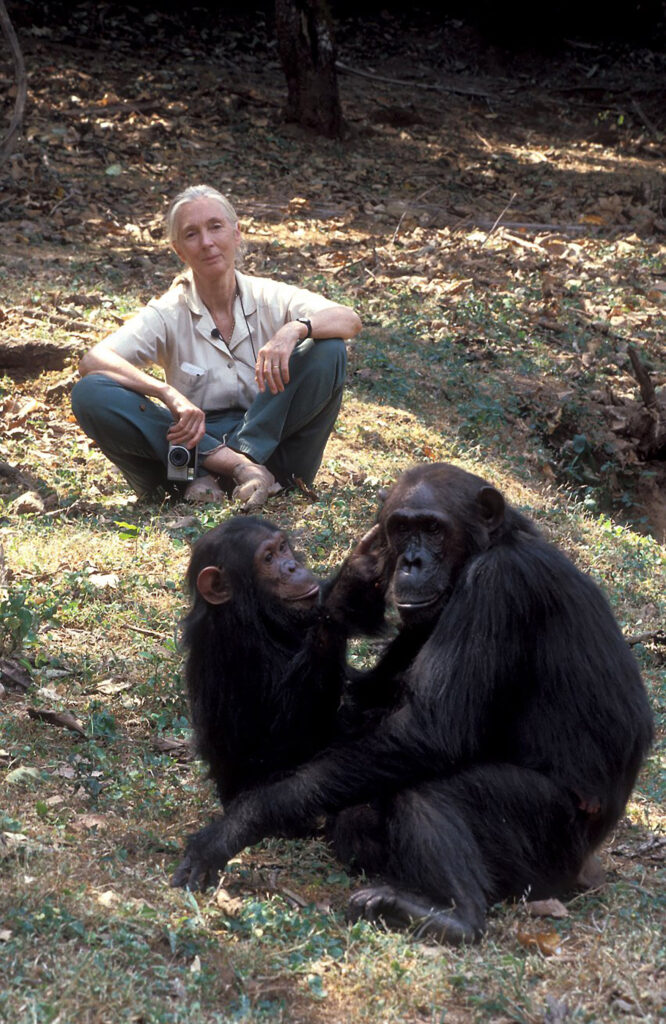
Female Eastern Chimpanzees (Pan troglodytes schweinfurthii)
Gombe National Park, Tanzania, East Africa 1998. Courtesy of the Jane Goodall Institute
A future for chimpanzees
Charles Darwin worried that the great apes could not compete with humans and would be bound to go extinct. Jane Goodall determined that we cannot allow that to happen. However, without her global leadership, there can be no doubt that the cause of chimpanzees would be much less well known, the funds directed toward conserving chimpanzees would be fewer, and the surviving populations would be less numerous than they are today.
Gombe National Park presents a microcosm of the chimpanzee conservation picture. Within Gombe, the research community that Goodall began studying in 1960 remains alongside one neighboring community also under study, occupying an area that Jane and her teams have worked in now for 65 years. But elsewhere in Gombe, the chimpanzees are essentially gone, apparently due to hunting. In a similar way, the populations where Goodall, her Institutes, and her influence have made themselves felt have continued to flourish; but in other places, declines have been precipitous.
Over the years, I repeatedly asked Jane to take time off from her relentless lecture tours to come and see chimpanzees in Uganda’s Kibale Forest, or bottle-nosed dolphins in Shark Bay, Australia, or orcas off the West Coast of the United States. Her reply was always the same. “I would love to, but I can’t afford the time.” She felt it her duty to continue inspiring as many people as she possibly could, and particularly the young.
As anyone who has seen the lines of excited people waiting to meet her at one of her innumerable speaking events knows, she was a rock star, the only one that primatologists have ever had. The world of ape conservation will desperately miss Jane’s extraordinary combination of talents.