
Grantee Spotlight

Dr. Deepak Choudhary is a Leakey Foundation grantee and postdoctoral fellow at Baylor University in Waco, Texas. His current research focuses on establishing a detailed timeline for the fossil-rich Ramnagar region in Jammu and Kashmir, India. This work aims to clarify the chronology of important Middle Miocene primates, including Sivapithecus indicus and Kapi ramnagarensis, helping refine the evolutionary timeline used in molecular clock studies.
Dr. Choudhary’s interest in paleontology began during childhood in the Himalayas. His fascination with geology and dinosaurs sparked a lifelong curiosity about the Earth’s deep past. He earned his Master’s in Earth and Geological Sciences from the Central University of Punjab, Bathinda, where he studied Miocene vertebrates from Kutch, Gujarat.
This project builds on his doctoral work and previous support from the Baldwin Fellowship. His goal is to contribute to a more accurate understanding of primate evolution through high-resolution dating techniques that link geologic sequences to evolutionary milestones.
Questions and answers with Deepak Choudhary

How did you become interested in geology?
Growing up near the Himalayas in northern India, I’ve always been fascinated by geology and geography. My curiosity about the formation of these mountains sparked early, and when I first learned about dinosaurs in elementary school, I was captivated. Dinosaurs, as they are for many people, were my introduction to paleontology, and they inspired me to explore this field further.
Although I was an average student, my passion for these subjects never diminished. In college, I chose to study geology. My first paleontology class confirmed that I was on the right path; studying fossils felt like a thrilling adventure rather than work.
After graduating from Jammu University, I pursued a Master’s in Earth and Geological Sciences at the Central University of Punjab, Bathinda. For my Master’s thesis, I chose to focus on paleontology, specifically studying the Miocene vertebrates of Kutch, Gujarat. This project deepened my love for fossils and solidified my commitment to this field.
Tell us about your Leakey-funded project
Imagine stepping into a time machine and traveling back millions of years to an era when ancient apes and primates roamed the Earth. Our project, funded by The Leakey Foundation, seeks to do just that by unraveling the mysteries hidden in the rocks of Ramnagar (Jammu and Kashmir, India), a region rich with fossils from the Middle Miocene. This project focuses on creating a detailed and well-supported magnetostratigraphy for the Ramnagar sequence, which can provide a more precise understanding of the region’s geochronology.
This understanding is crucial for linking Ramnagar with other Middle Miocene fossil localities and documenting the timing of ape, primate, and mammalian evolution in the region. This finding is significant because primate and hominin molecular clock studies commonly use the first appearance datum (FAD) of Sivapithecus as a calibration point.
Hence, a revised age of some of the most important primates from the Siwalik region could provide insights and fine-tune the broader timing of primate evolution. In essence, our project is like piecing together a giant jigsaw puzzle of our planet’s history, one rock layer at a time. By doing so, we hope to provide a clearer picture of how our ancient relatives lived, evolved, and contributed to the rich tapestry of life we see today.
What questions are you most interested in answering with your research?
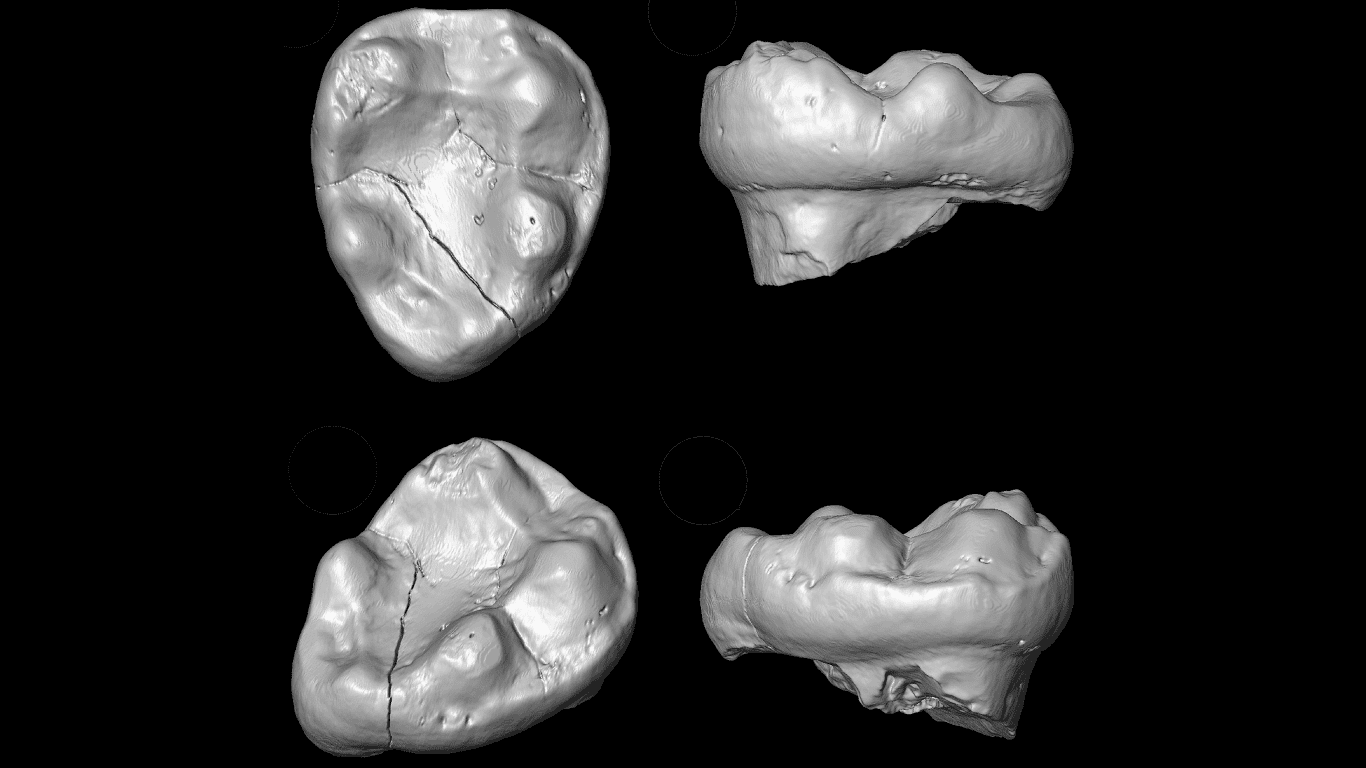
Ramnagar is home to some incredible ape fossils that shed light on the evolution of both lesser apes (like gibbons) and great apes (like orangutans). However, the exact ages of these fossils have been unclear. By establishing a more accurate chronology, we can determine when key species first appeared. For instance, the likely early gibbon ancestor, Kapi ramnagarensis, and the great ape relative, Sivapithecus indicus, are two significant finds whose precise ages we aim to clarify.
How did you feel when you learned about your Leakey Foundation grant?
I was deeply grateful and excited upon receiving The Leakey Foundation grant, especially as I continue my postdoctoral research focused on “Timing of Middle Miocene Hominoid Evolution at Ramnagar, India by Integrating Magnetostratigraphy and Biochronology.” This support not only acknowledges the potential impact of my research but also provides essential resources to further explore this specific area.
Building on my doctoral studies, supported by the Baldwin Fellowship, this grant will enhance my expertise, foster collaborations, and enable me to contribute new insights to anthropology. It marks a significant step in my academic journey, empowering me to advance scientific understanding and shape discussions in my field.
Why is research like yours so important?
Understanding the precise timeline of when ancient apes and primates lived isn’t just about satisfying curiosity—it’s about piecing together the story of our own origins and the evolution of life on Earth. By determining the exact ages of these fossils, we gain insights into human evolution, refining our understanding of the lineage of primates, including our ancestors. Accurate fossil dates enhance molecular clocks, leading to more precise estimates of evolutionary events. Studying the past adaptations of primates and other mammals to changing environments informs present-day conservation efforts, helping us protect endangered species.
Why is human evolution research relevant today?
Each discovery advances scientific knowledge across multiple fields—from paleontology and geology to genetics and evolutionary biology—and has global significance, enriching our overall understanding of life’s history. Moreover, these findings have cultural and educational value, inspiring future generations of scientists and fostering a deeper appreciation for natural history and the sciences. This research connects the dots between past and present, illuminating our place in the world and guiding efforts to preserve the incredible diversity of life on our planet.