
Primates
World Gorilla Day, held every September 24, is a day to celebrate gorillas and help more people learn about them. Public awareness is essential for gorillas’ survival, along with long-term scientific research and conservation. Reading about mountain gorillas and sharing what you learn is one way you can take part.
The date also marks the founding of the Karisoke Research Center in Rwanda in 1967. The site was established by Dian Fossey, who began her groundbreaking study at the urging of anthropologist Louis Leakey. She became one of the Leakey Foundation’s first grantees, receiving 16 Leakey grants in her lifetime.
Karisoke, operated by the Dian Fossey Gorilla Fund, is the longest-running field research site dedicated to studying and protecting gorillas, and the Leakey Foundation continues to support research there. Below, Leakey Foundation grantee Dominic Mayo shares mountain gorilla facts, along with questions he and other Leakey-funded researchers at Karisoke are working to answer.
By Dominic Mayo, Leakey Foundation Grantee
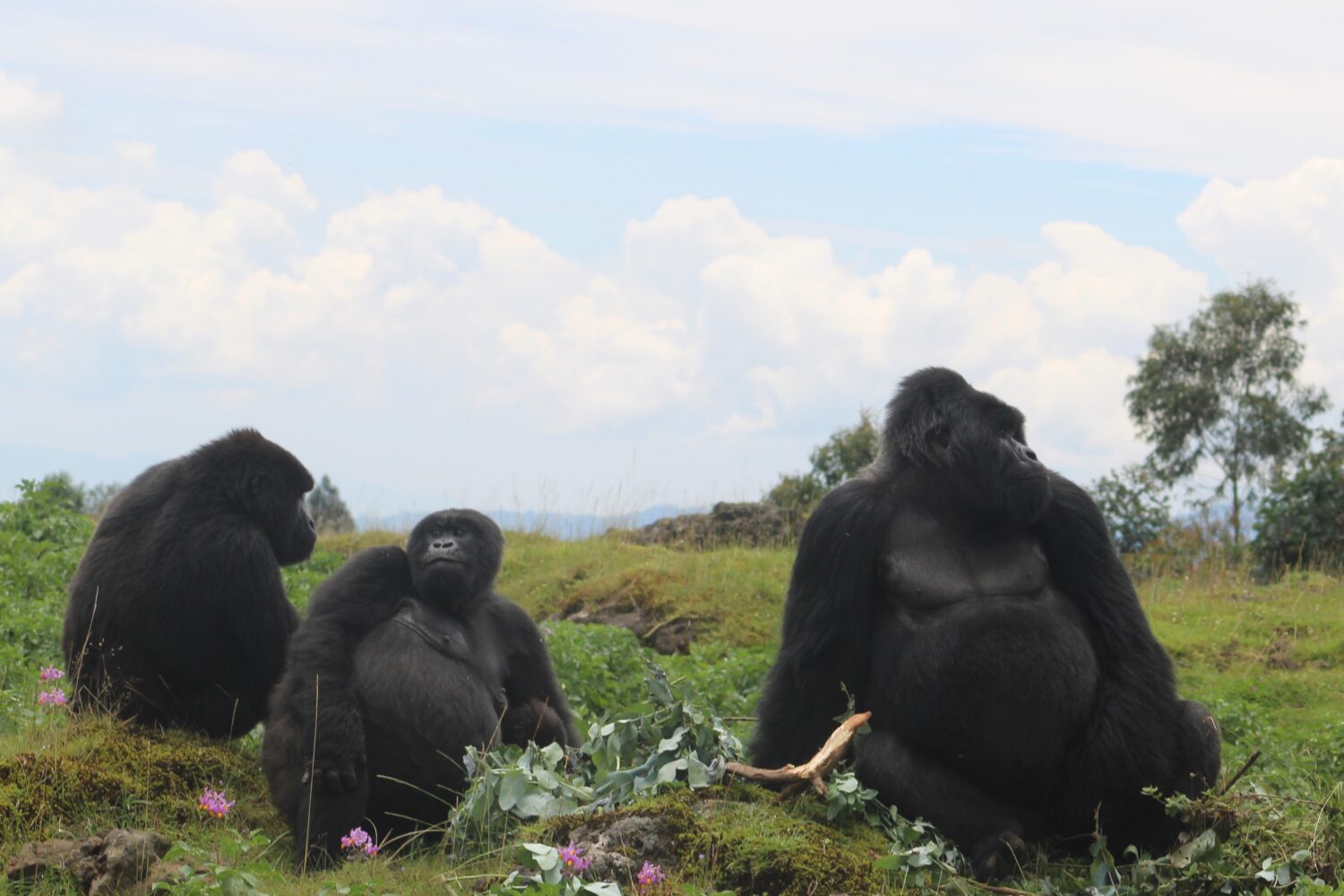
1. Where do mountain gorillas live?
Mountain gorillas are a subspecies of Eastern gorilla (Gorilla beringei), and they live in two areas: Bwindi Impenetrable Forest in Uganda and the Virunga Massif in Uganda, the Democratic Republic of Congo, and Rwanda.
2. How many mountain gorillas are there?
Mountain gorillas are the only wild apes with a growing population size. Thanks to active conservation efforts, the mountain gorilla population has grown from about 250 individuals in the 1980s to over 1000 individuals today!
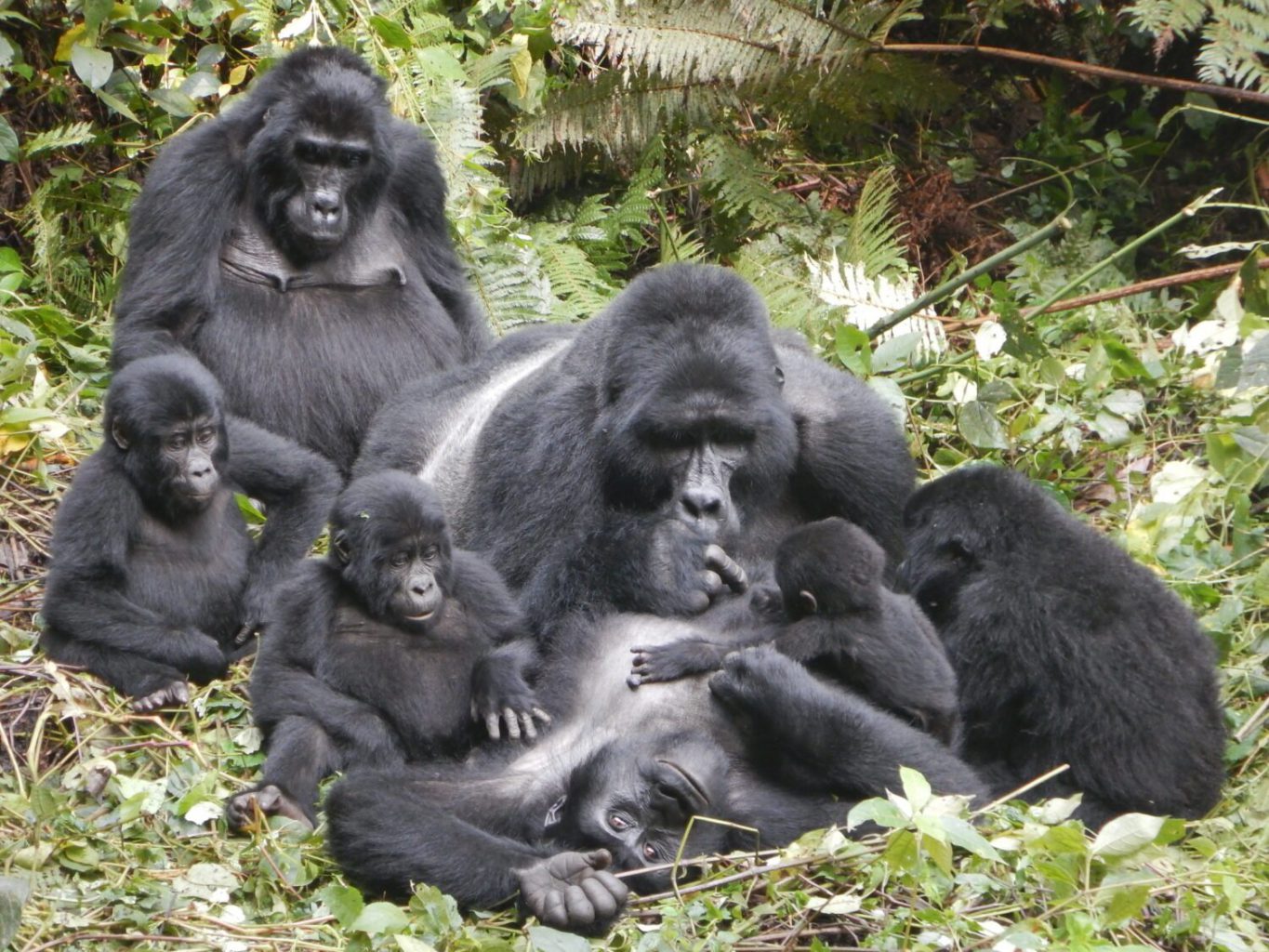
3. How big are mountain gorilla groups?
Mountain gorillas live in social groups that range in size from 2 to 60+ individuals. The largest group ever recorded contained 65 gorillas!
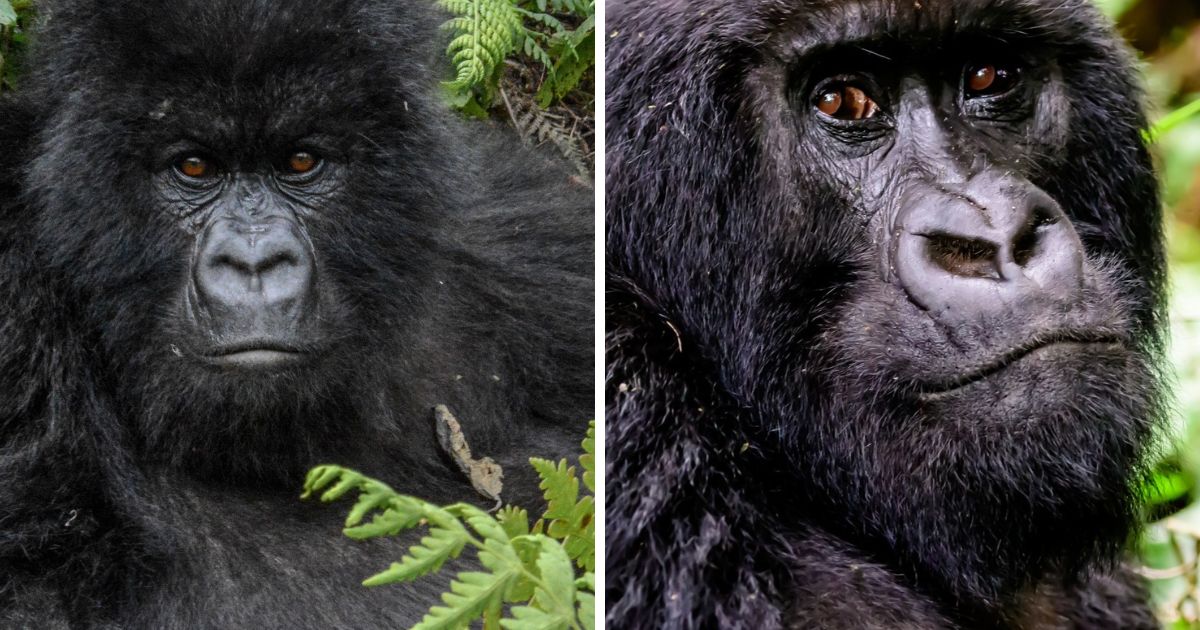
4. How do researchers tell mountain gorillas apart?
Every mountain gorilla has a unique noseprint. Bumps, wrinkles, and indents above the nostrils define the noseprint, and since the days of Dian Fossey, researchers have used noseprints to individually identify each gorilla in a group.
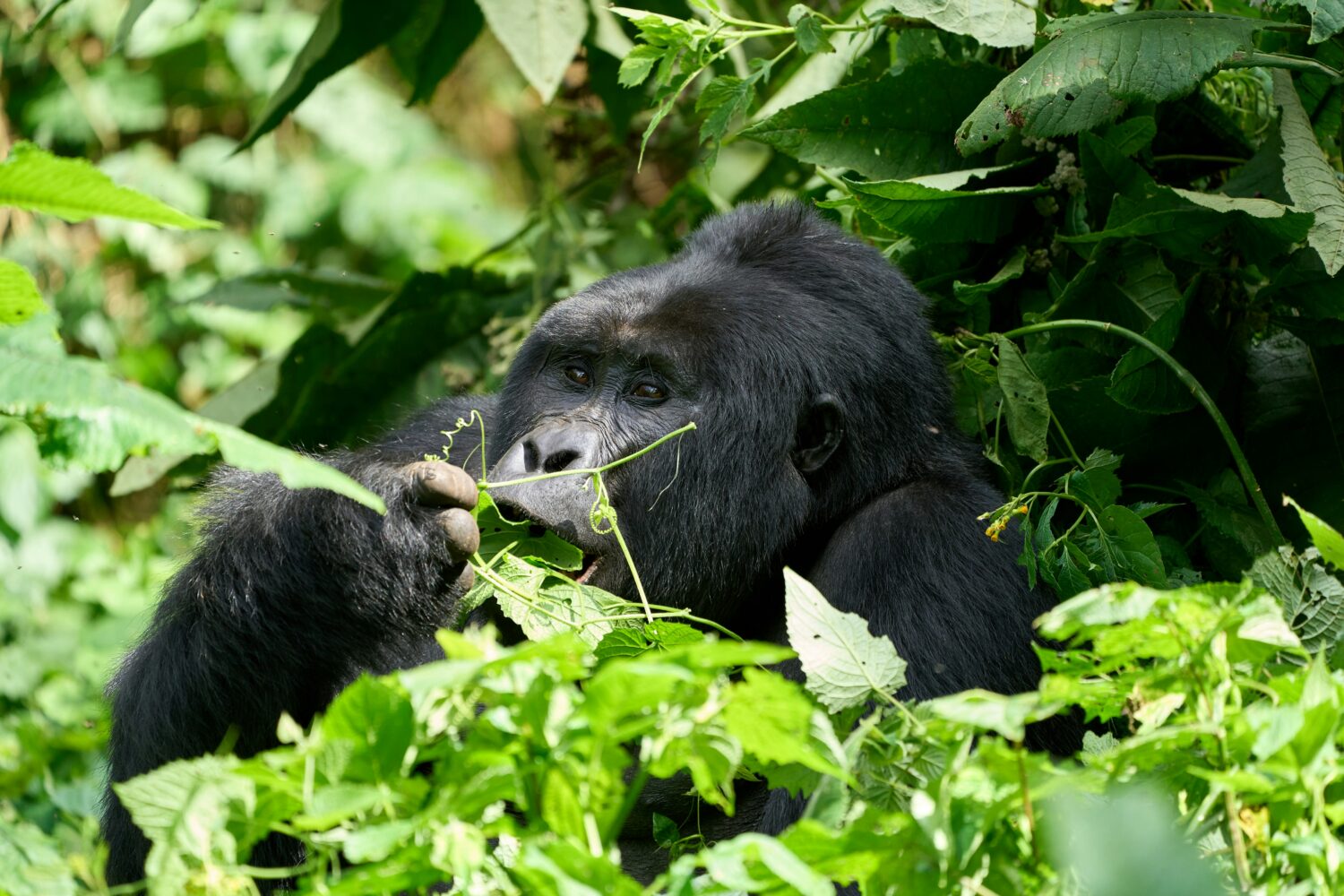
5. What do mountain gorillas eat?
Mountain gorillas are herbivores, meaning they primarily eat plants. However, they are also known to occasionally snack on ants!
6. When do male gorillas become silverbacks, and how does it happen?
All male gorillas eventually mature into silverbacks (i.e., the fully-developed male form characterized by large body size and silver back hair). Some males reach this state much earlier than others, but it is unclear what factors influence this variation.
Leakey Foundation grantee Ella Brown is investigating how these differences in male gorilla development may be influenced by their social environments.
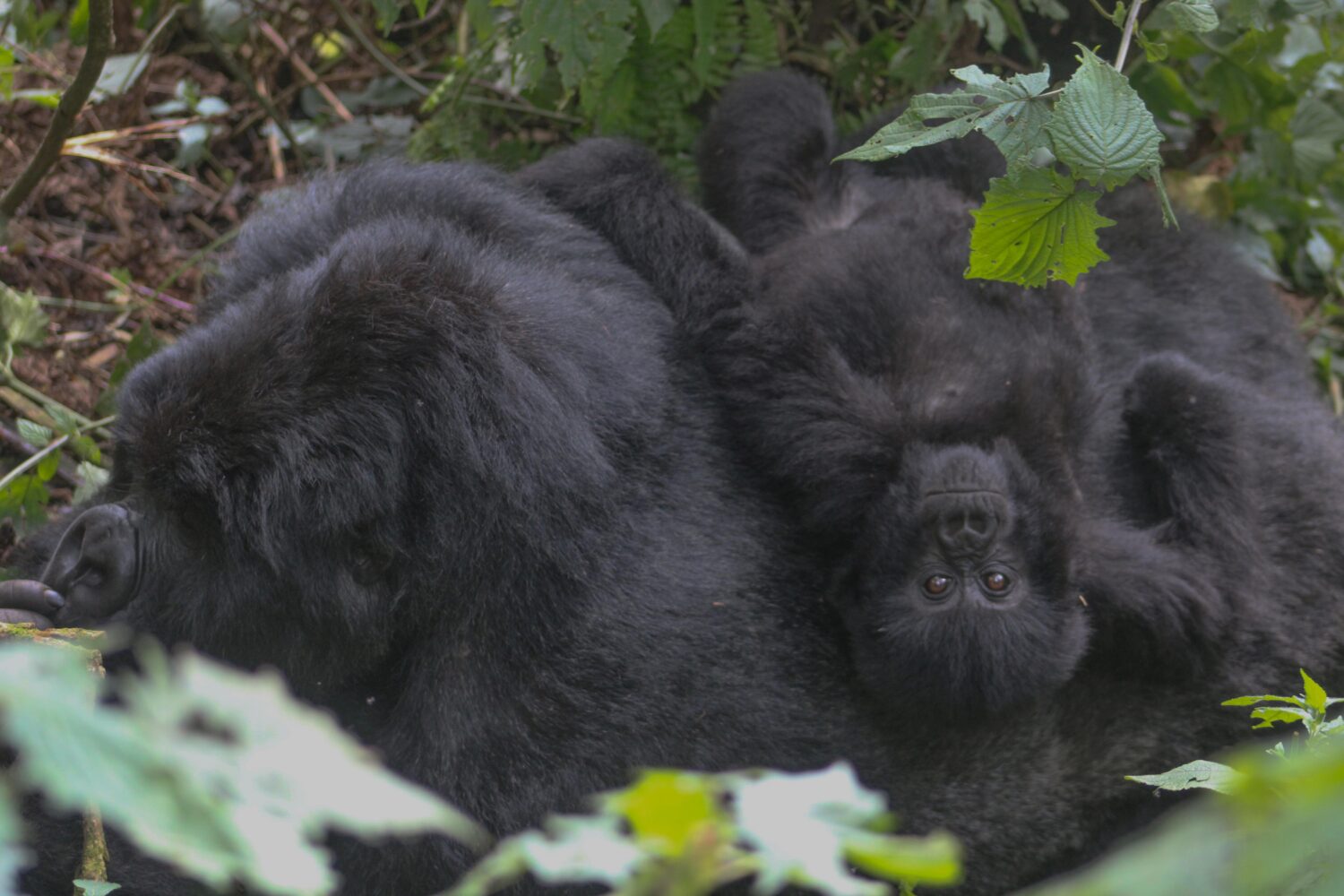
7. Do male gorillas care for infants?
Male mountain gorillas often care for immature individuals of their group. Silverbacks rest, feed, groom, and play with infants and juveniles, as well as protect them from outsider males.
My Leakey Foundation-funded research is investigating how female gorillas use competitive interactions to access silverback social partners and the potential benefits of male-female relationships for adult females and their infants.

8. How far do mountain gorillas travel each day?
Mountain gorilla groups travel an average distance of about 715 meters (a little less than half a mile!) everyday to reach new feeding and resting areas.
Leakey Foundation grantee Lauren Wiseman-Jones recently found that gorillas increase their daily group travel distances by up to 55% following encounters with snares set illegally to catch other wild animals (but may unintentionally capture gorillas). These ranging patterns suggest that mountain gorillas are aware of these anthropogenic threats and adjust their movement behaviors to avoid them!

9. What happens when gorilla groups meet?
Mountain gorillas often encounter other social groups while traveling across their home ranges. These encounters may be aggressive, peaceful, or even affiliative depending on the shared history of the social groups.
Leakey Foundation grantee Eric Ndayishimiye is exploring how social stressors like inter-group encounters are influencing the stress physiology of male mountain gorillas, who regularly play an important, protective role for their groups during these events.
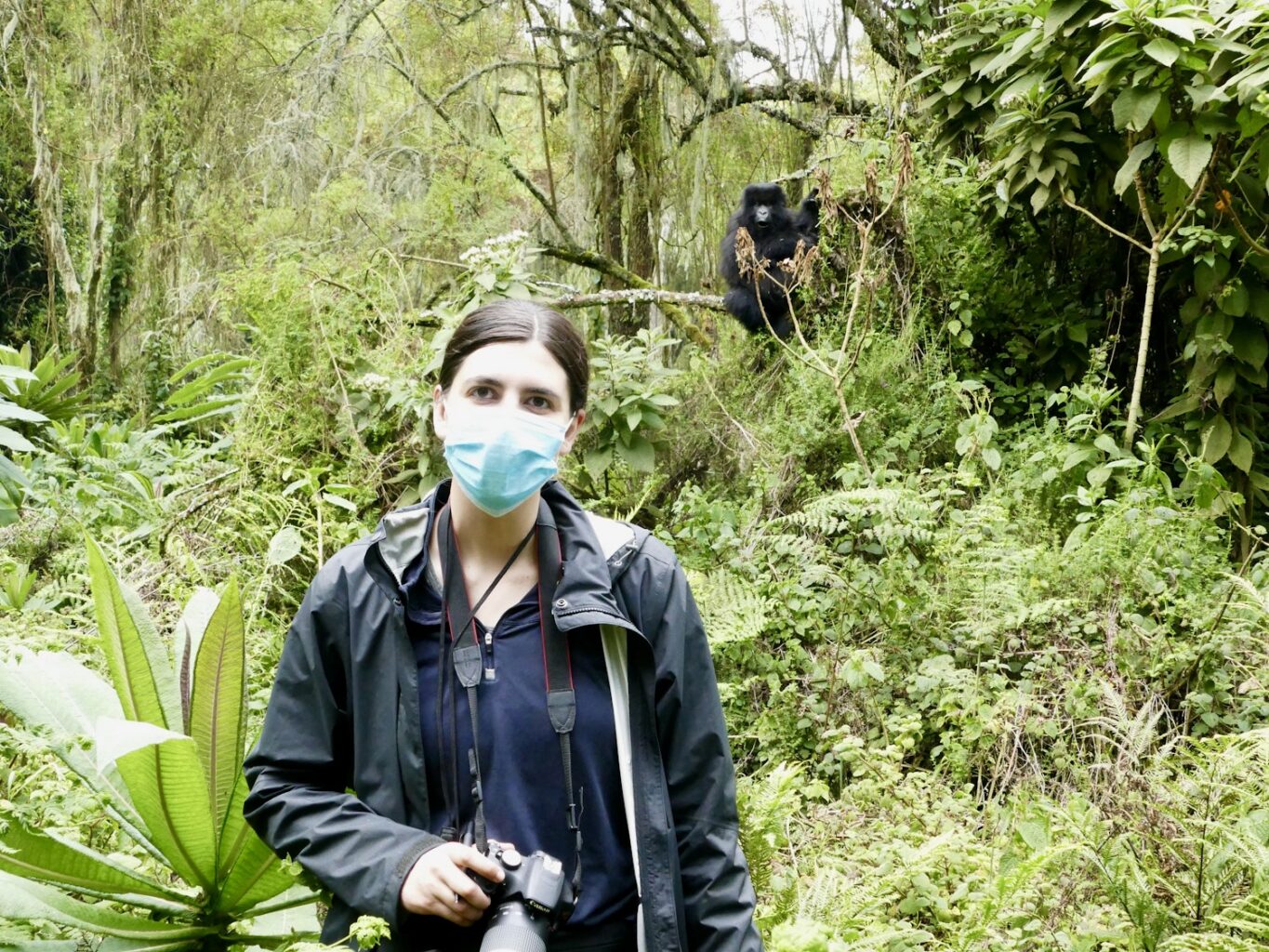
10. How high up can mountain gorillas live?
Mountain gorillas live in a variety of microclimates within their afromontane habitat, and they can range at higher elevations than any other non-human great ape (sometimes up to 3,850m above sea level!).
Leakey Foundation grantee McKensey Miller is investigating how wild mountain gorillas behaviorally and physiologically respond to these variations in their environment and how these responses might aid gorillas as they deal with the consequences of climate change.
Bonus fact!
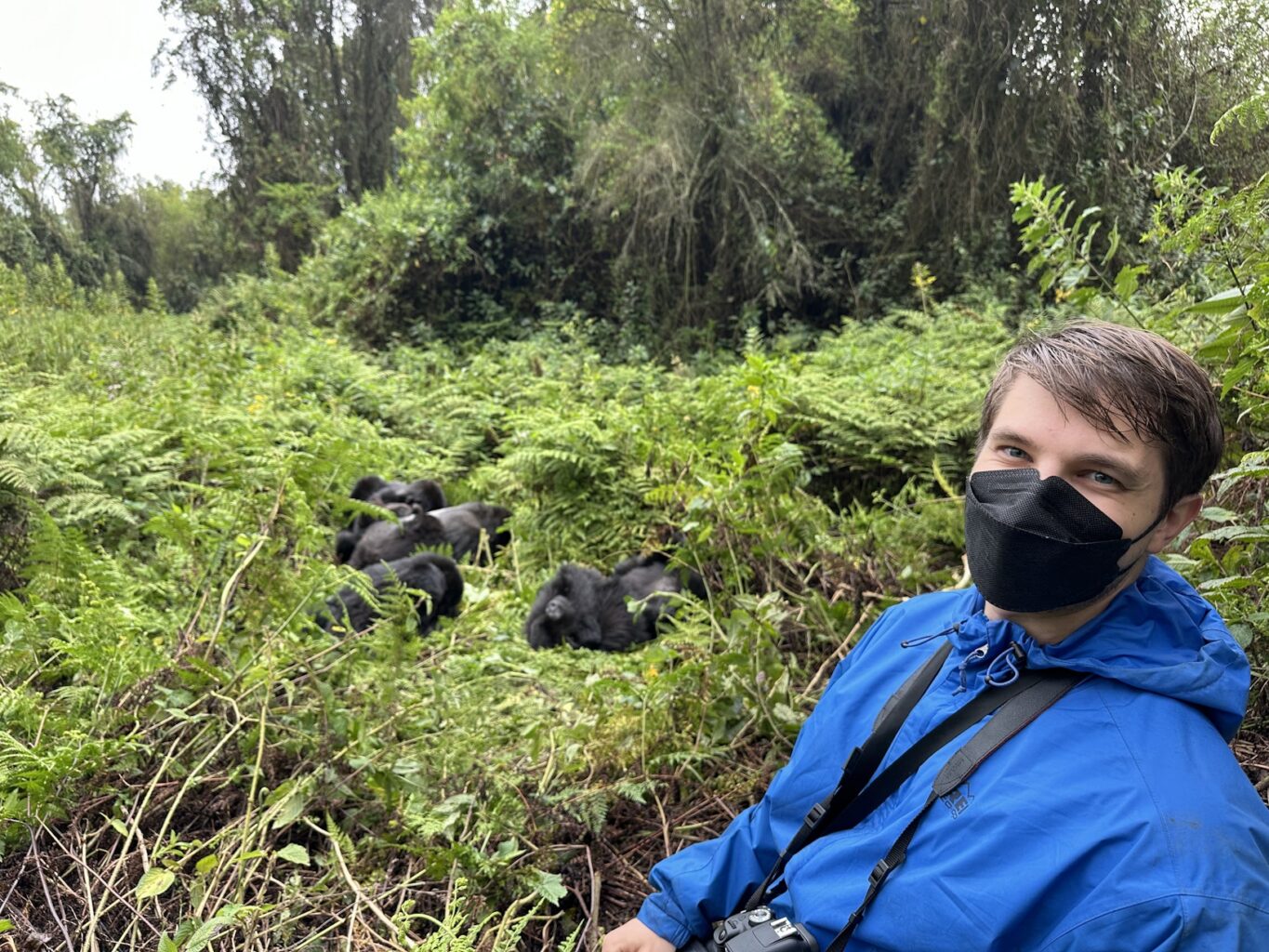
The mountain gorillas studied by Ella, Eric, Dominic, Lauren, and McKensey for their Leakey-supported research projects were recently featured in a new movie called A Gorilla Story: Told by David Attenborough. You can watch it on Netflix! And, if you want to learn more about mountain gorilla biology, behavior, and conservation, you can go to gorillafund.org or follow the Dian Fossey Gorilla Fund (@savinggorillas) on Instagram and Facebook!