
Grantee Spotlight
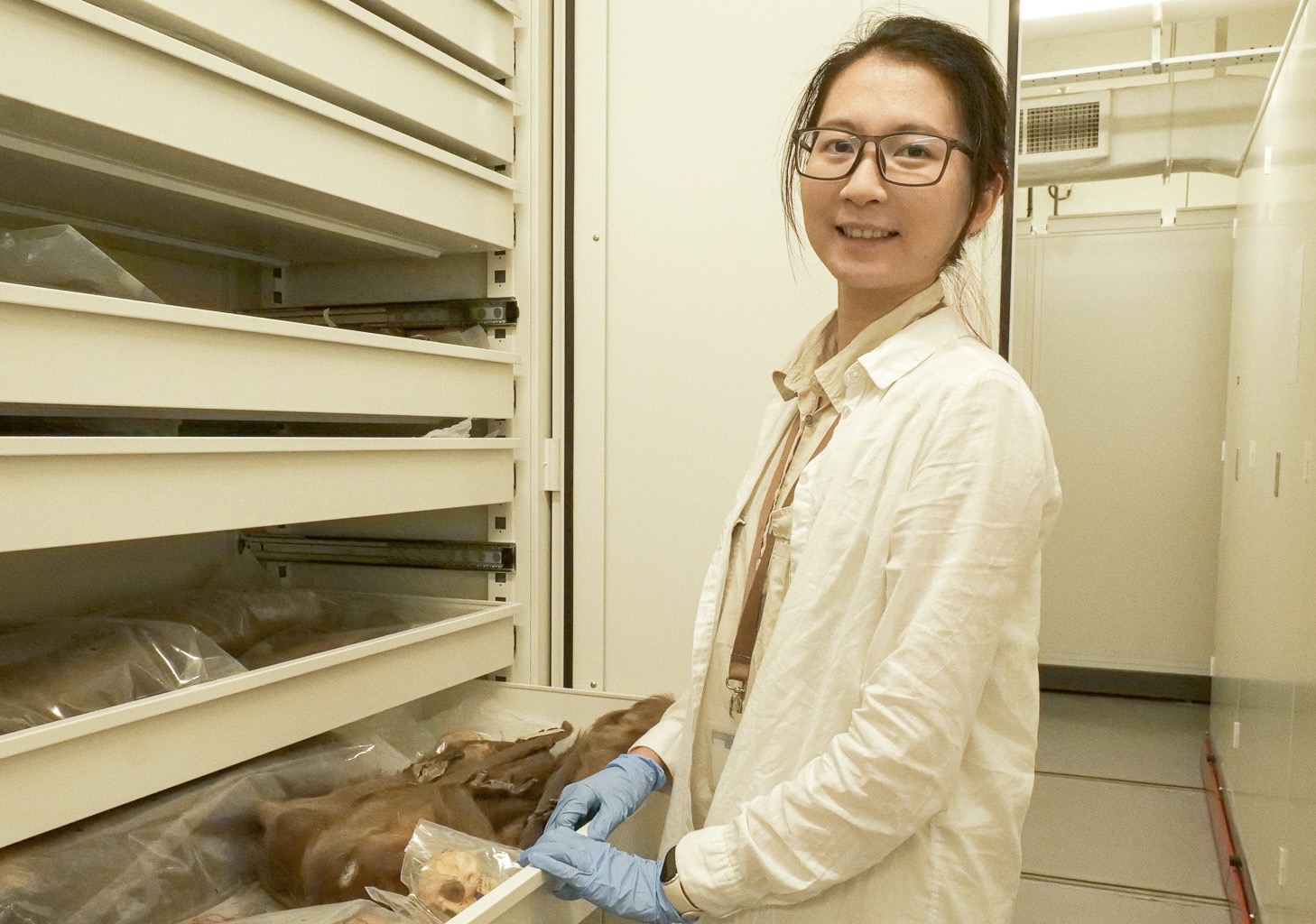
Yuting Gao is a PhD candidate at the University of Colorado Boulder whose work will help us better understand the microbes that live in our mouths. She received a Leakey Foundation research grant in 2025 for her project entitled “Monkey microbes, molars, and meals: Clues to human dietary evolution.”
Yuting’s research will explore how mouth bacteria differ among monkey species and the factors that cause these differences. Her study will also help us better interpret the microbial changes that accompanied major transitions in human evolution, such as the adoption of meat-eating, cooking, and agriculture. This is important because it can shed light on how our ancestors’ microbes helped them adapt to new foods and environments, ultimately influencing human health and survival
through time.
What big questions do you hope to answer through your Leakey Foundation-supported research project?
Just like humans and monkeys have evolved different teeth and diets over millions of years, the communities of microbes that live in our mouths may have evolved too. My research asks: Do oral microbes play a role in the dietary adaptations of primates? If so, what is the role?
To explore this, I work with “dental calculus,” which is the hardened plaque that builds up on teeth. Dental calculus can preserve microbial DNA (e.g. bacteria) from millions of years ago. By extracting and analyzing microbial DNA from specimens housed in natural history museums, I can study oral microbiomes from a variety of primate species. I will analyze which microbes were living in their mouths and what those microbes may have been capable of doing (e.g. help digest certain foods).
My goal is to understand what causes variations in the oral microbiome (e.g., diet vs. host physiology) and what that can teach us about the long-term relationship between primates (including humans) and the microbes that live with us.
What sparked your interest in genetics and the oral microbiome?
I didn’t know there was a job called research until I worked with some great mentors in college. I participated in one fieldwork project in archaeology and one in medical anthropology. I enjoyed working with the researchers and loved the research lifestyle: hands-on, team-based, and curiosity-driven. That time is still one of my favorite memories of all, and from there, I knew I wanted to continue in research.
I decided to do genetics research after taking a class with Dr. Abigail Bigham at UCLA. It was my first genomics course. I realized that a genome is like a puzzle and there is still so much that we don’t know about it. It amazes me that by studying DNA, we can ask deep questions about human history and biology. Even now, I still feel inspired when I read new research in this field.
How did you feel when you learned you received your Leakey Foundation grant?
The Leakey Foundation has funded many important researchers in our field. I felt very excited to be part of it, and I’m grateful for the opportunity. Research takes time, and it’s easy to feel busy but not see output. This grant is a much-needed positive feedback, and it recharges me to keep going in research. Most importantly, this funding will allow me to analyze the samples from different species that I didn’t get to and allow me to answer my research questions more completely.
I also shared the announcement with my family in China. My parents can’t read English, but they were thrilled to see my photo. I think the grant, along with this article, will allow them to know more about what I am doing.
What has been the most challenging obstacle in your work so far?
The challenging part of my work experience so far was being a nomad for 6 months in 2025. I traveled to the natural history museums one after another to collect samples, then to the ancient DNA lab to analyze them. I traveled to New York, Washington DC, and back to Denver before driving to Phoenix, AZ! There were several times that I didn’t know where I would be next week. Although I had to deal with uncertainty in both my research and personal life, I got to experience many new places along the way!
Why should people care about human origins and microbiome research?
The gut microbiome is now a familiar idea in popular media, but we still know far less about the oral microbiome. Many people think the mouth is “simple.” Yet research now shows that the mouth relates to broader health and systemic disease clinically, and periodontal disease is linked to higher mortality in some historical populations.
Human origins research, including my research about primate oral microbiomes, helps by giving us context. Before we know “what to do,” we need to know “what it is.”

What’s your favorite mind-blowing fact related to human origins, evolution, or your field?
No matter how many times I think about it, it’s mind-blowing that the code of life is written in four letters (ATGC), not 2, 6, or 8, but 4 letters. The code is simple, but it has so many different combinations.
On the other hand, the genome is completely invisible to our senses, but we’ve learned to decode it and reconstruct histories we could never witness, such as migration, selection, and even relationships between species.