
Grantee Spotlight
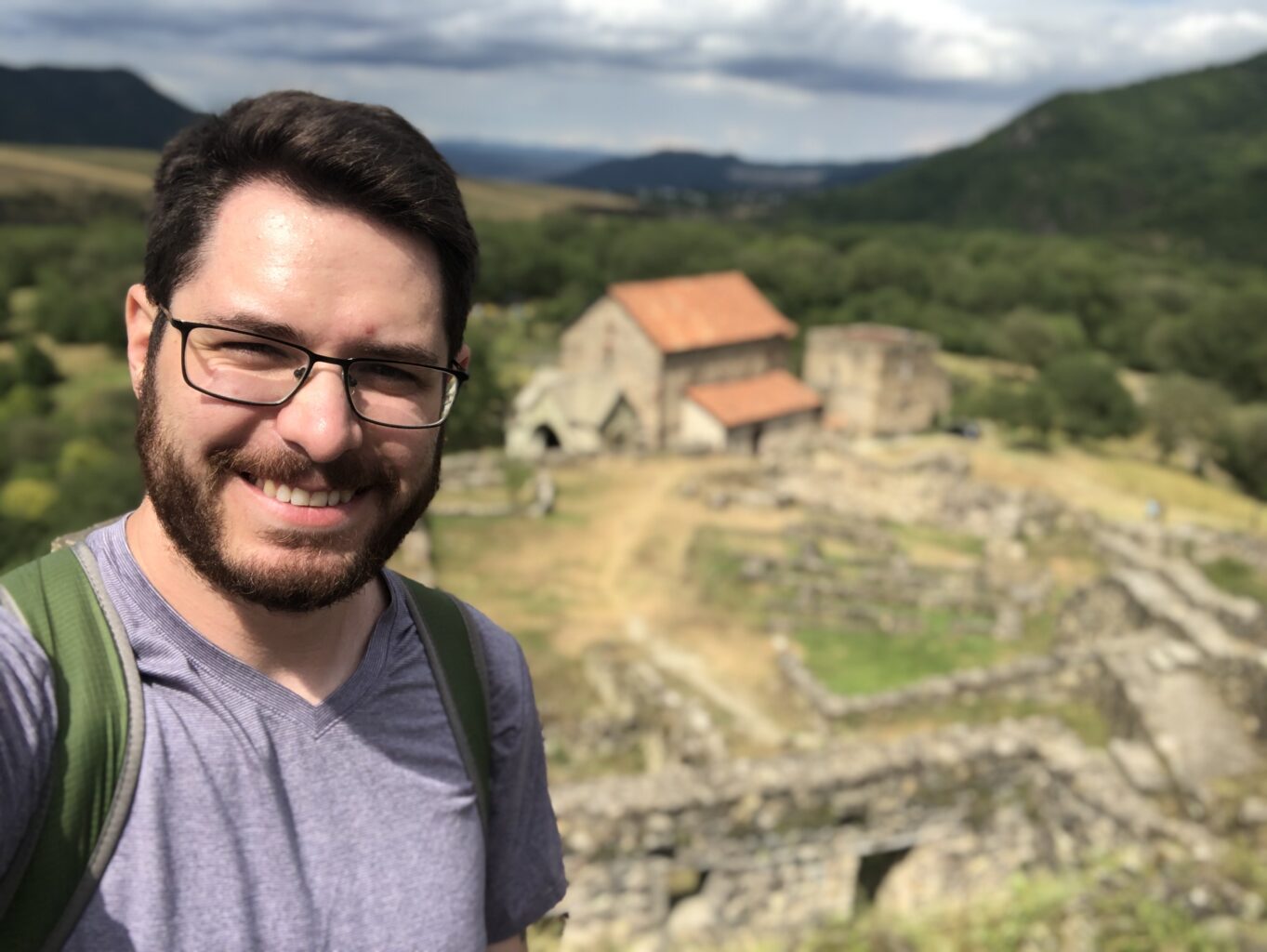
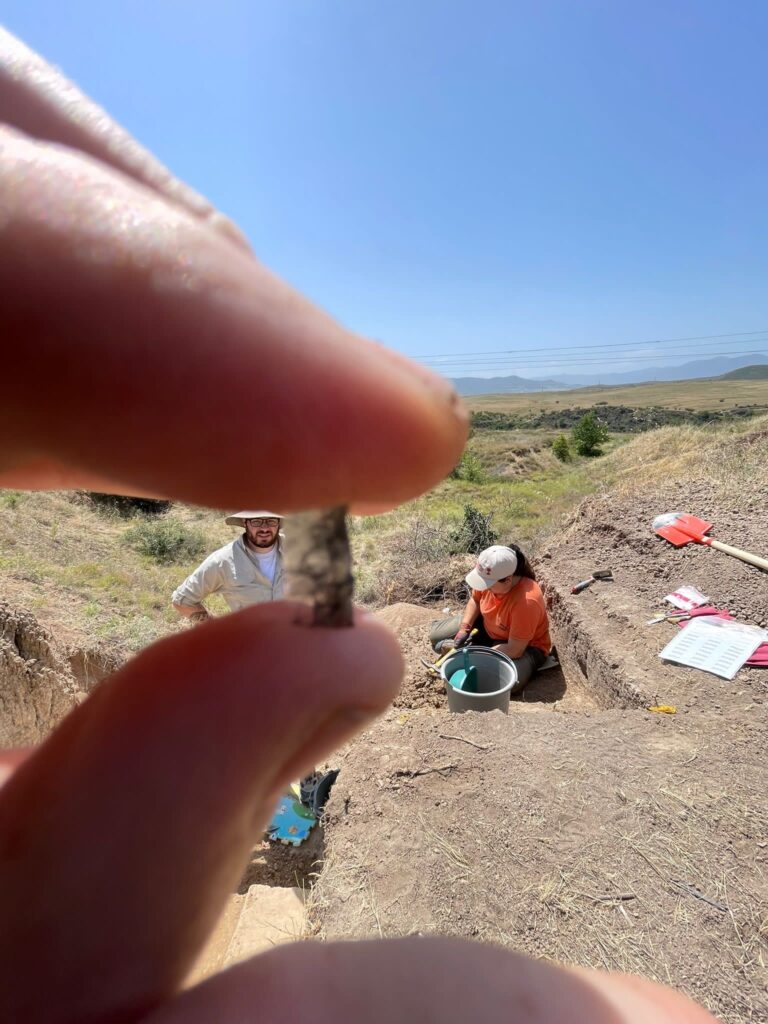
Tanner Kovach is a Leakey Foundation grantee and doctoral student at the University of Connecticut studying human technological evolution during the Upper Paleolithic in the Southern Caucasus. His research focuses on stone tool assemblages from three archaeological sites dating between 50,000 and 25,000 years ago to understand how Homo sapiens and Neanderthals adapted to social and environmental challenges.
Tanner’s interest in human evolution grew from a childhood desire to study paleontology. His Leakey Foundation-supported project aims to shed light on the interactions and adaptations of Neanderthals and modern humans during a critical period in human history.
Questions and answers with Tanner Kovach
What’s the focus of your Leakey Foundation-supported project?
This project is studying the technological transition from Neanderthals to Homo sapiens in the southern Caucasus, through the study of several stone tool assemblages from three archaeological sites spanning 50 to 25 thousand years old. This region served as one of several important geographic connections between Southwest Asia and the rest of Eurasia, suggesting that the cultural and technological dynamics occurring there are directly relevant to a comprehensive understanding of the dispersal of Homo sapiens, the disappearance of the Neanderthals, and the technological evolution of our species in Eurasia throughout the Late Pleistocene.
Why did you choose to study human evolution?
Growing up, I always wanted to be a paleontologist. However, my university did not have a paleontology program, so I thought that human evolution would be the next best thing!
What big questions guide your research?
I am most interested in questions surrounding the interaction between Neanderthals and Homo sapiens, and the ways in which both species adapted to their social and physical environments.
How did you feel when you learned you’d been selected for a Leakey Foundation grant? What will this funding help you do?
I felt extremely proud and grateful when this project was funded by The Leakey Foundation. This research will serve as the basis for my doctoral dissertation, and it would not be possible without this funding.
Why is research like yours important?
In my opinion, the most interesting questions we can ask involve who we are and how we got here. My research examines just a small part of what it means to be human, both in our abilities to adapt to challenges and the ways in which we interact with others, which adds to a richer understanding of our species.