
Grantee Spotlight
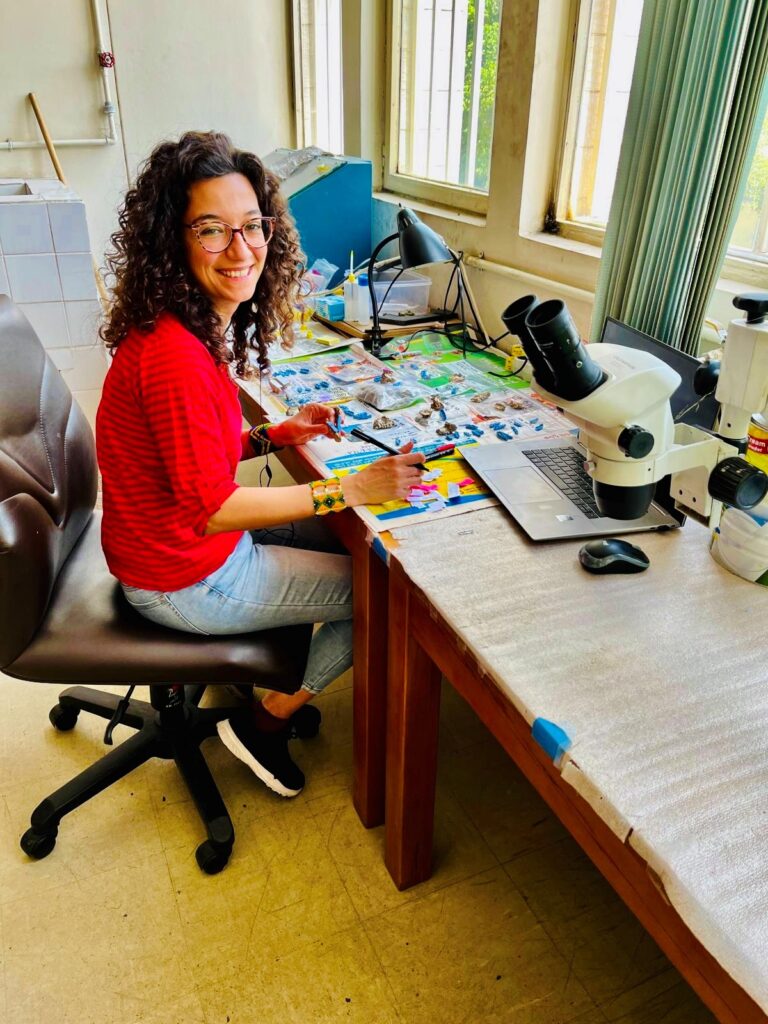
Raquel Hernando is a 2024 Leakey Foundation grantee and a postdoctoral researcher at the National Centre for Research on Human Evolution (CENIEH). Dr. Hernando investigates the diets of fossil colobus monkeys, baboons, and vervet monkeys from the Afar Region of Ethiopia during the late Pleistocene, roughly 158,000 to 100,000 years ago.
She uses Dental Microwear Texture Analysis to study microscopic wear on fossil teeth. This method allows her to reconstruct the diets of ancient primates and understand how they adapted to environmental changes. Her research provides insight into how fossil primates living alongside early Homo sapiens responded to ecological challenges, helping us learn more about the evolutionary processes that shaped both nonhuman primates and early humans.
Questions and answers with Raquel Hernando
What’s the focus of your Leakey Foundation-funded project?
This project explores the diets of colobus monkeys, baboons, and vervet monkeys that lived in the Afar Region of Ethiopia during the late Pleistocene, around 158,000 to 100,000 years ago. By studying their teeth, we can reconstruct their diets and understand how these primates adapted to their environment over time.
The fossils, recovered from the Chai Baro and Faro Daba stratigraphic beds, represent one of the largest and best-preserved primate assemblages from the Pleistocene. This provides a unique opportunity to study how diet reflects ecological and evolutionary changes. To do this, we use a non-destructive microscopic technique named Dental Microwear Texture Analysis (DMTA), which looks at microscopic marks on enamel. Depending on the area of the tooth we analyze, we can learn about their diet in the last few days or even the last few months of their lives.
What makes this study particularly exciting is its broader context: these primates shared ecosystems with Homo sapiens, facing similar environmental challenges. By understanding the diets and behaviors of these fossil monkeys, we can gain valuable insights into their ecology and the selective pressures that shaped their evolution, as well as those that influenced the development of these humans.
How did you become interested in studying diet, teeth, and fossil primates?
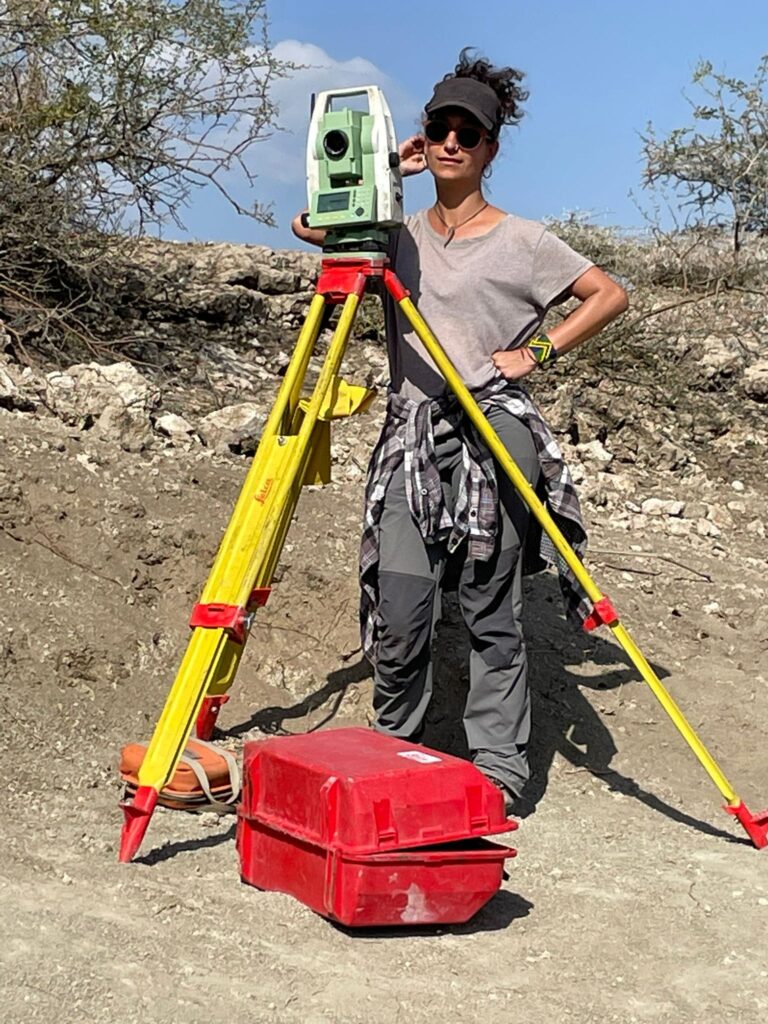
Human evolution has fascinated me since I was a child growing up near the world-famous Atapuerca archaeological site in Burgos (Spain). Living so close to this site made me curious about how our ancestors lived.
As I advanced in my studies, this motivation evolved into a professional focus on dietary behaviours in past populations. During my predoctoral research, I specialized in reconstructing past diets through the study of teeth to understand how diet reflects adaptation to changing environments. Now, in my postdoctoral position, I am thrilled to expand my expertise to the study of these fossil primates from the Middle Awash to understand their ecological and evolutionary context.
What questions are you most interested in answering with your research?
One of the most exciting questions I aim to answer is whether the dietary behavior of primates in the genus Chlorocebus (vervets) differed between two distinct time periods (Chai Baro and Faro Daba beds). Previous studies have identified subtle differences in their postcranial skeletons, suggesting that individuals from Chai Baro were more terrestrial compared to those from Faro Daba. By comparing dietary evidence with these morphological adaptations, I hope to determine if shifts in behavior, such as more terrestrial behavior, may be accompanied by changes in diet. Understanding this relationship would provide valuable insights into how behavioral changes drive ecological and evolutionary adaptations within a species.

How did you feel when you learned about your Leakey Foundation grant?
When I received the email notifying me of the Leakey Foundation grant, I had to read it twice to believe it. I was super happy, and it was a very special moment that I was lucky to share with my colleagues from the Tied2Teeth project. This grant represents a pivotal opportunity in my career. Thanks to The Leakey Foundation’s support, I will be able to apply cutting-edge methodologies to obtain my data, significantly enhancing the scope of my research.
The impact of this grant goes far beyond the immediate research. It will foster my professional growth by expanding my network of international collaborators and exposing me to innovative methodologies and perspectives. Additionally, it will open doors to future projects with experts from PALEVOPRIM and the Middle Awash team, creating exciting opportunities for interdisciplinary collaboration.
Why is research like yours so important?
I believe it is important because it helps us to discover how species have adapted to environmental changes over time. By studying the diets of these fossil primates that lived alongside Homo sapiens, we gain insights into how these species adapted in challenging and shifting ecosystems. This knowledge not only enhances our understanding of the past but also provides valuable context for how modern species, including humans, might respond to today’s rapidly changing environments.
As a society, an interest in human evolution connects us to our roots and teaches us about the challenges and adaptations our species faced. Human evolution reveals where we came from and how we have adapted to survive, thrive, and transform the world around us.