
Grantee Spotlight
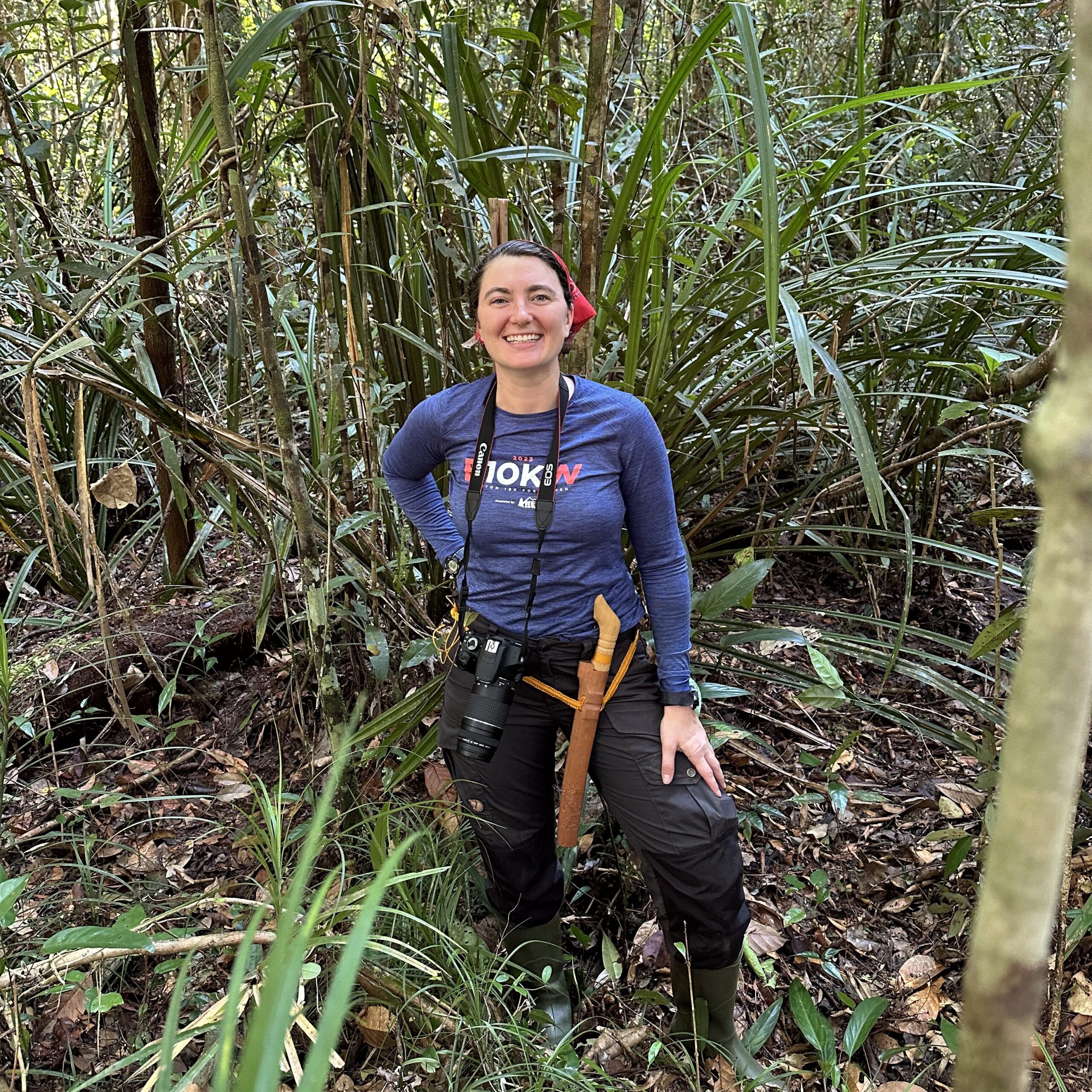
Dr. Alexandra Kralick is a Postdoctoral Research Fellow at the University of Wisconsin–Madison. She’s an anatomically trained biological anthropologist with a background in critical science studies and four-field anthropology. Dr. Kralick’s research takes a holistic and integrative approach to primate anatomy, exploring the breadth of within-sex variation in the bodies of our closest living relatives.
Her work primarily focuses on orangutan skeletal biology, with particular attention to sex-linked variation in life history and functional morphology. Her current Leakey Foundation-funded project at the Tuanan Orangutan Research Station connects skeletal biology with behavior, helping us understand how the challenges of carrying infants shape the ways apes move through their environments. She also received a Leakey Foundation grant in 2020 for her dissertation research. With that funding, Alexandra developed a method for identifying a unique form of male variation in orangutans (flanged and unflanged males) in museum collections.
Questions and answers with Alexandra Kralick
Tell us about your Leakey Foundation-supported research project
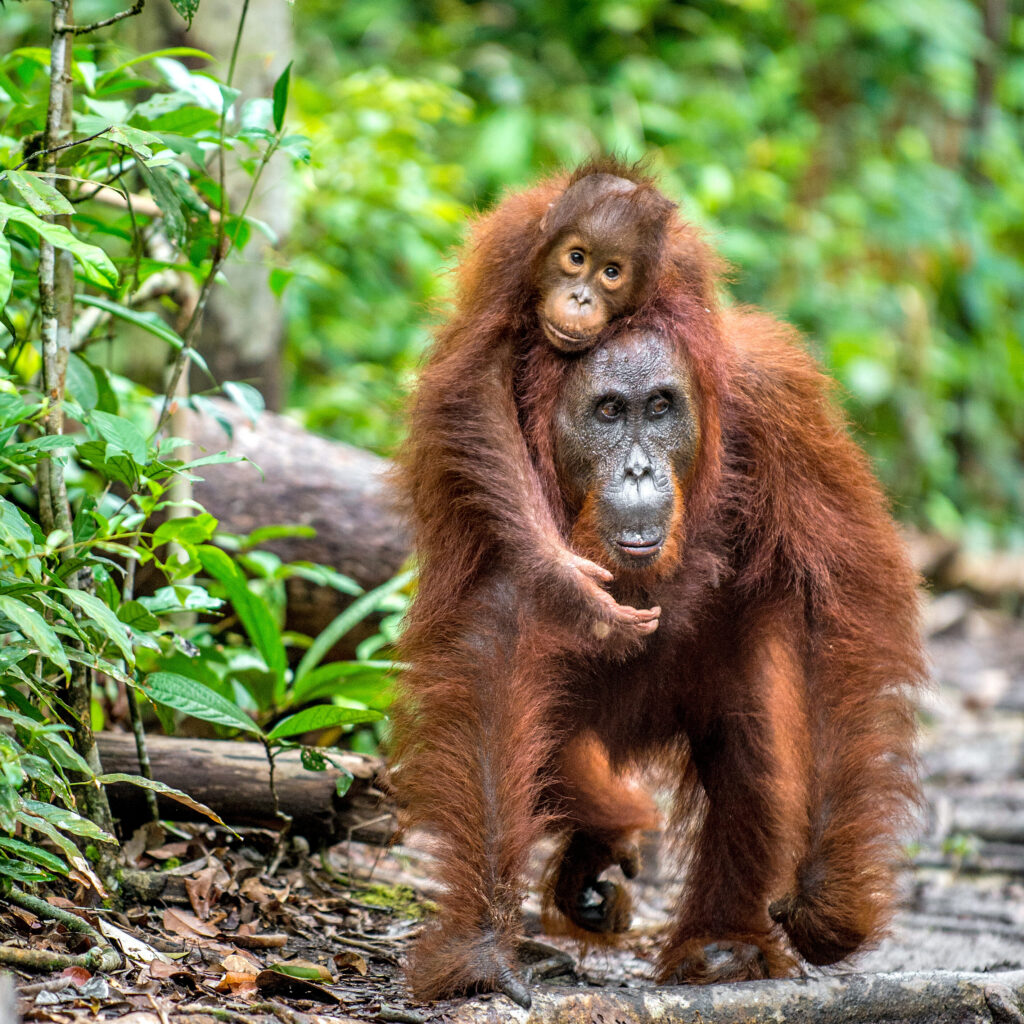
How do the challenges of carrying infants shape the way that apes move through their environments? We still know surprisingly little about this, especially when it comes to the unique demands placed on female apes, who are often both smaller than males and responsible for carrying infants. These factors likely influence how and where they move, but teasing apart what’s due to size versus infant-carrying has been nearly impossible.
That’s where orangutans come in. Unlike most great apes, orangutans include two types of adult males: large, fully developed “flanged” males, and “unflanged” males, who delay developing secondary sexual traits and typically smaller in size than flanged males, but are not found to carry infants. This unique variation gives us a natural experiment to better understand sex differences in orangutan movement patterns.
With support from The Leakey Foundation, we’re collecting detailed data at the Tuanan Orangutan Research Station in Borneo. This research will help reveal how movement shapes the body over time and will offer new clues about how our own ancestors navigated their environments, especially our female ancestors with their offspring.

What questions are you most interested in answering with your research and why?
I’m especially fascinated by unflanged male orangutans and the scientific mysteries that might be uncovered by paying close attention to them. They’ve often been treated as an evolutionary puzzle, but I see them as a key to understanding variation and flexibility. My research asks what their unique biology can tell us about development, morphology, and behavior, and how paying attention to the “exceptions” might reshape our broader understanding of evolution.
Was there a specific moment or experience that set you on your path?
I’ve always been fascinated by the evolution of the human body, though I originally imagined I’d approach it through the field of medicine. That shifted when I began undergraduate research with Dr. Shannon McFarlin at George Washington University. After traveling to Rwanda with her to excavate mountain gorilla skeletons and then seeing the gorillas in person, I was hooked. It was an awe-inspiring experience that solidified my passion for studying great apes and human evolution. There was no turning back after that!
How did you feel when you learned about your Leakey Foundation grant?
I was thrilled and deeply grateful to receive a Leakey Foundation grant. As someone currently on the tenure-track job market, this support offers me the opportunity to launch my second major research project after my PhD. I am also thrilled to have funding to be able to go back to Indonesia and spend more time with the orangutans!
What surprising discovery or challenging obstacle have you encountered in your work so far?
With support from my Leakey Foundation dissertation grant, I developed a method to identify unflanged male orangutan skeletons in museum collections and examined skeletal variation within male orangutans. A surprising discovery from this work was that unflanged males are not simply “female-sized” but their skeletal correlates of body size range widely, at times overlapping with those of adult females, while other times overlapping with those of flanged males, depending on the measurement.
Why should people care about human origins research?
Human origins research helps us understand who we are, where we come from, and how we have changed over time. Relative to other fields, it is still young, full of unanswered questions and new discoveries waiting to be made! Studying our evolutionary past isn’t just about fossils or tools, it’s also about how we choose to interpret the evidence. That process reveals a lot about the present: which kinds of bodies, behaviors, or ways of life we value and which we overlook.
When we look closely at variation in humans and our non-human primate relatives, we start to see that there was never just one way of being human or primate. A science of human origins that embraces this diversity can help us better understand and appreciate what it means to be human today.