
Grantee Spotlight
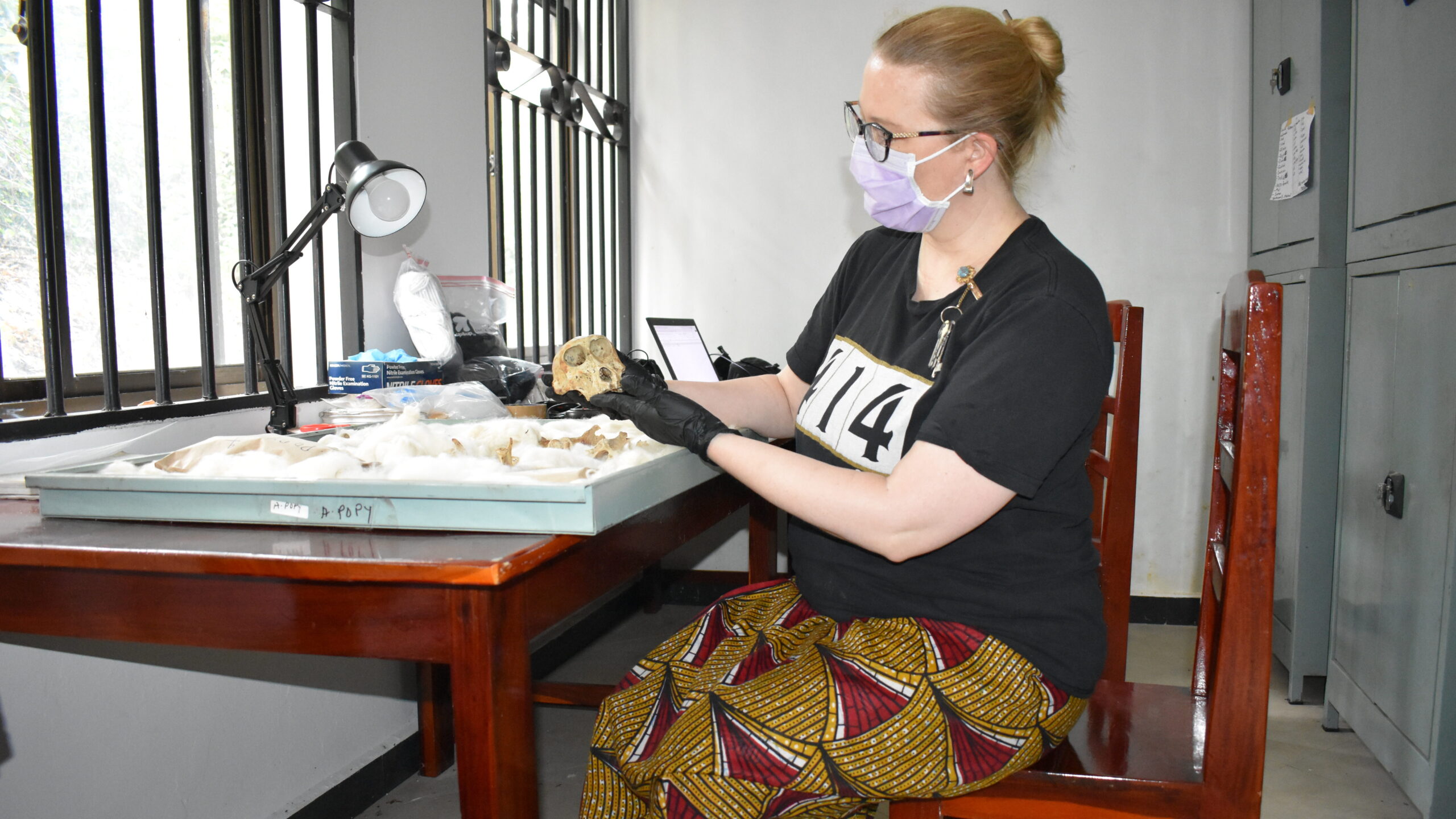
Claire Kirchhoff is a Leakey Foundation grantee and a Clinical Associate Professor at Marquette University. She studies baboon skeletons from Gombe National Park in Tanzania to understand how bones reflect health, behavior, and social relationships. She is analyzing hundreds of skeletons for signs of illness, injury, and aging, and linking them to records from long-term research at Gombe. This will provide an innovative way to address a concept called the osteological paradox, which asks whether skeletons with signs of illness or injury belonged to less healthy individuals or to those who survived long enough to leave those marks behind.
Before joining Marquette University, Claire Kirchhoff combined her interests in biology, anatomy, and anthropology to explore how bones tell the story of an animal’s life. She has done similar work with chimpanzee skeletons and enjoys connecting physical evidence with long-term behavioral studies. Her Leakey Foundation-supported project helps researchers link bones to life experience in ways that deepen our understanding of primate evolution and survival.
Questions and answers with Claire Kirchhoff
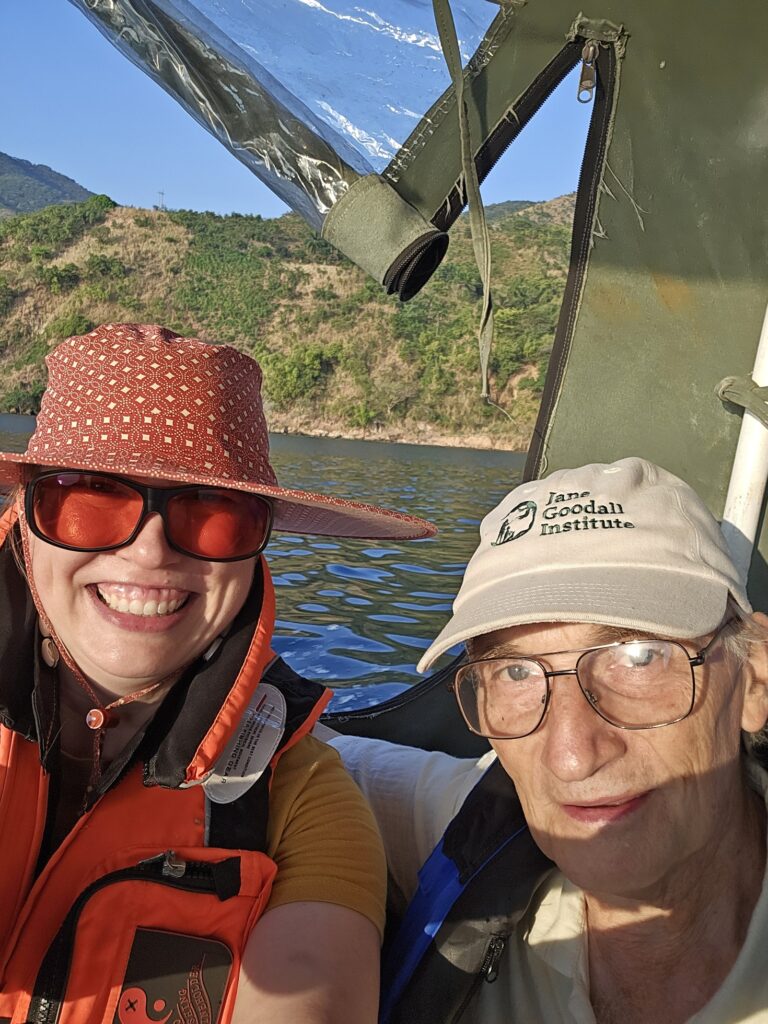
Tell us about your Leakey Foundation-supported project.
Primate skeletal analysis provides context for questions about what it means to be human. Like humans, baboons are adaptable and live in many environments. Since 1967, Dr. Anthony Collins and collaborators have studied baboon behavior at Gombe National Park, Tanzania, where Dr. Jane Goodall and colleagues have studied chimpanzees for over six decades. Long-term studies allow us to address ecological questions, but the ways life events impact the skeleton leave gaps in our knowledge.
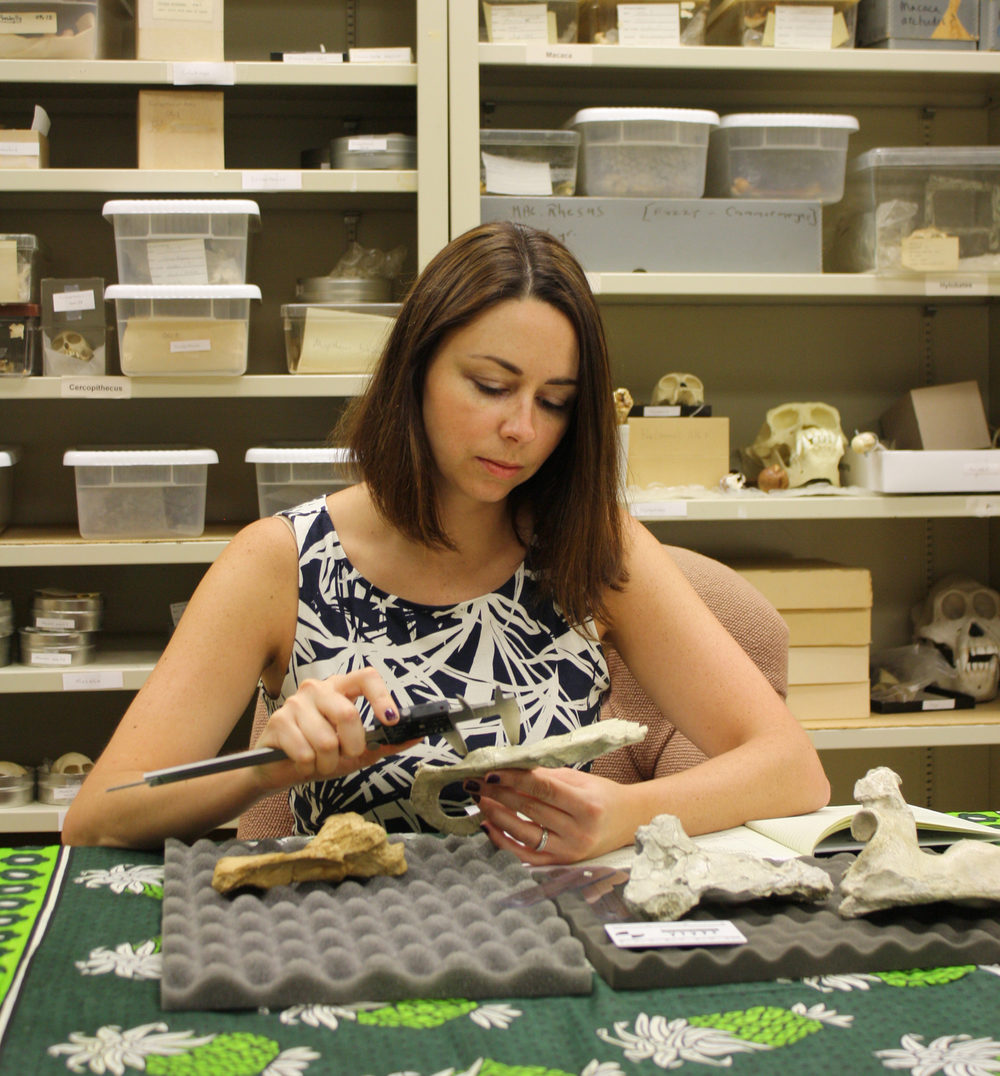
The Baboon Project preserves the skeletons of baboons who have died of natural causes. I will be studying hundreds of skeletons for signs of illness, injury, and aging and link to sex, dominance rank, group size, and observational health records. This will provide an innovative way to address a concept called the osteological paradox, which suggests it is difficult to know whether skeletons with many signs of illness/injury represent the least or most healthy individuals. It seems intuitive to assume that more skeletal signs means the animal was less healthy, but it could also mean the animal was strong enough to survive past the onset of the injury or illness. The chance to directly link skeletons and behavior for the same animals is a deeply exciting scientific endeavor made possible by the Leakey Foundation. I have previously undertaken similar studies on the Gombe chimpanzee skeletal collection, and one of the most compelling future directions for this project will be comparing two species that live side by side in the same environment.
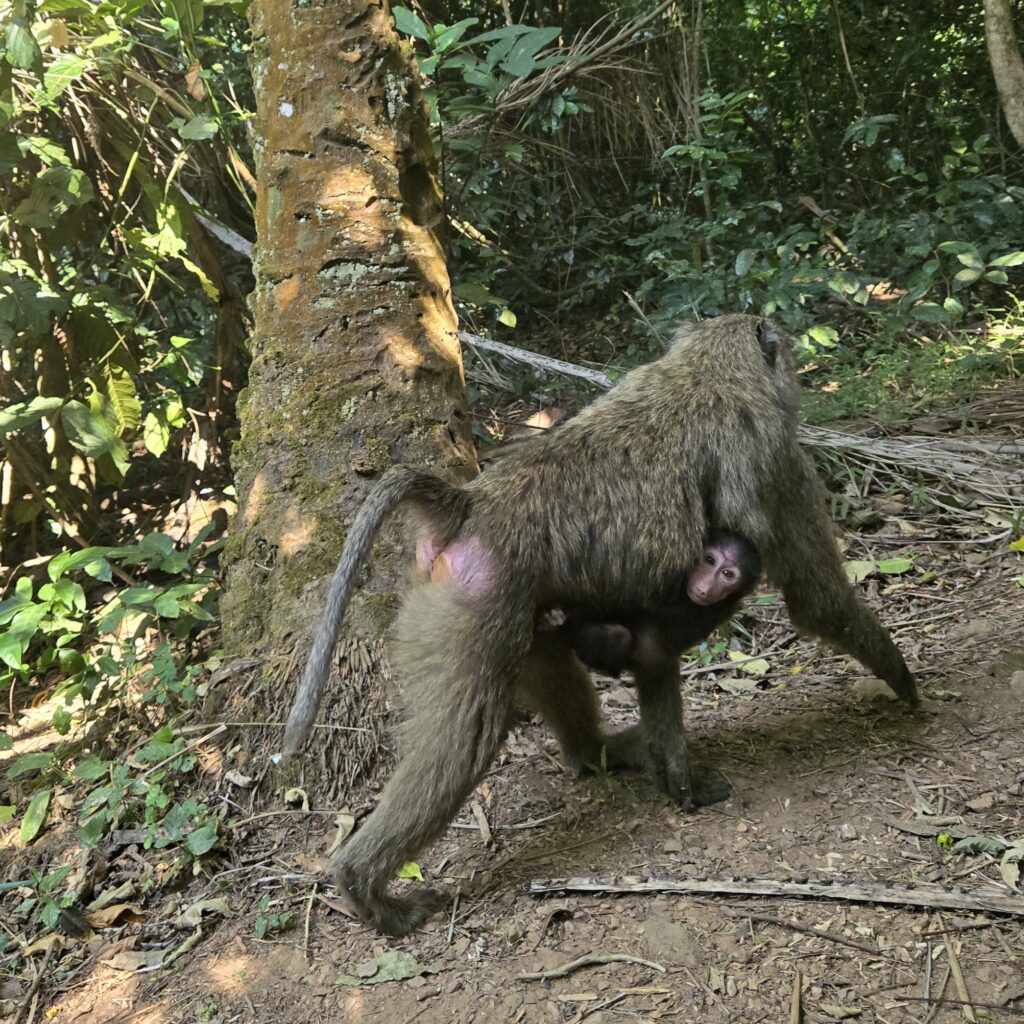
Why did you choose to study skeletons in this way?
My work sits at the intersection of biology, narrative, and what it means to live and die. So much of what is important to me comes together through this project: meaning-making, storytelling, curiosity, and scientific inquiry. I have always been interested in humans’ past as a way to inform our present and future. In college, my interest in human material culture shifted towards ultimate explanations for human nature and the evolutionary framework for our species.
At the start of graduate school, I took my first human anatomy class because I thought it would make me a better anthropologist. This turned into a vocational calling to teach human gross anatomy, and that continues to inform my scholarship as my students and I navigate what death and dying could mean in an educational context – what that means for our own professional and personal lives.
Because we are alive, we will eventually die, and that can be sad, but those who have made anatomical gifts show us the ways that people can make a lasting, positive impact on the world even after they have passed. They are our best anatomical teachers. Similarly, while I never wish for the death of the wonderful animals who populate Gombe National Park, I do hope for the chance to engage with their mortal remains to help us answer fundamental questions about what skeletons can teach us, what stories skeletons can tell.
I am interested in hard tissues as a way to address theoretical issues like the osteological paradox, but to me skeletons are also beautiful, offering the chance to craft individual narratives. Because selection acts at the level of the individual, life stories and histories for individual baboons not only offer points of interest, but ways to understand selection at a very detailed level.
What big questions guide your research?
The relationship between behavior and the skeleton drives my research. What stories do skeletons tell, and how does that information provide context for a wide variety of questions on health, ecology, and sociality? Skeletal analysis can provide additional insight for rarely observed but important behaviors as well as in situations where it is difficult or impossible to directly observe behavior, such as endangered, nocturnal, or extinct animals. Skeletal data is a powerful tool for answering questions about primate ecology and evolution.
We use hard tissue data to examine the fossil record, in medicolegal contexts, and as a means of resolving health concerns. This all relies on what we have determined about how skeletons reflect behavior, ecology, and life histories – and the way we make those links comes from bones with additional kinds of data. Even something relatively simple like estimating height or biological sex for skeletal remains relies on previous study of skeletons with known heights, known sex. If we are interested in using skeletons to answer more complex questions, we need skeletons with associated complex data so that our interpretations of skeletons without life histories can be as meaningful as possible. This is what makes the Gombe baboon skeletal collection so compelling for me – the chance to directly link behavioral and hard tissue data for the same animals.
Further, and I know it is not objective to say so, but data collection is fun! I enjoy the process of cataloguing the skeletons and collecting lesion data, and I’m excited to visit Tanzania again. I’ll get to swim in Lake Tanganika, see some beautiful cichlids, eat delicious food, and swap stories with other researchers. Gombe is a gorgeous park, and if I could propose a few generalities about Tanzanian culture, I would emphasize friendliness, gratitude, and hospitality.

How did you feel when you learned you’d been selected for a Leakey Foundation grant?
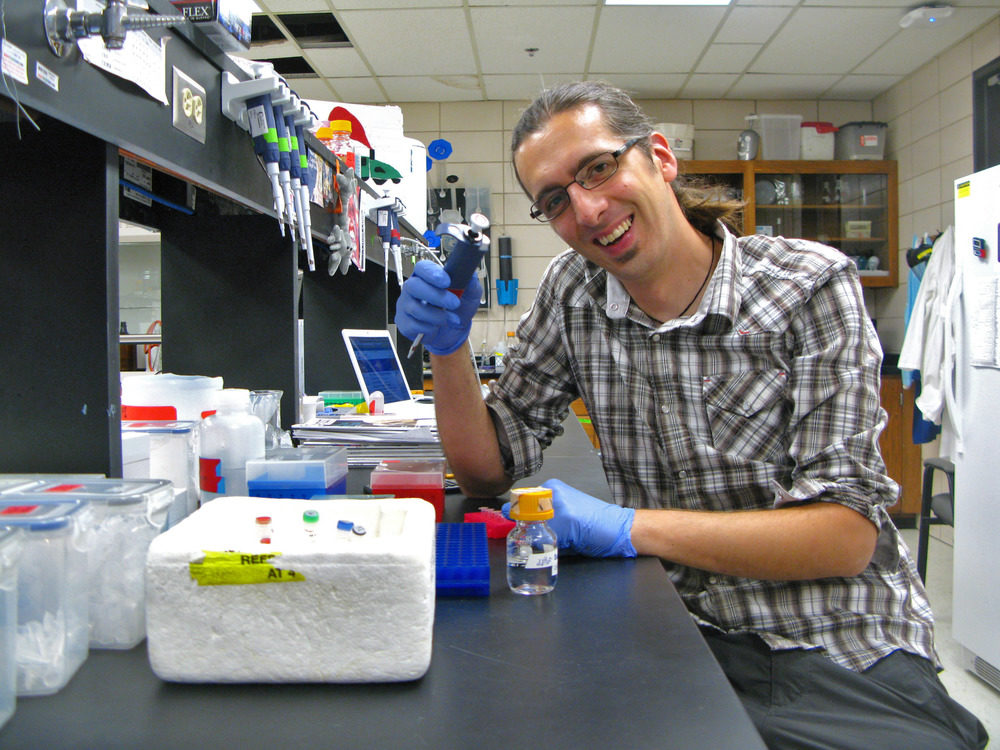
Securing funding for this project was a multi-year collaborative effort, and I was ecstatic to receive the award notification. After cheering and dancing in my office for a bit, I knew I wanted to share the joy with others – but it was a quiet time on campus right before commencement, so I had to gallop down the hall to find some colleagues to hug! The proposal could not have come together without my international team of collaborators including Anton Collins, Jason Massey, Rebecca Nockerts, and Mike Wilson. Asante sana!
This award will have a big impact on my career as the data collection would not be possible without The Leakey Foundation’s support. Further, I have a type of faculty position that is ineligible for tenure, so it is a big boost to be able to maintain my research activities in that context. I could easily fill all of my professional time with teaching and service responsibilities, and external support allows my department to make room for my scholarship. I am privileged to have the kind of position that includes this level of flexibility and security. I am also a scholar who lives with long COVID, which at this point seems to have caused some level of permanent disability for me. Receiving the award was a huge source of validation in terms of my intellectual capacity while I navigate a new-to-me life history phase.
Why is human origins research important?
I am interested in questions about what makes us human. Why do we eat what we eat? Why do we live where we live? Why do we live in groups and cooperate – or not! These kinds of questions can be moral, philosophical, existential, but they are also biological. By including a biological, evolutionary context, including information on our closest relatives (other primates), we can discover more about ourselves, the world, and the ways we are connected.
Human evolution is something we all have in common – it is a shared history and heritage for our species. Further, so much of what we know about our origins comes from countries like Tanzania, which is home to Gombe National Park.
Tanzania is a developing country with limited opportunities for advanced scientific training, and yet is also a critically important nexus of inquiry for many fields including biological anthropology, ecology, conservation, and sustainable development. Tanzania is home to iconic sites such as Olduvai Gorge, Hadza country, the Masai Mara, Gombe, and more. The future of science and conservation in Tanzania depends on the successful training of a new generation of local scientists; The Leakey Foundation’s support of this proposal includes equipment and supplies to help facilitate that effort and work towards greater equity and diversity in STEM.
Special acknowledgements
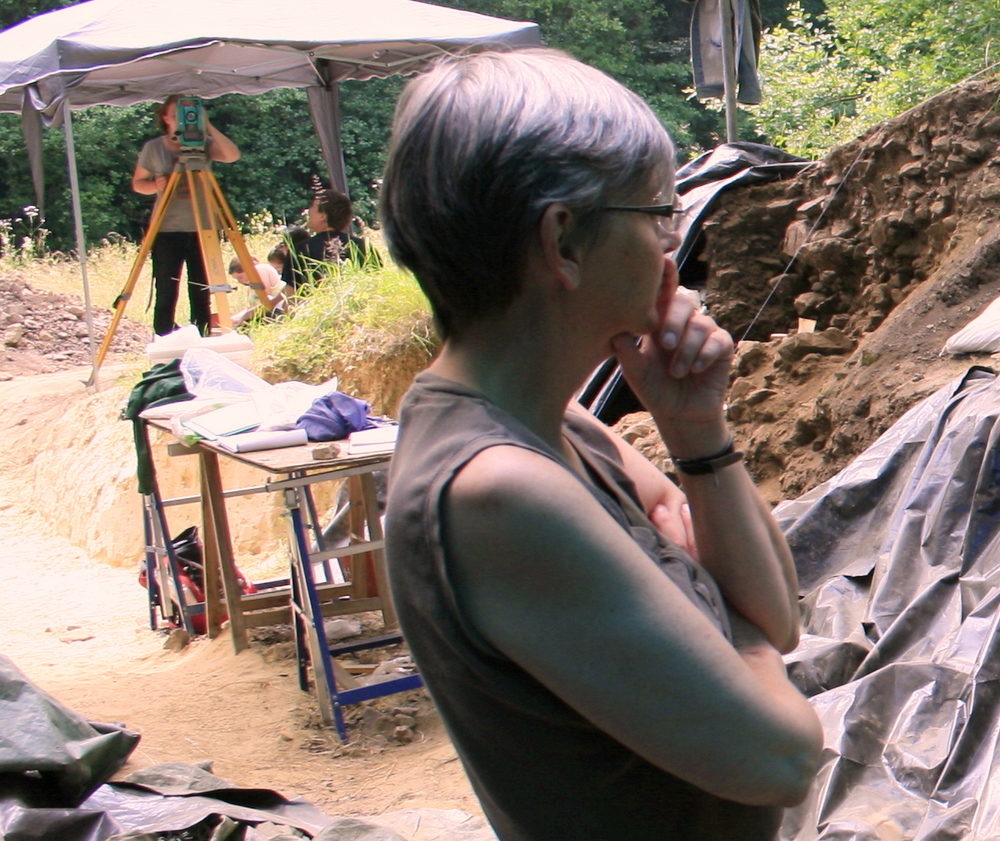
- Gombe Baboon Project research staff, who are responsible for creating and preserving the behavioral and demographic records as well as the skeletons. The particular dedication and foresight of Dr. Anton Collins, who has served as Baboon Project Director since 1967, is unmatched. Many Tanzanian research technicians have made significant contributions to baboon research over the years, and we particularly acknowledge Appolinare Sindimwo, Marini Bwenda, and Joseph Nyirenda, who is a recent M.S. from the University of Dar es Salaam.
- The Department of Biomedical Sciences at Marquette University, where I am a faculty member, launched a new master’s program in 2024! I hope to collaborate with a new graduate student. My research community has a proven track record of support for students historically underrepresented in STEM, including women, first generation college students, students from rural high schools, neurodiverse students, and Latina students.