
Grantee Spotlight
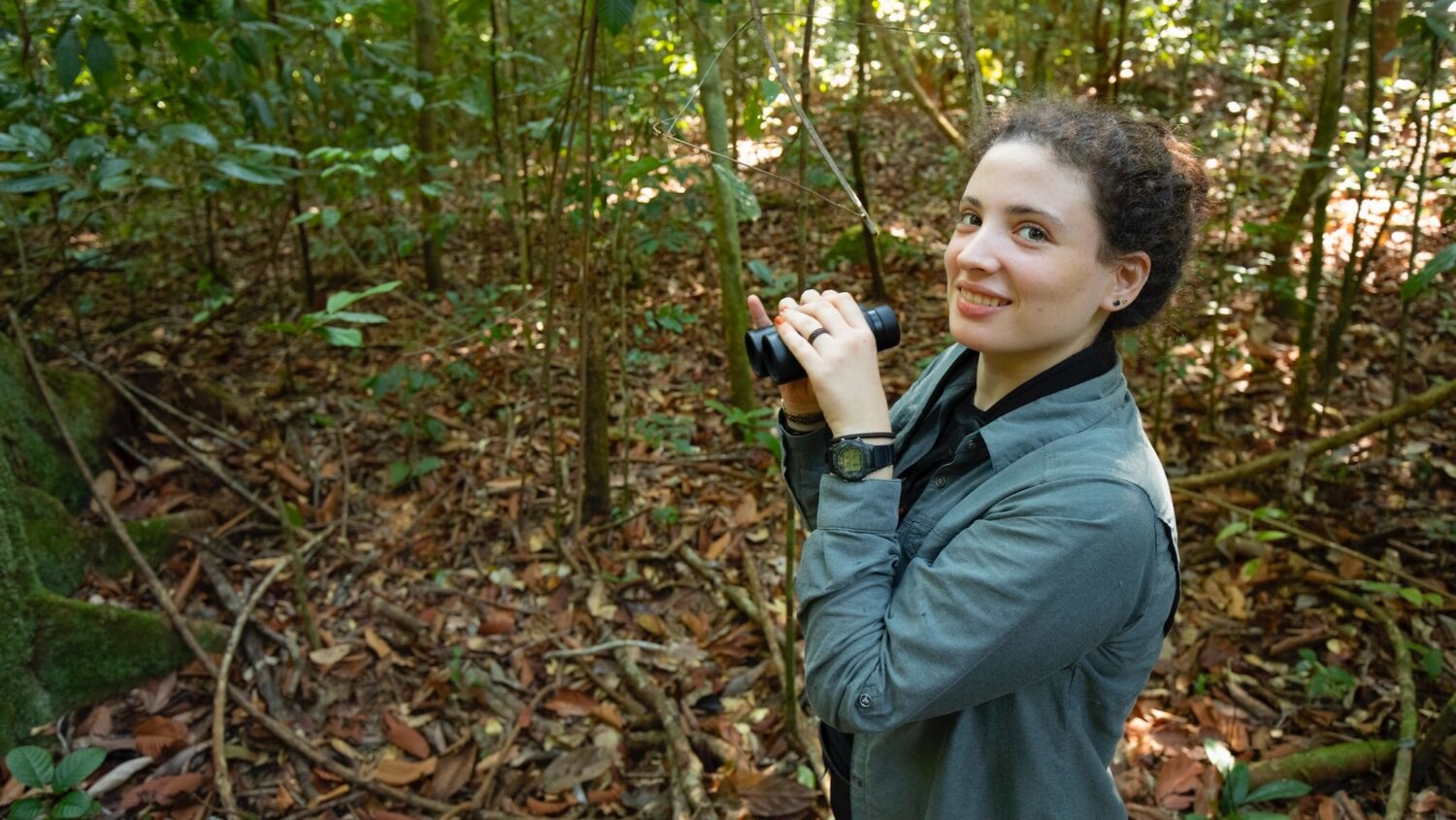
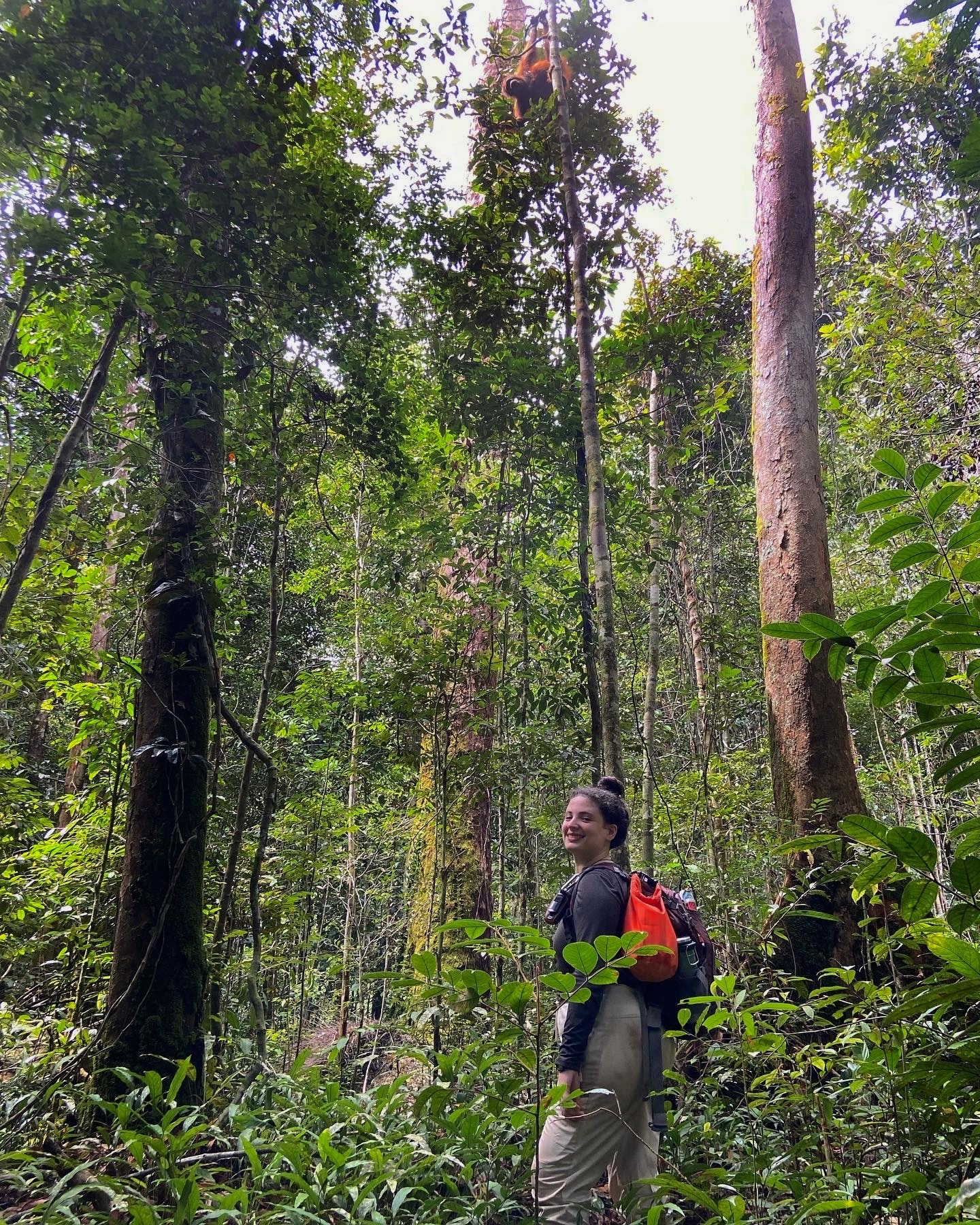
Natalie Robinson is an orangutan researcher, conservationist, and PhD candidate at Rutgers University. She studies how food, energy, and ecology shape reproduction in wild Bornean orangutans. She works at the the Tuanan Orangutan Research Station in Central Kalimantan, Borneo, and has previously worked at the Gunung Palung Orangutan Conservation Program. As of this writing in October 2026, wildfires are burning around both sites.
Natalie received a Leakey Foundation grant in fall 2025 for her research on the connections between ecology and reproduction in Bornean orangutans. Her fieldwork has deepened her passion for community-led conservation, and her research will help us better understand how orangutan physiology responds to ecological conditions such as wildfires and the smoke they produce. Orangutans have the longest birth intervals of any mammal, so understanding how orangutan physiology varies across different conditions is vital for the conservation of this critically endangered species.
Questions and answers with Natalie Robinson
What questions are you most interested in answering with your research, and why?
I am most interested in understanding how the environment at Tuanan, a peatland swamp which is prone to widespread forest fires, influences orangutan reproduction. Orangutans rely heavily on fruit for energy, and sufficient energy is necessary for reproduction. So, I ask how changes in forest-wide fruit availability impact female reproductive function. I am also interested in whether specific nutritional variations can affect ovarian activity, and whether periods of negative energy balance (when energy demands exceed energy intake) can lead females to reduce or even temporarily suppress reproductive activity altogether.
These questions matter because orangutans already reproduce very slowly, and environmental disturbances that alter food availability may have long-lasting consequences for population resilience and recovery. More broadly, by studying how reproductive systems respond to ecological stress in a long-lived, slow-reproducing primate, this research helps illuminate the evolutionary trade-offs that our hominid ancestors would have also faced in variable environments.
Tell us about your Leakey Foundation-supported research project
My research explores how local rainforest ecology, nutrition, and energetics influence reproduction in wild orangutans. I work at a long-term field site, the Tuanan Research Station, in Central Kalimantan, Borneo, Indonesia, where orangutans are observed daily, and biological samples are collected non-invasively.
Using orangutan urine samples, I measure hormones related to reproduction to understand how females’ ovarian activity fluctuates in response to external factors. By combining this hormonal information with detailed observations of orangutan behavior and careful monitoring of environmental conditions, my research takes a holistic approach to understanding how natural environmental variation affects reproductive health and population stability. Because orangutans share key aspects of their biology and evolutionary history with humans, this work also provides insight into the evolutionary roots of human reproductive physiology and how it responds to environmental variation.
How did you become interested in studying orangutans?
I have always been interested in science, but I didn’t always know how I wanted to apply that interest. I arrived at my undergraduate institution as an undeclared major, still exploring different paths. During my first semester, on a whim, I enrolled in an Introduction to Biological Anthropology course taught by Dr. Jeremy DeSilva, and I was instantly hooked. The course introduced me to a field I knew nothing about and showed me this new form of science that intertwines biology, evolution, and behavior.
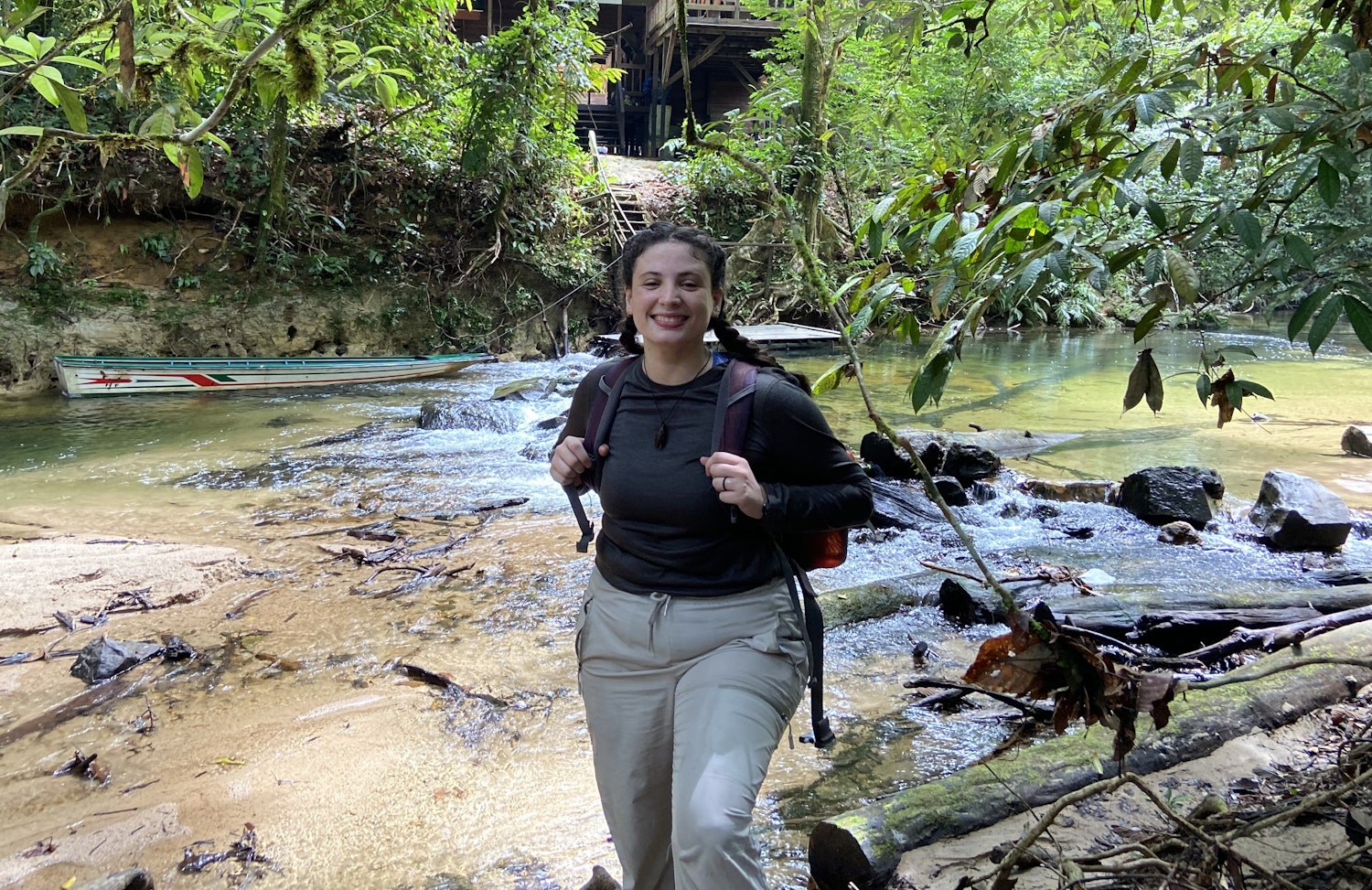
I went on to spend the rest of my undergraduate years working in Dr. Cheryl Knott’s laboratory at Boston University, where I became involved in research on wild orangutans. After graduating, I traveled to Borneo for a year of fieldwork studying orangutans in their natural habitat. Seeing an orangutan in the forest for the first time, after years of analyzing long-term data and biological samples, was a defining moment. I knew then that I had found the work I wanted to pursue, and I have continued studying orangutans ever since.
What impact will your Leakey Foundation grant have on your life and career?
It was a huge honor to learn that I was awarded a grant from the Leakey Foundation. The Leakey Foundation has a long history of supporting transformative research in human origins, and being selected as a grantee felt like a meaningful vote of confidence in my research and my path as a scientist. This support will have a lasting impact on my career, as it enables me to carry out critical field and laboratory work that would otherwise be difficult to fund.
What challenging obstacle or surprising discovery have you encountered in your work so far?
One of the biggest challenges in my work is that orangutans show no obvious external signs of reproductive cycling. Unlike humans, they do not bleed during menstruation, and unlike some other non-human primates, they do not develop visible sexual swellings. This means that to understand their reproductive biology, I must rely on hormone measurements rather than visual cues.
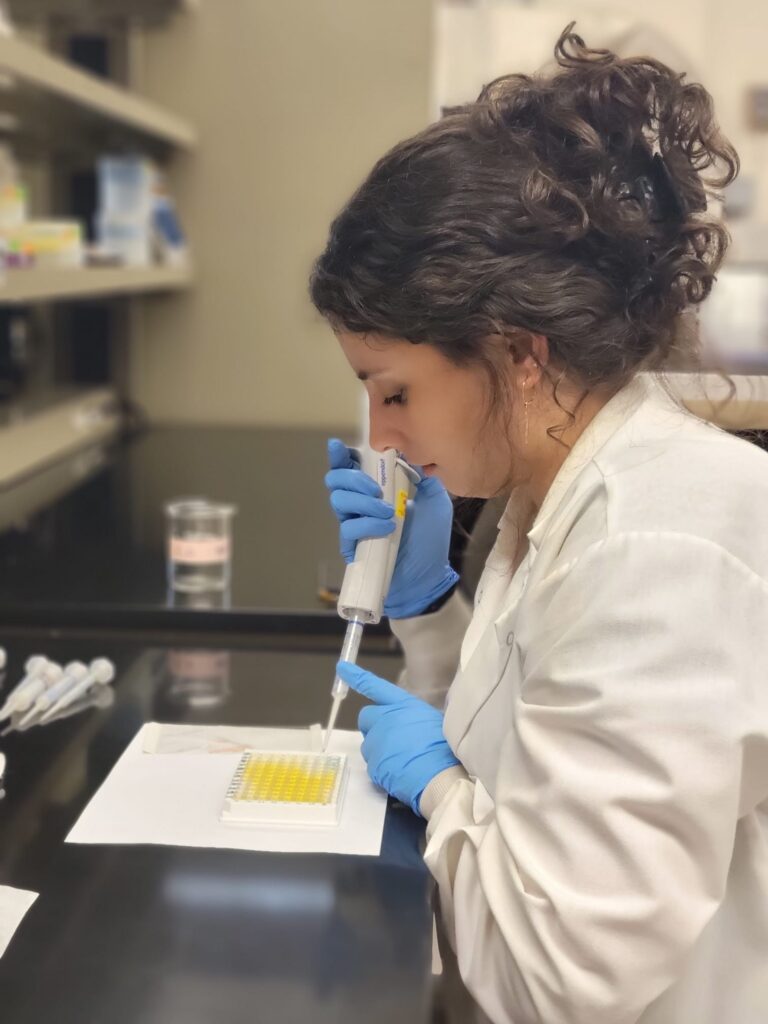
For this project, we needed to develop and validate a method to measure estrogen and progesterone (the primary ovarian hormones) from urine samples collected non-invasively in the forest. There are commercially available hormone kits, but they are designed for human samples and had not yet been rigorously tested on orangutan urine for these specific metabolites. After many hours of laboratory work, my advisor and I successfully validated these methods and demonstrated that the kits reliably measure orangutan hormones without chemical or antibody interference.
One surprising discovery was just how concentrated orangutan urine is compared to human urine. Some samples had to be diluted up to 200 times more than a typical human sample before they could be accurately analyzed!
How can research related to human evolution help us understand or solve a significant challenge we face today?
One reason people should care about this research is that it can help explain why our bodies function as they do and how our bodies respond to environmental stress. Many aspects of human health, including reproduction, have been shaped by evolutionary trade-offs between energy use, survival, growth, and fertility. These trade-offs did not arise in stable environments, but in settings where food availability and ecological conditions fluctuated over time.
By studying orangutans, some of our closest living relatives with whom we share 97% of our DNA, we can gain insight into the evolutionary foundations of human reproductive physiology. My research examines how environmental variation and energy availability influence reproduction in wild orangutans, a long-lived, slow-reproducing primate that experiences natural fluctuations in food resources. Because orangutans and humans share key aspects of life history and physiology, understanding how orangutan reproduction responds to ecological stress helps clarify how human reproductive systems evolved to balance survival and fertility. These insights are especially relevant today, as humans and orangutans alike face rapid environmental change, and orangutans remain critically endangered.
Is there anything we haven’t asked that you’d like readers to know about you or your work?
One thing readers may not realize is just how challenging it can be to collect the kind of data needed to understand orangutan reproduction in the wild. A major fieldwork goal of mine is to follow a single female orangutan continuously for approximately 45 days in order to document an entire ovarian cycle – something that has never before been recorded in a wild orangutan.
Typically, orangutans are followed from the moment they wake up until they build a nest to sleep in at night, and this type of follow is usually repeated for about five consecutive days. To capture a full reproductive cycle, however, I will need to locate a female who is neither pregnant nor nursing and collect daily urine samples across both the follicular and luteal phases of her cycle. This requires maintaining visual contact with the same individual for more than a month in a dense rainforest environment.
Many things can go wrong: she may leave the study area, travel through parts of the forest that have been burned by fires and are difficult to traverse, change nests in the middle of the night, or move to the ground and become too difficult to observe. Successfully completing this work will be a major challenge and would not be possible without the skill, dedication, and knowledge of long-term local field staff.
What’s your favorite mind-blowing fact related to human origins, evolution, or your field?
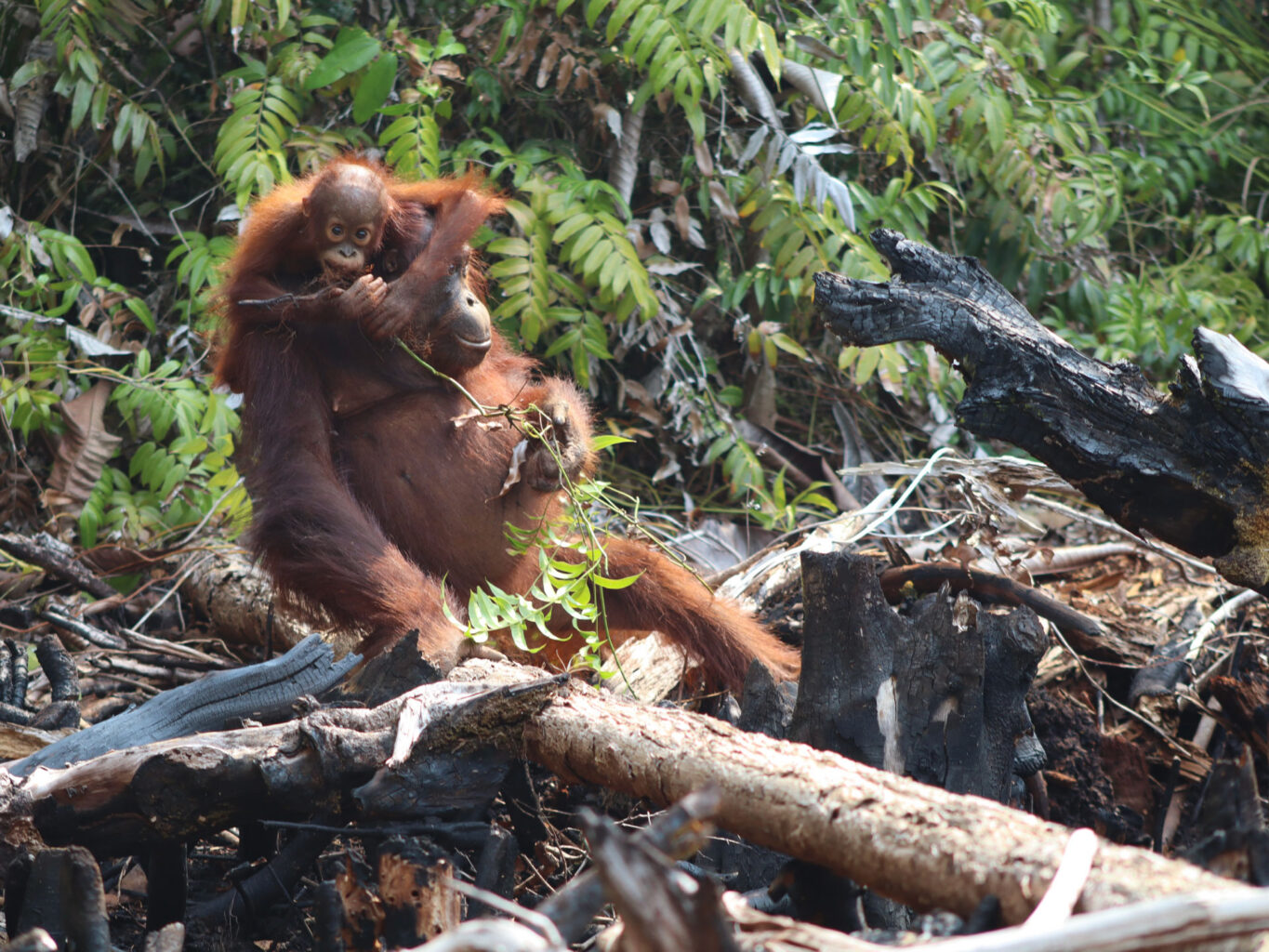
Orangutans have the slowest reproductive rate of any mammal! On average, a female will have only one offspring every 8 years. She nurses and cares for her baby until it is independent enough to survive on its own in the forest, and she typically does not conceive again until her child is between 6 and 9 years old. During this long interval, a mother teaches her child essential skills, from making nests to sleep in, to navigating between hard-to-reach branches, to opening fruits with thick or prickly skins.