
Grantee Spotlight
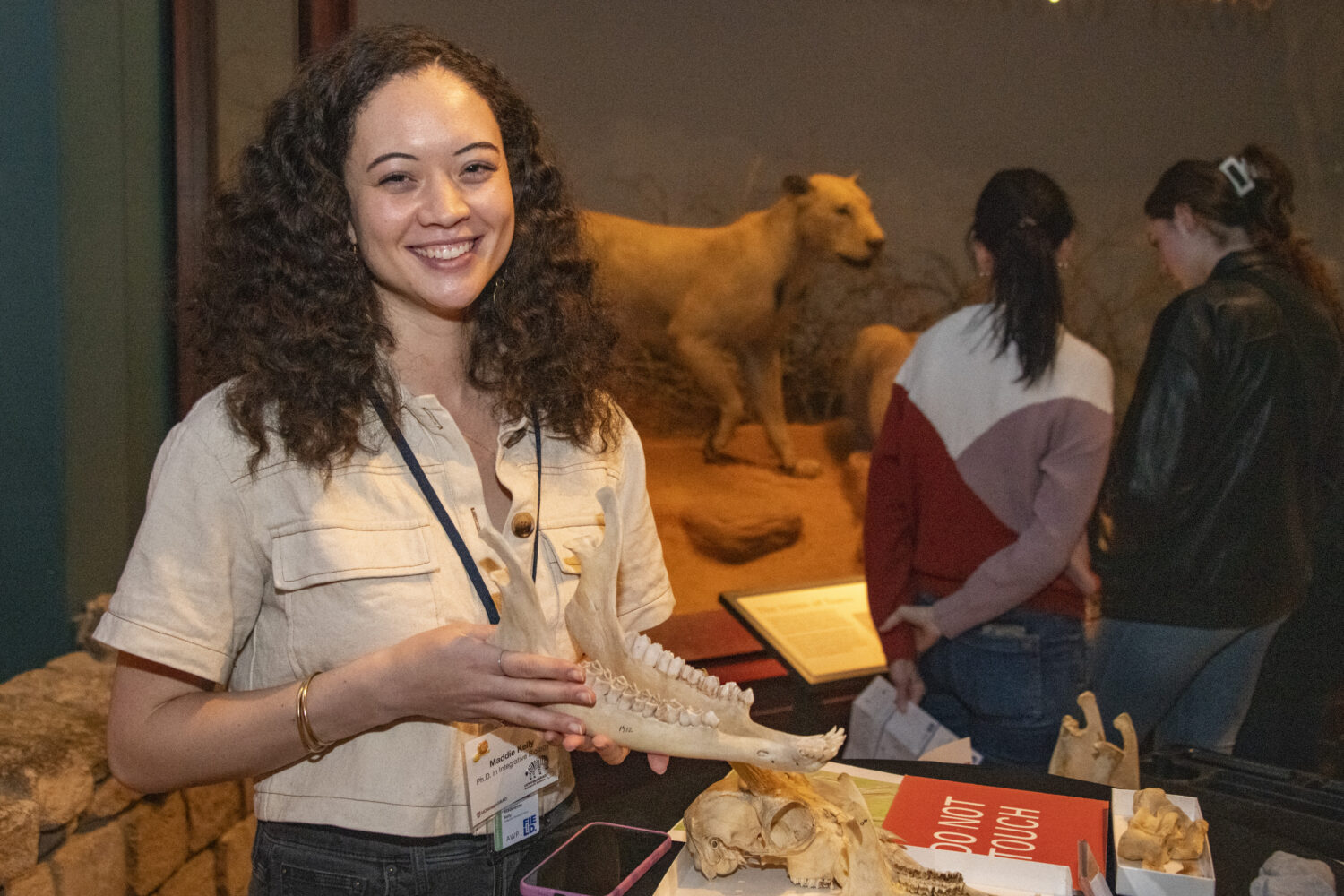
Madeleine Kelly is a 2024 Leakey Foundation grantee and a PhD candidate at the University of Chicago. She studies the environments of hominins in eastern Africa during the early Pleistocene, a key period when Homo erectus first appeared.
Using data from both modern and fossil mammals, such as antelope ankle bone shapes and mammal tooth chemistry, Madeleine Kelly creates models to track changes in tree cover and plant resources across ancient landscapes. Her work helps reconstruct the ecosystems early humans lived in and shows how those environments changed over time.
Her interest in human evolution and paleoecology began during her undergraduate studies and fieldwork with the Koobi Fora Field School. She focuses on understanding early hominins as part of complex ecosystems, examining how environmental shifts influenced their development and interactions with other species.
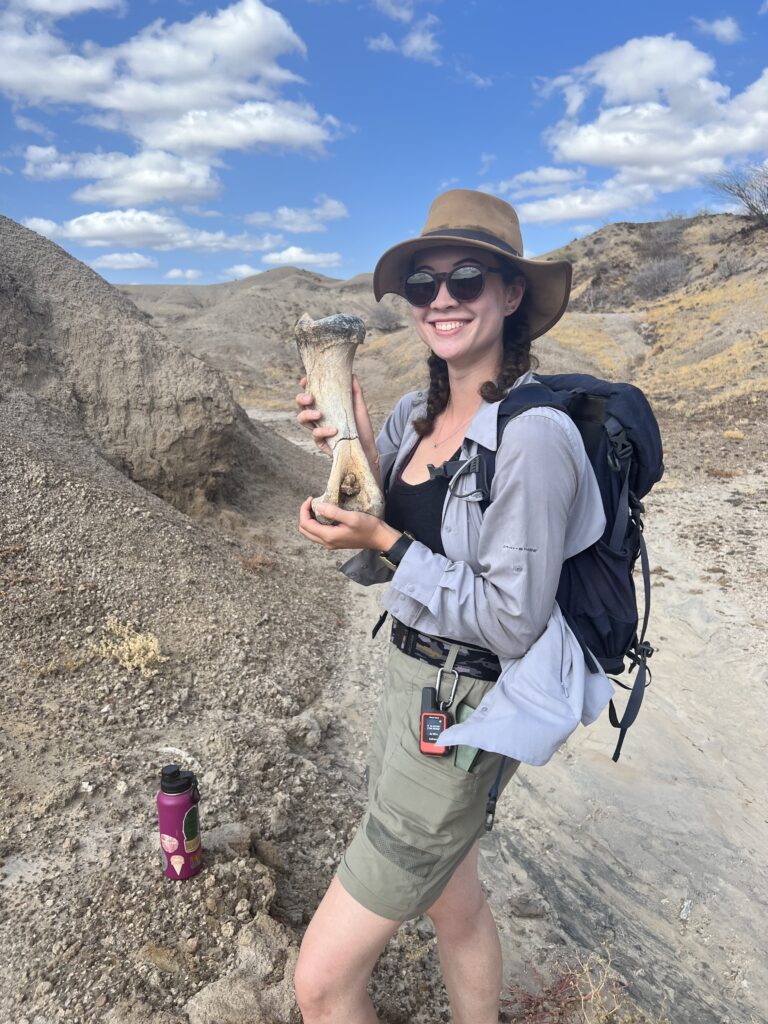
Questions and answers with Madeleine Kelly
Why did you choose to study human origins and paleoecology?
I have loved science for as long as I can remember, but I really discovered my interest in human evolution and paleoecology as an undergrad. When I started college, I had been working on a personal genealogy project, so questions about my own family’s heritage were on my mind as I enrolled in a course on human ancestry and genetics. I was captivated by the bigger picture of human origins, and from there, dove into a major in Human Evolutionary Biology.
Later, my first experience with field work with the Koobi Fora Field School in 2019 firmly solidified my interest in paleoanthropology. I fell in love with the sense of adventure and discovery that comes with doing field work, and I loved the chance to work hands-on with fossils. I discovered that what interested me the most was understanding the entire animal community, of which our hominin ancestors are just one part. Since then, my goal has been to understand hominins as a part of a dynamic ecosystem, and shed more light on how interactions with the environment shaped our species’ evolution.
What big questions guide your research?
The big question driving my research is: what was the environmental context of early Pleistocene hominin evolution? This time period is particularly interesting to me, because it is when the species Homo erectus first appears in eastern Africa. I want to explore what factors in the environment changed to prompt the evolution of more human-like features in H. erectus, compared to the more ape-like features of earlier species. Additionally, there are at least three other hominin species coexisting with H. erectus in Africa during this time. I want to better understand how the habitats they lived in varied, to ultimately help develop new hypotheses about how these different species may have competed or divided the resources available in the environment. However, we need a more detailed picture of past environments to shed light on these broader questions regarding hominin evolution and diversity. Therefore, my research explores how using different sources of data to reconstruct environmental conditions can complement each other, as well as how new methods can generate higher-resolution paleoenvironmental reconstructions.
Tell us about your Leakey Foundation-supported project
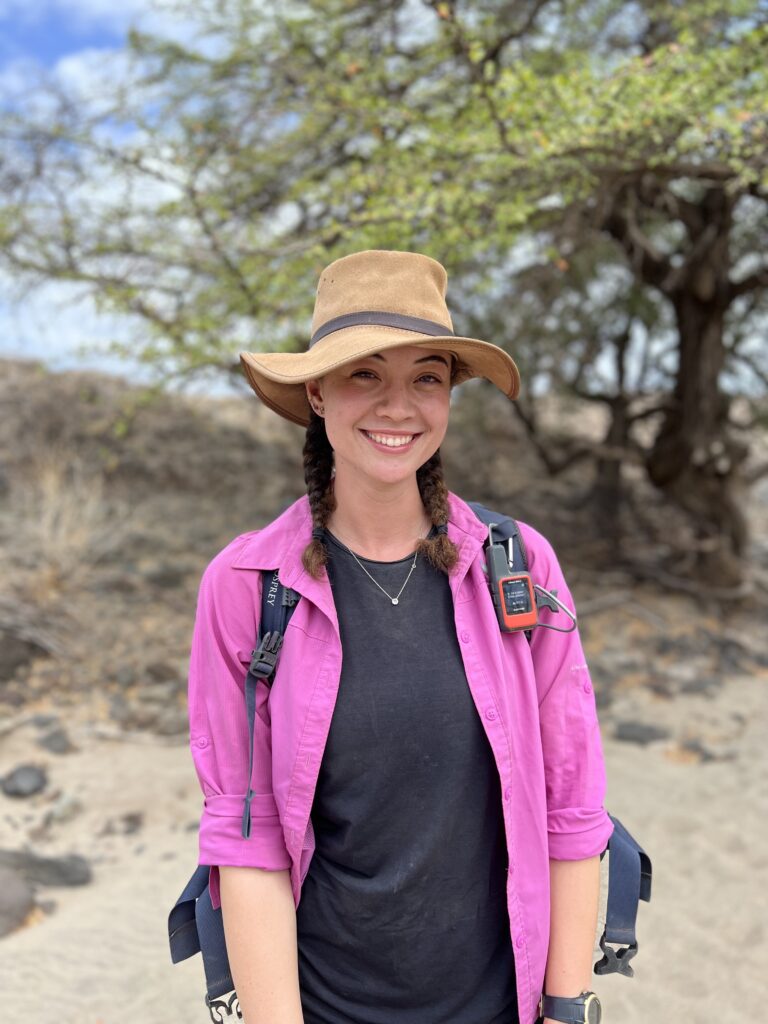
My project focuses on characterizing the types of environments our early ancestors lived in, specifically in eastern Africa. This is important because in order to understand an animal’s biology, we must have a clear understanding of its habitat. Knowing an animal’s habitat allows us to infer the challenges it might have to overcome in its environment, and in turn, how those challenges may drive evolution over time. Humans are no exception.
The environments that our ancient ancestors lived in can tell us a lot about why we evolved to look the way we do today. Previous research shows that our hominin ancestors lived in complex and highly variable environments, ranging from woodlands to open grasslands. However, the exact ways in which that environmental variability drove our evolution remain unclear. My project aims to improve our knowledge of how environmental changes might have driven the development of traits that make us uniquely human, such as walking efficiently on two legs and making sophisticated stone tools. To do this, I am developing models based on what we know about modern African ecosystems. I am analyzing data from the mammal community, including the shapes of antelope ankle bones and the chemical composition of mammal teeth, to model how tree cover is distributed across the continent. I will then input similar mammal data from the fossil record into my models to reconstruct how tree cover varied across space in the past. This work will ultimately help generate new ideas about how changes in the distribution of plant resources on the landscape may have shaped our species’ unique evolutionary trajectory.
How did you feel when you learned you’d been selected for a Leakey Foundation grant?
I was thrilled to hear that I received a Leakey Foundation grant for my dissertation research. It felt incredibly validating to learn that senior researchers in the field saw promise in my research. That gives me a boost of confidence moving forward. The funding will allow me to travel to museums around the world to build a robust dataset of both modern and fossil data, which will ultimately make my dissertation much stronger, and provide me with an excellent foundation for my future career.

Why is work like yours so important?
I think my research, and paleoecology research generally, has two important, broader implications. First, studying hominin paleoecology means studying humans as part of an intertwined animal community. This perspective is important, because it is another reminder that the ways we alter the environment have great consequences for not only ourselves, but also for the other living things that we share the planet with. Additionally, better understanding the environments that our early ancestors evolved in ultimately helps us understand why we evolved into the unique species we are today. Because we are now changing the world around us faster than our bodies can keep up, this knowledge of the environmental context of our evolution is more important than ever. By improving our understanding of the habitats, diets, and lifestyles of our ancestors, we can better tune our diets, medical care, or even the ways we exercise, to our unique biology.
What’s your favorite mind-blowing fact about human evolution?
My favorite human origins fact is that it was only really recently that humans became the only hominins, bipedal apes, on the planet. For most of our evolution, our ancestors shared the planet with at least one or more other hominin species. How exactly our ancestors and evolutionary cousins interacted millions of years ago is still up for debate!