
Grantee Spotlight
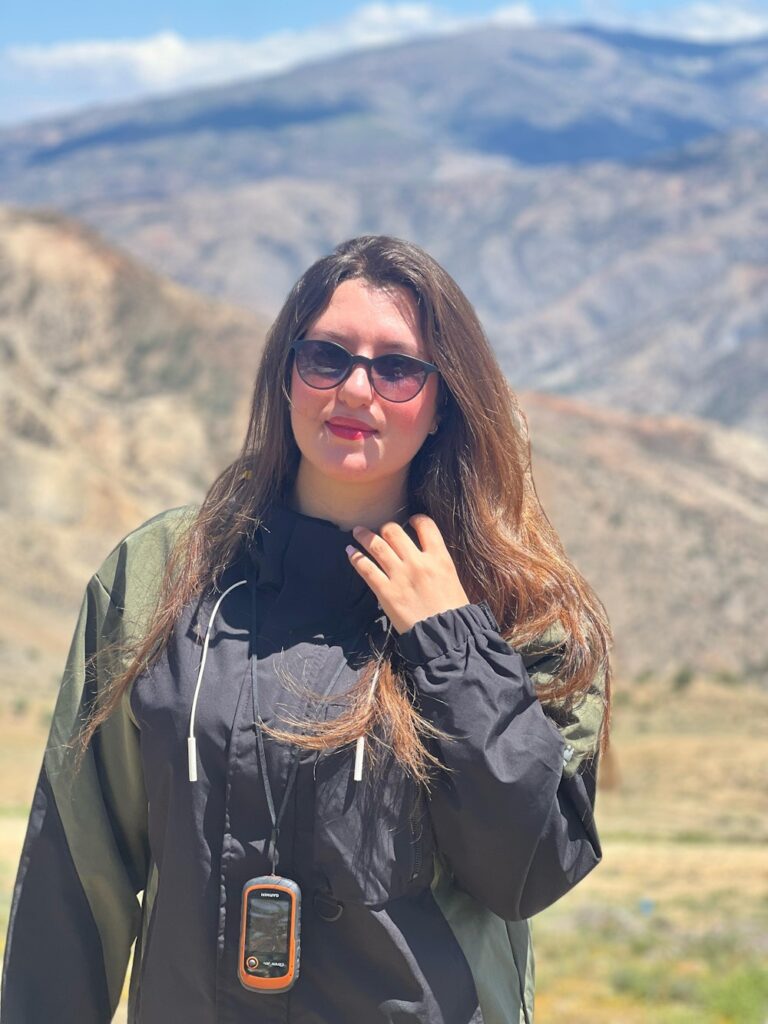
Majda El Bouhamdi is a PhD student in primatology and a science teacher at Ibn Tofail University, Kenitra. She is a 2025 Leakey Foundation Baldwin Fellow from Morocco, whose research focuses on the Barbary macaque. Majda is investigating how environmental pressures, physiological stress, and genetic diversity influence social behavior in Barbary macaques in the fragmented habitats of Morocco’s Rif Mountains. She has a background in biodiversity, ecosystem management, and conservation, holding a master’s degree in oceanography and a bachelor’s degree in biotechnology from Abdelmalek Essaadi University.
Questions and answers with Majda El Bouhamdi
Can you tell us about your research?
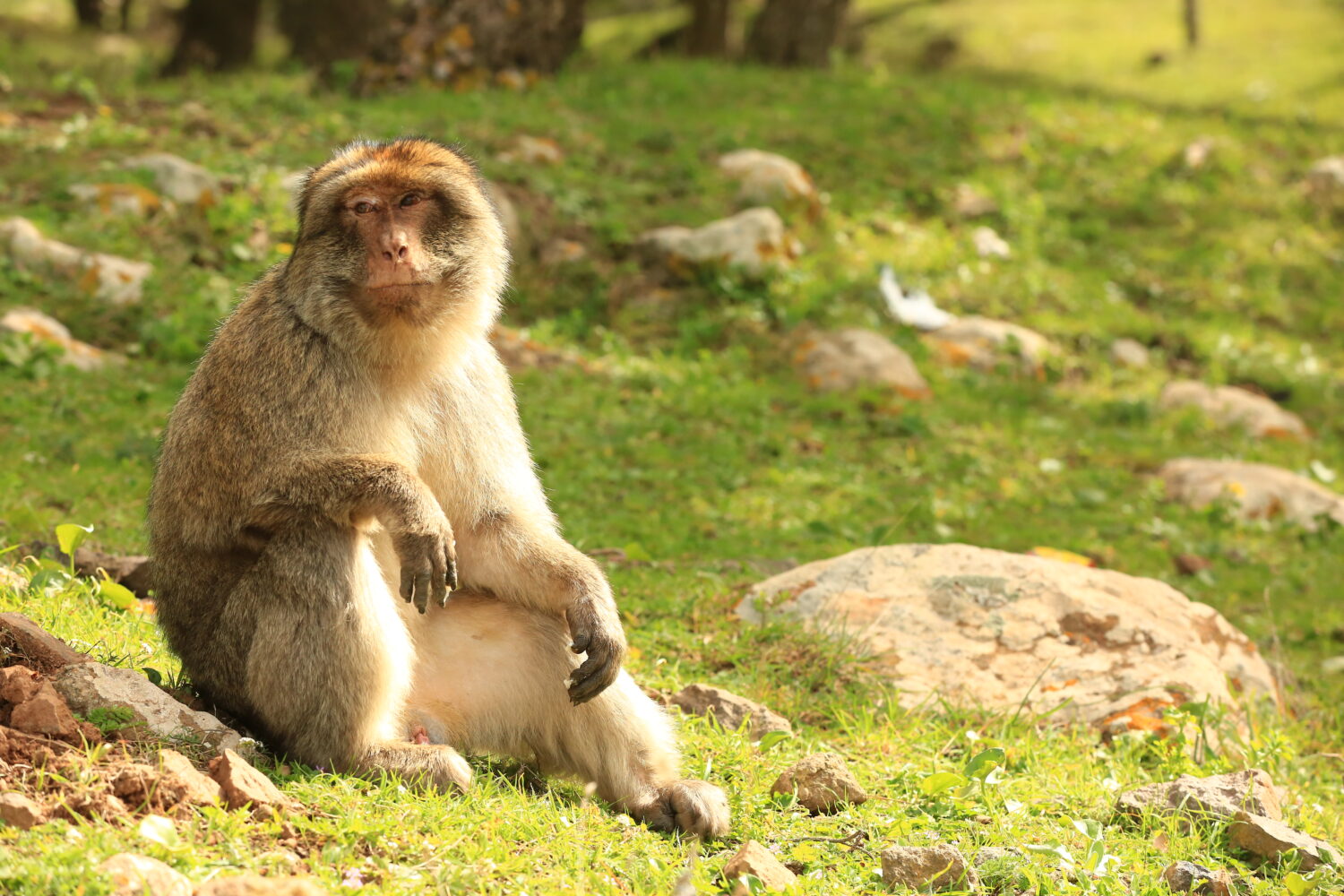
My research focuses on the Barbary macaque, a unique species of monkey that lives in North Africa. These monkeys are unique; not only are they the only macaques outside of Asia, but they’re also the only wild monkeys living north of the Sahara Desert. Barbary macaques are highly social and live in multi-male, multi-female groups. They are notable for male-infant bonding. They survive in rugged mountain forests and have developed strong social bonds to help them cope with harsh weather and food shortages.
With support from The Leakey Foundation, I will gain the advanced training and tools I need to understand how Barbary macaques respond to environmental and human challenges, insights that are important for both conservation and evolutionary science. I use non-invasive methods like collecting feces to examine their genetic diversity and stress levels while also observing how they cooperate with each other.
What do you hope to learn by studying Babary macaques?
The Barbary macaque gives us a living window into the past. Like early humans, they rely on social cooperation to survive in tough environments. By understanding how macaques adapt to stress and isolation, we can gain insights into how our own ancestors might have responded to similar challenges as they spread into new habitats.
What are some of the questions you’d love to answer?
How does isolation affect Barbary macaques’ genetic diversity and stress levels? Many macaque populations in Morocco are separated by fragmented forests. I want to know if this isolation is leading to lower genetic diversity and higher stress, which can make survival more difficult.
How do food availability and human presence influence their social behavior? Barbary macaques are highly social and cooperative, but I want to explore whether limited resources and human disturbance are changing how they interact, whether they’re becoming more aggressive or less affiliative of one another.
What can their responses teach us about early humans? These monkeys are a valuable model for understanding how social mammals, including our own ancestors, adapted to challenges like environmental change, isolation, and stress. Studying them could, along with other research, help us build a fuller picture of how early humans might have survived in similar conditions.
How did you become interested in primatology?
I have always been passionate about science and have followed a scientific path with curiosity. I began with a focus on marine biology and conservation, where I built a strong foundation in biodiversity and ecosystem management. Over time, I became especially interested in how animals adapt to environmental change and human pressure, questions that led me to primatology.
The Barbary macaque, with its unique distribution in Morocco, ecology, and social behavior, caught my attention. Seeing these monkeys in their natural habitat in Morocco, my home, was a turning point. It is how primatology brings together everything I care about: science, conservation, and understanding our shared history.
How did you feel when you learned you had received a Baldwin Fellowship?
When I got the notification of approval, it was a moment of real pride and happiness. It felt rewarding to see that my efforts were recognized. More importantly, it gave me a renewed sense of motivation and an extra push to dive deeper into research and keep expanding my knowledge in this field.
Also, when I had the chance to meet the travelers from The Leakey Foundation’s Fellows Tour in Rabat, it was another meaningful moment for me. The conversations were engaging and encouraging, and I felt truly recognized by the foundation through their genuine interest in my work and journey.

What are the challenges of working in the Rif Mountains?
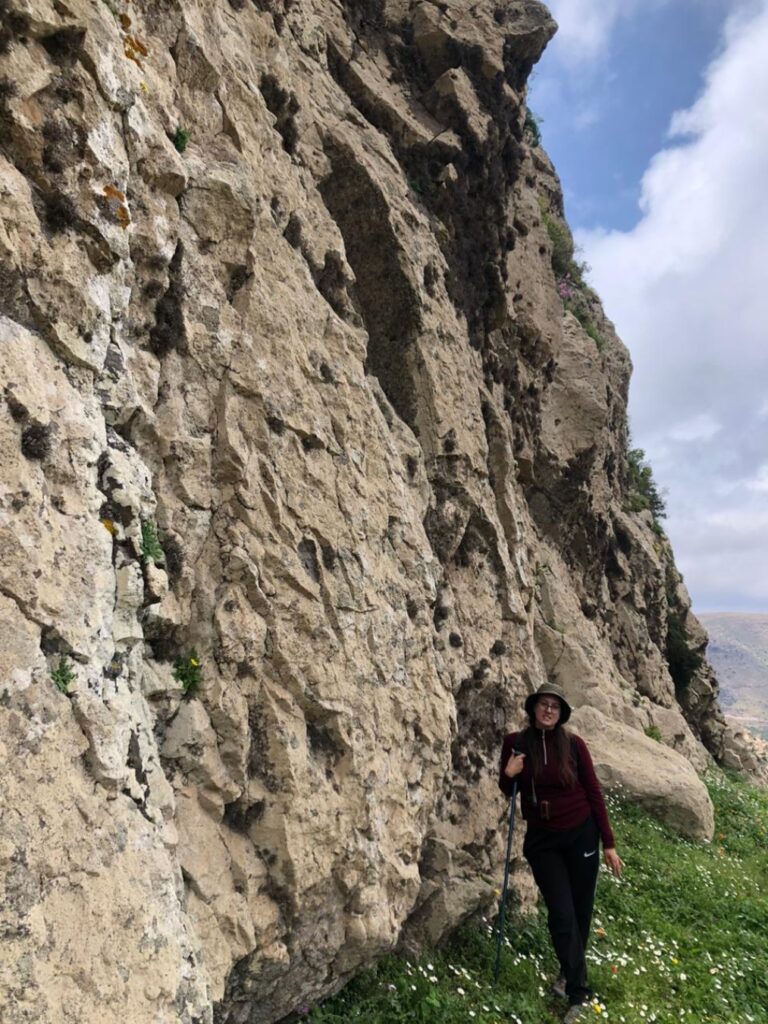
One of the biggest challenges I have faced is working in remote forested areas where access can be very difficult. Harsh weather, steep terrain, and limited infrastructure often make fieldwork physically demanding and logistically complicated. Sometimes, even reaching the study site requires hours of hiking and careful planning.
At the same time, watching how Barbary macaques support each other through grooming, huddling, or sharing space has been fascinating. It reminds me that cooperation is not only a survival strategy for humans but also deeply rooted in other primates.
Do you have a favorite fun fact about Barbary macaques?
In Barbary macaques, it’s not just mothers who care for babies; males and even other group members help too. It’s amazing to see how deeply rooted caregiving and cooperation are, even in our non-human primate cousins.

Why is it important to study human origins?
Human origins research helps us understand who we are, where we come from, and how we have adapted to the world around us. It helps us understand the roots of our behavior, resilience, and connection to nature and the challenges we face today. I think one of the biggest challenges we face today is how to adapt to a rapidly changing world. My research, and human evolution studies more broadly, help us understand how social species like ours have handled similar challenges in the past.
By studying Barbary macaques, a highly social, endangered primate living in fragmented and often degraded environments, we can understand how cooperation, stress management, and genetic diversity contribute to survival. These monkeys, like early humans, rely on strong social bonds to cope with scarcity and isolation. Their responses can give us valuable clues about the limits and strengths of adaptation, especially in small or stressed populations.
Is there anything else you’d like to share that we haven’t asked about?
Yes, I would like people to know that my work is deeply rooted in both science and hope. As a Moroccan woman in science, studying the Barbary macaques in the forests of my own country, I feel a strong responsibility to protect both our natural heritage and the knowledge that comes from it.