
Grantee Spotlight

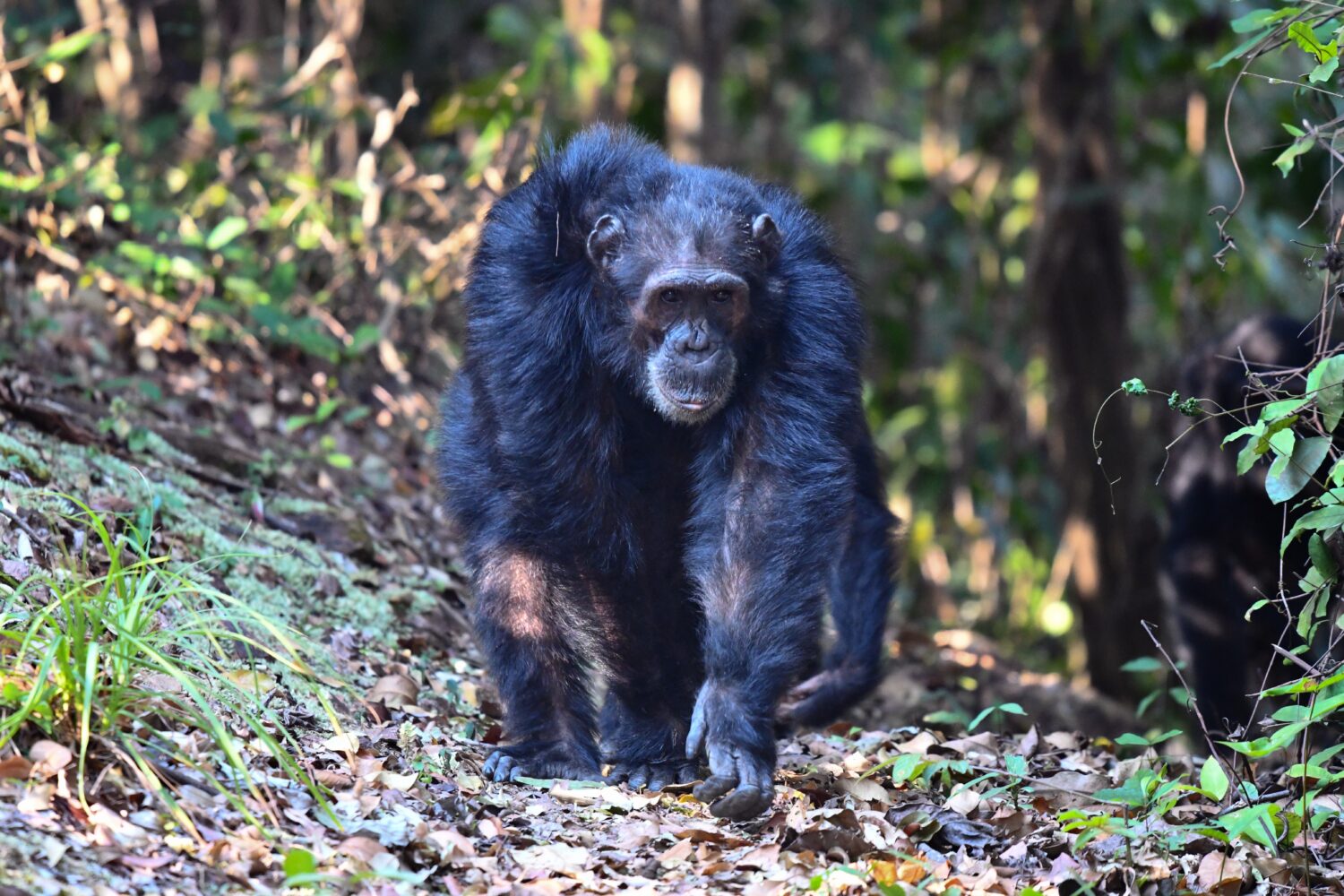
Why do chimpanzees at some field sites spend more time in large groups while others tend to travel in smaller, more fragmented parties? Researchers have long pointed to food availability as the answer. But Maggie Hoffman, a PhD candidate at Arizona State University, thinks terrain may be part of the story too.
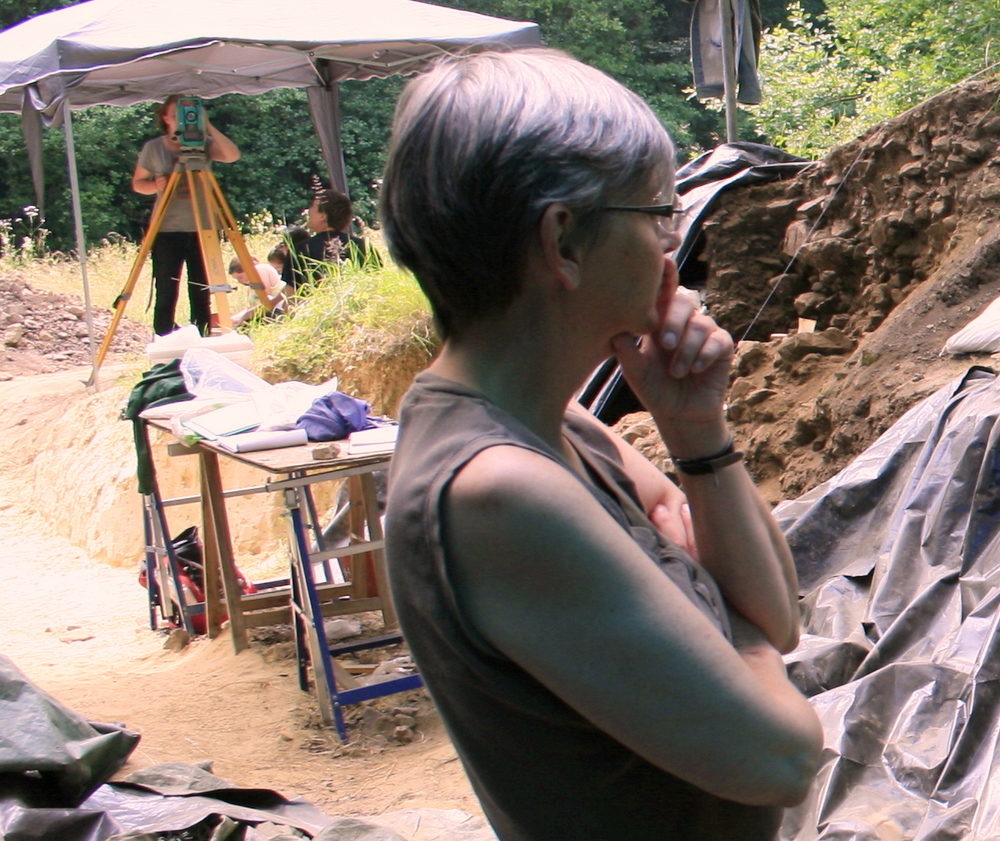
Maggie received a Leakey Foundation research grant in 2025 to study how the steepness and variability of terrain influences travel decisions and social behavior across three wild chimpanzee communities in East Africa: Gombe, Kanyawara, and Budongo. The three sites differ considerably in terrain, making them a natural comparison point for a question that hasn’t been examined much in previous research.
The logic is straightforward but the implications run deep. Traveling uphill costs more energy than traveling on flat ground. As groups get larger, animals have to travel farther to meet their collective needs. If terrain makes that travel more costly, it may constrain who chimps choose to move with, and how often. Terrain, in other words, may be quietly shaping social life.
That matters for understanding chimpanzees. It also matters for understanding us. By examining how terrain influenced travel and sociality in our closest living relatives, Maggie’s research offers a new lens on the selective pressures that shaped hominin social behavior, habitat choice, and possibly the evolution of bipedalism itself.
Questions and answers with Maggie Hoffman
What sparked your interest in studying wild chimpanzees?
I have always been interested in animals and science but I first became interested in primatology specifically when I took a course called “Primate Social Behavior” during my undergraduate degree. It was my favorite class and just a few weeks into the semester I decided that I wanted to become a primatologist.
What big questions are you most interested in answering with your research and why?
I am investigating how the terrain in different wild chimpanzee habitats influences the chimps’ travel decisions and social behavior. I’m asking whether differences in terrain across field sites contribute to intraspecific variation in wild chimpanzee social behavior.
I’m most interested in answering this question because the connection between terrain, travel, and sociality has not been examined much in previous studies. I’ve observed significant differences in both chimp social behavior and the terrain they traverse, especially its steepness, first hand in my previous fieldwork.
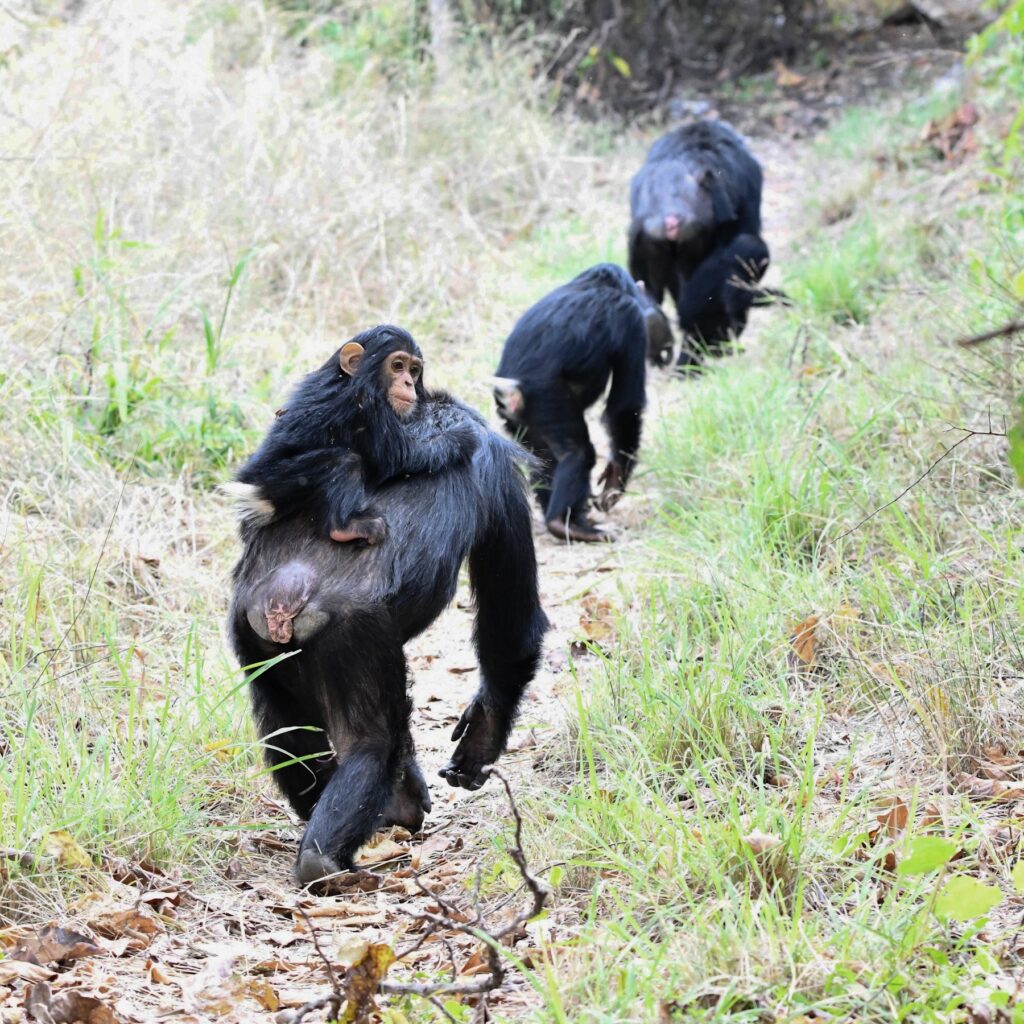
How did you feel when you learned you received your Leakey Foundation grant?
I was so excited when I found out I received my Leakey grant! I’m incredibly passionate about my dissertation project and these funds are making my fieldwork and data collection possible.
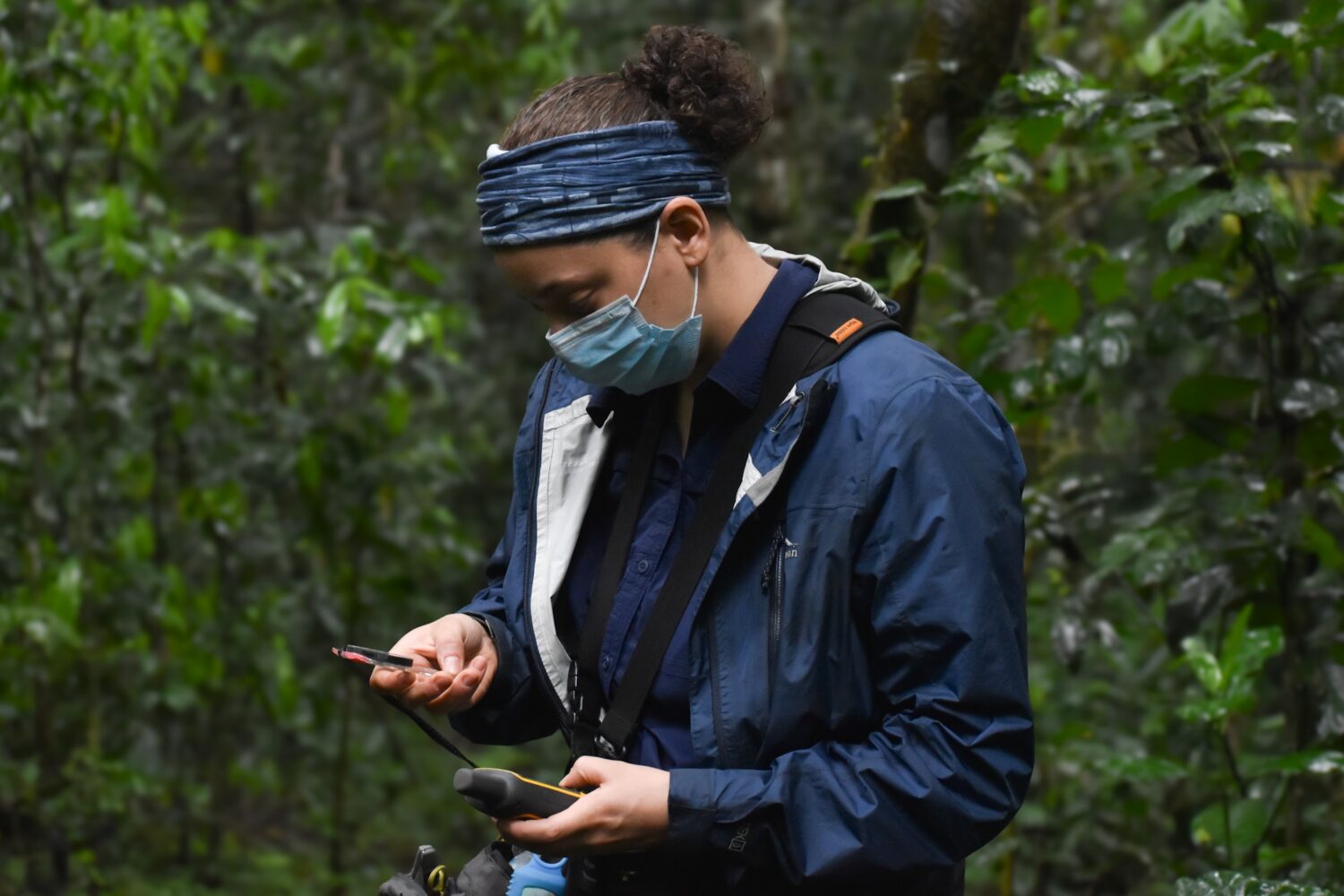
What has your experience of field work been like? Have there been surprising challenges?
Fieldwork with wild primates is very challenging, both physically and mentally! There are new unexpected obstacles every day and part of being a good field primatologist is learning to be flexible and adaptable when things go wrong, like when you can’t find the chimps for days on end, your equipment breaks, or you learn something new about your study population that means you have to change your data collection protocols despite months of planning.
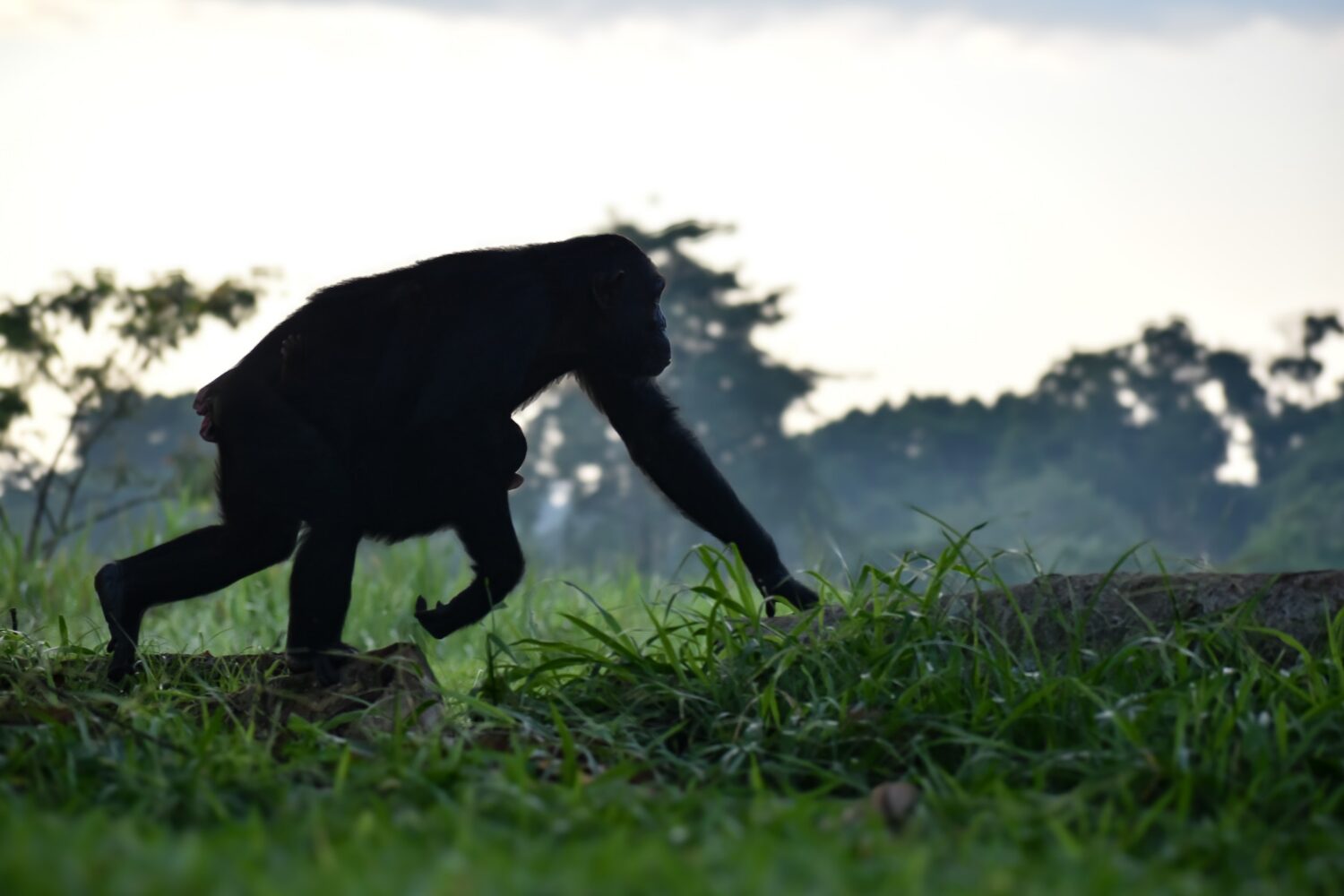
Why should people care about human origins research?
Human origins research helps us understand more about our past but can also inform the present and the future.
Learning more about our ancestors and our closest living relatives can help us understand our own behavior and health from an evolutionary perspective. Research with chimpanzees for example has taught us more about our own sociality, healthy aging, responses to disease, and much more! Continuing to discover more will help us better understand and combat the many problems that we as humans continue to face in these areas.
What’s your favorite mind-blowing fact related to human origins, evolution, or your field?
Chimpanzees sleep in nests every night, just like humans! Human nests are just called beds. Unlike most humans, every time a chimp goes to sleep (either at night or for a nap during the day) they make a new nest and they never reuse old ones. Chimps also don’t share nests, they each sleep alone in their own individual nest. The only exception is mothers with infants – they sleep together!
See more of Maggie’s wildlife photography on Instagram!