
Grantee Spotlight
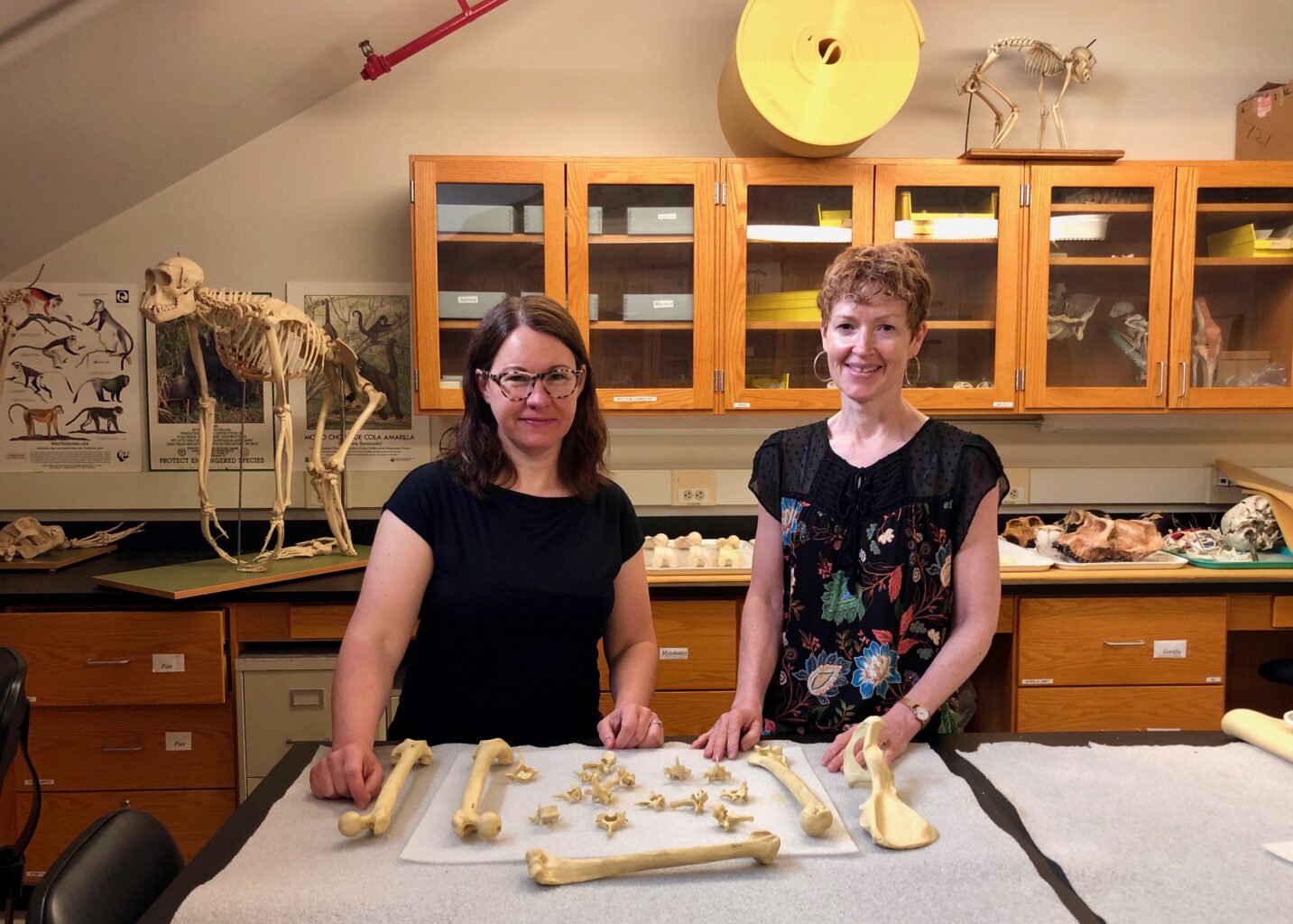
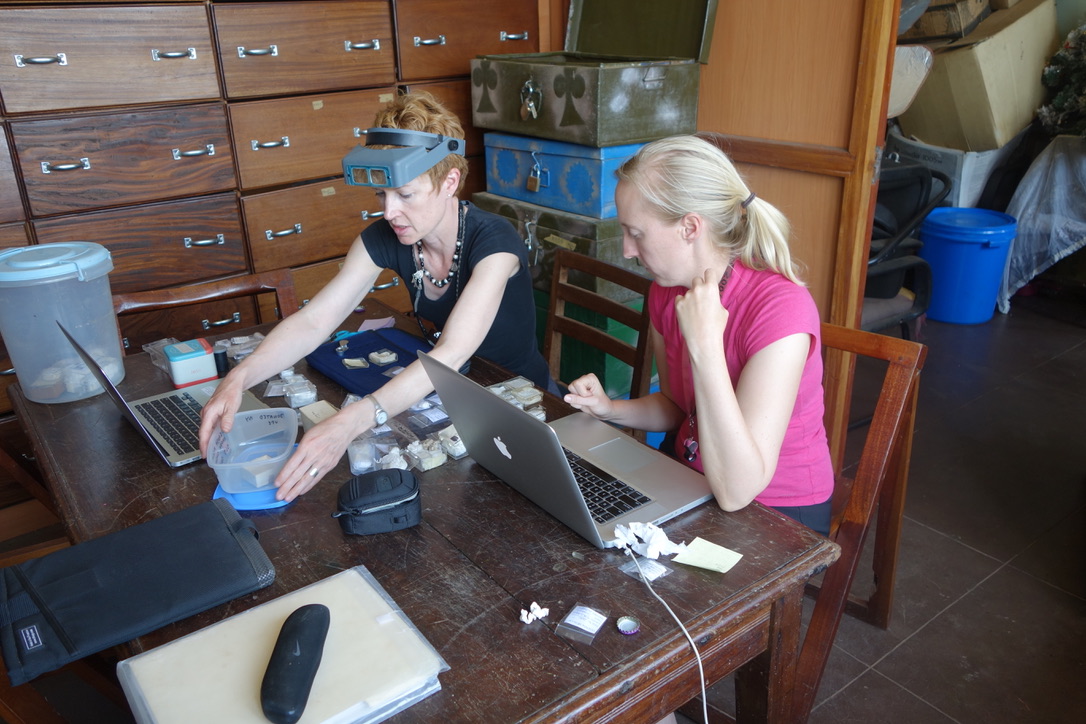
Laura MacLatchy is a Leakey Foundation grantee and a professor in the Department of Anthropology at the University of Michigan. She is a paleoanthropologist interested in understanding the relationship between biological form and function. Her research focuses on the evolution of primate locomotion as well as ape and human origins. Her Leakey Foundation-supported project investigates ancient apes of Uganda at an extinct volcano called Napak, analyzing fossils and chemical signatures in teeth and soils to understand their diets, how they moved, and the environments they lived in.
Inspired by advice from Richard Leakey early in her life, Laura studied biology and geology before earning her PhD and becoming a paleoanthropologist. Now, her research is challenging old assumptions that linked the expansion of grasslands in Africa to the evolution of numerous human traits, including walking on two legs, using tools, and hunting.
Questions and Answers with Laura MacLatchy
Tell us about your Leakey Foundation-supported project.
Traditionally, scientists thought the earliest apes lived in forests, and that the human lineage branched off from other apes around 7 million years ago and began living in habitats that were less forested and more grassy. Features such as bipedalism have been tied to this move away from the forest. However, fossil discoveries in Uganda have shown that the earliest apes already lived in grassy woodlands going back as far as 20 million years ago. This causes us to question the view that human origins are associated with more open, diverse ecosystems that were not available until ~10 million years ago.
This project will continue investigations into the ancient apes of Uganda at an extinct volcano called Napak. We will analyze any new and previously collected fossil apes to reconstruct how they moved and what they ate. We will study the diets of other fossil mammals by analyzing chemical signatures in their teeth. And we will use chemical signatures preserved in ancient soils to reconstruct climate and vegetation. By putting all these lines of evidence together, we will get a better understanding of how early apes survived and thrived in these grassy woodlands. This, in turn, will help us interpret how and why human ancestors, living in similar environments, nonetheless evolved in a different direction.

How and when did you become interested in human evolution?
I was interested in fossils and human evolution from an early age, thanks to my parents’ subscription to National Geographic magazine. In its pages, I learned about Louis Leakey and Richard Leakey’s fossil discoveries. When I was 16, I wrote to Richard Leakey and told him I was going to go to a small college in my hometown in Canada, but that there were no opportunities to study anthropology or paleontology. He told me to take lots of science in general- biology and geology- and then try to get into graduate school. I did just that!
What big questions guide your research?
I am interested in understanding as much as I can about how and why the signature adaptations of apes and humans evolved, such as slow life history, large body size, and versatile locomotion.

How did you feel when you learned you’d been selected for a Leakey Foundation grant? What will this funding help you do?
This grant is very important to me. It will allow me to finish—or come close to finishing—a field work project that I started as a graduate student almost 30 years ago.
Why is this kind of research important?
Learning about human evolution is how we discover our place in nature, and for some of us, how we come to terms with our mortality.
What’s something you wish more people understood about human evolution?
The brains of our ancestors didn’t start getting big until about 2 million years ago, so it only took us 2 million years—just a blink in evolutionary time—to take over the world.