Grantee Spotlight
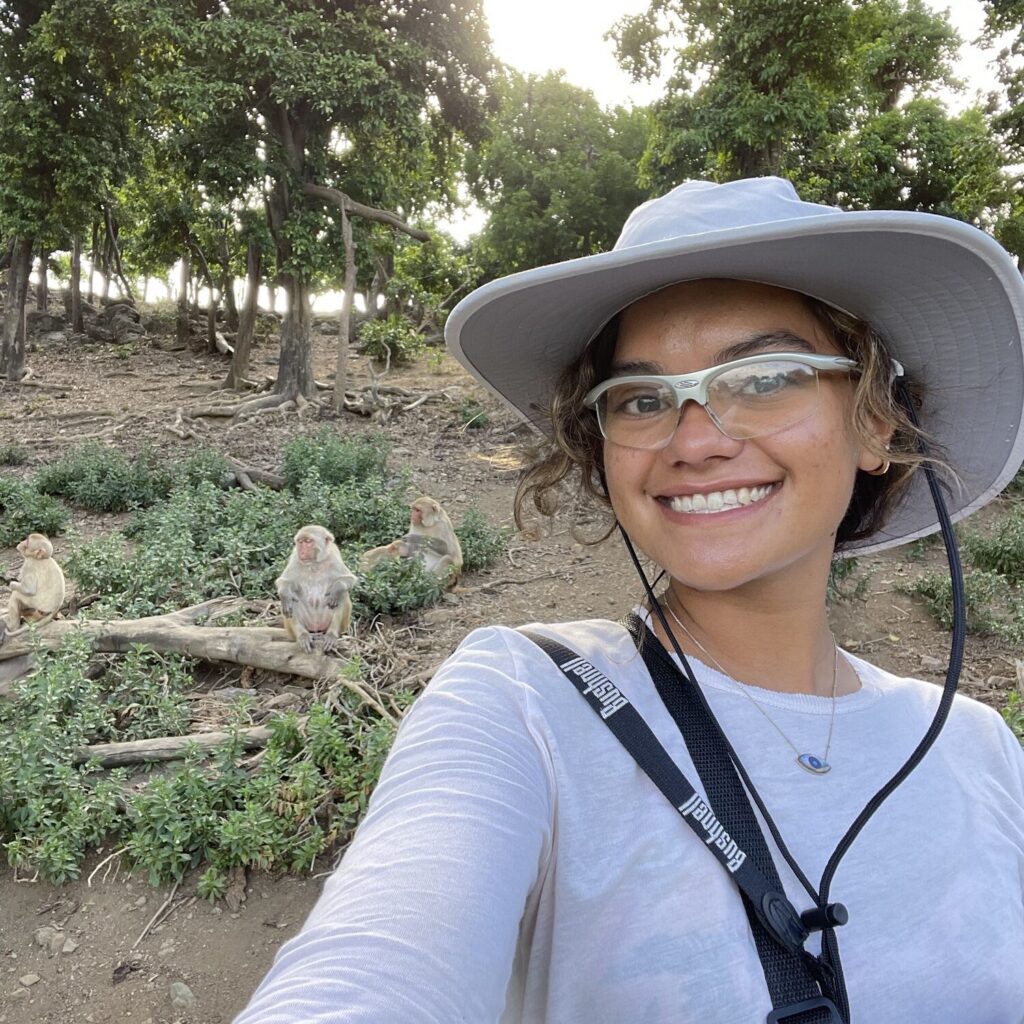
Kandra Cruz Cuberos studies female rhesus macaques on Cayo Santiago, Puerto Rico, where a free-ranging research colony has been studied for decades. Kandra’s dissertation research focuses on how mothers balance their offspring’s energy needs with their own. She is a PhD candidate at New York University, a Leakey Foundation grantee, and a first-generation scientist. Her work will help us better understand this fundamental question in biology and will give new insights into reproductive energetics, aging, and parental investment in their young. We asked her about her career path, her research, and her fieldwork experience.
How did you first become interested in primates and biological anthropology?
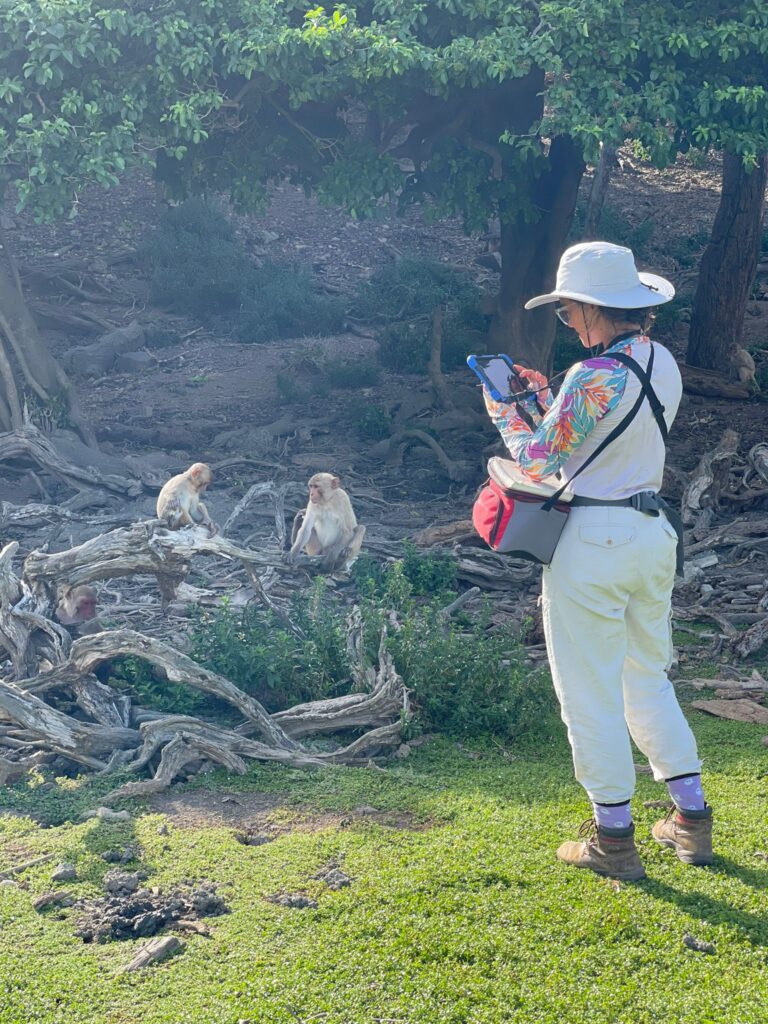
I was not one of those people who always knew they wanted to be a scientist. As an undergraduate, I was actually on the pre-med track and took an introductory anthropology course simply because it was required for my degree. I still remember sitting in class thinking that my professor was one of the smartest and most interesting people I had ever met. I wanted to understand the world the way he did.
That course was also my first real introduction to evolution, primates, and ecology. I was fascinated. Until then, I had never considered that there were careers studying animals outside of becoming a veterinarian. The idea that someone could spend their life asking questions about evolution, behavior, and our place in nature was completely new to me. At one point, I remember thinking, “Wait, I could follow monkeys around for the rest of my life? That sounds amazing.”
After that, I started looking for volunteer opportunities in research labs at my university. What began as curiosity quickly turned into a passion for research, fieldwork, and understanding how animals navigate their environments. Each opportunity led to another, and before long I found myself studying primates, collecting behavioral data, and asking questions about the evolutionary origins of human biology. Looking back, that one introductory anthropology course completely changed the direction of my life and set me on the path to becoming a biological anthropologist.
What is the focus of your Leakey Foundation-supported project?
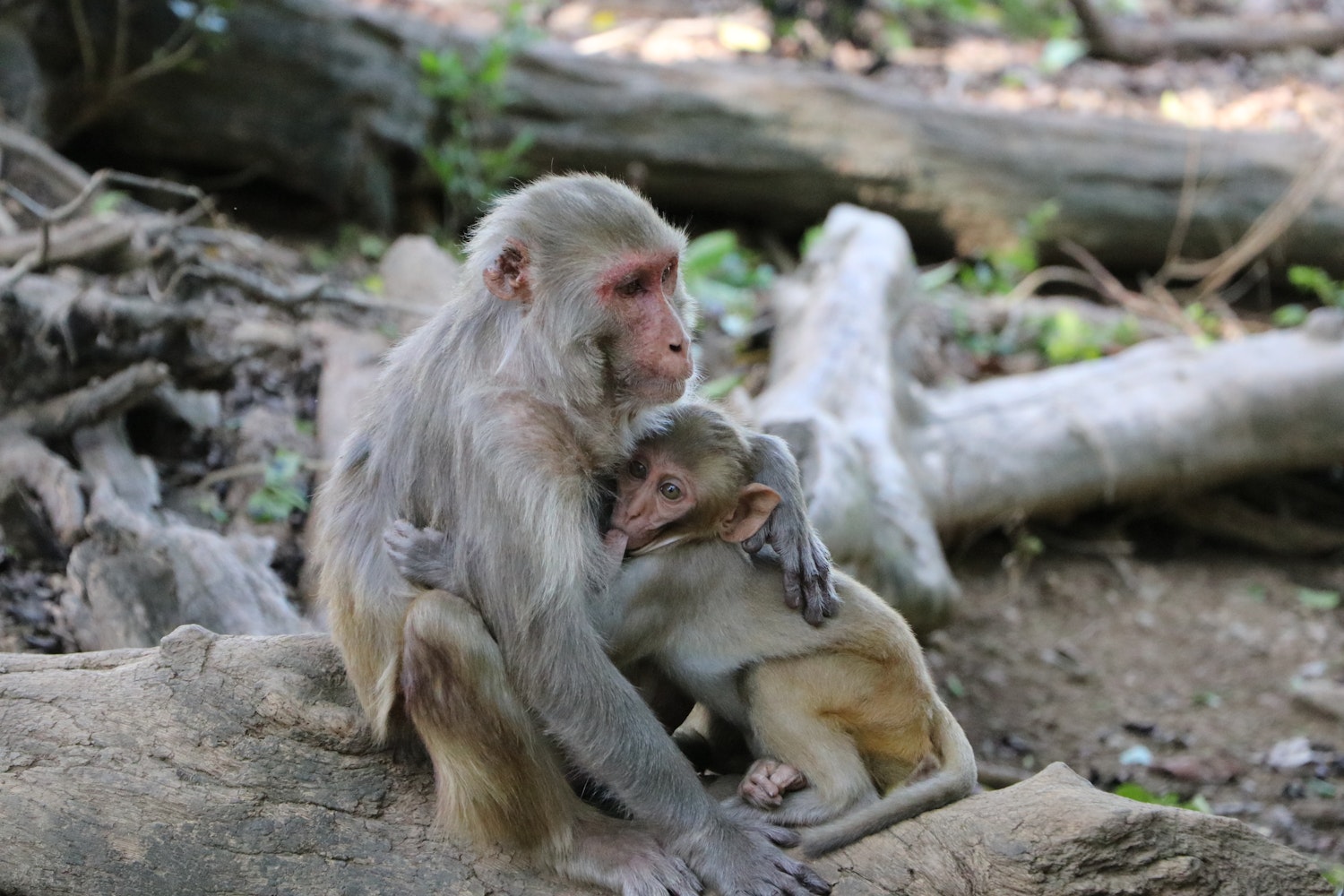
Having children is one of the most energetically demanding periods in a female’s life. Mothers must balance the energy needed to care for their offspring with the energy required to maintain their own health and survive long enough to reproduce again. Understanding how mothers balance these competing demands is a fundamental question in biology because these trade-offs shape health, reproduction, aging, and lifetime success.
My research investigates how female rhesus macaques manage these trade-offs throughout their lives. Using a combination of behavioral observations, long-term demographic records, and non-invasive biological samples, I will examine how energy is allocated between reproduction and bodily maintenance during different reproductive stages, including pregnancy, lactation, and the return to fertility after birth. I am also interested in how these patterns change as females age. Do older females reduce reproductive investment because of age-related decline, or do they increase investment in their offspring as future reproductive opportunities diminish?
This research takes place on Cayo Santiago, Puerto Rico, home to one of the world’s longest-running primate research populations. Because the monkeys have been monitored continuously for decades, we know the life histories, family relationships, and reproductive records of multiple generations. This unique resource allows us to connect physiological measures with real-world outcomes such as reproductive success and offspring survival.
By studying how female macaques balance the costs of reproduction and maintenance, this project will provide new insights into the evolution of aging, parental investment, and life-history strategies. Because humans face many of the same biological trade-offs, understanding these processes in our primate relatives can help us better understand the evolutionary foundations of human reproduction, longevity, and maternal health.
Can you tell us about a surprising or unexpected experience during your time in the field?
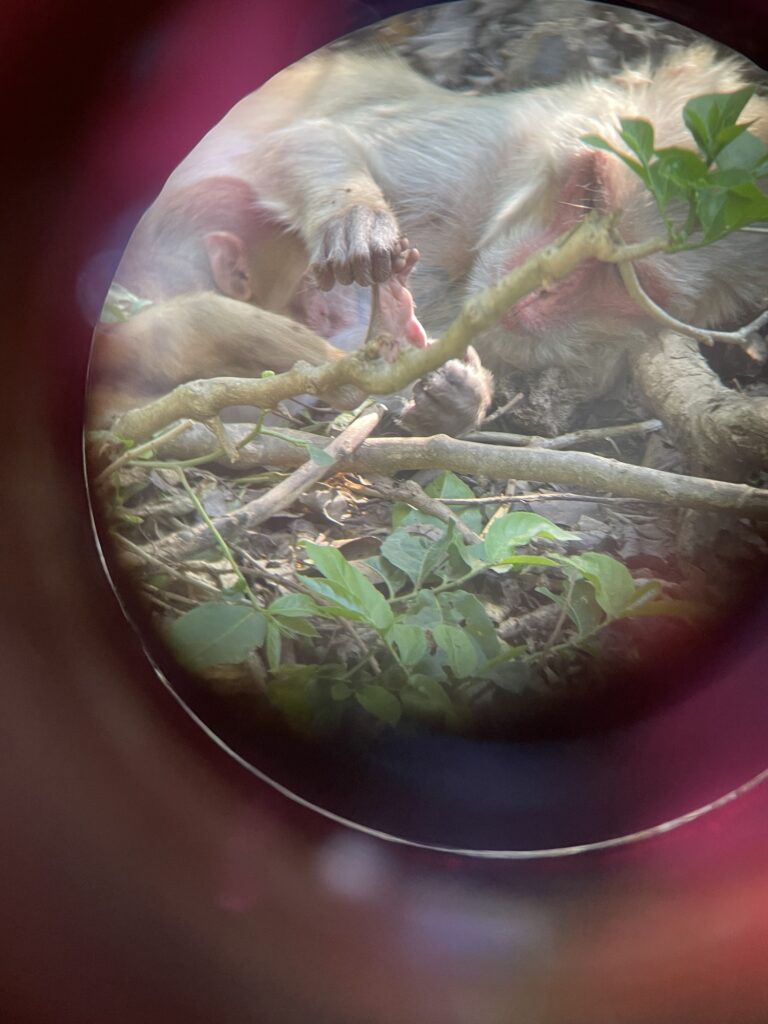
One of the most memorable moments of my fieldwork was witnessing a rhesus macaque give birth. Births are relatively rare to observe directly, and I happened to be following the female when she went into labor. Within moments of delivering her infant, she consumed the placenta, something that is common across many mammals but still remarkable to witness firsthand.
What surprised me most, however, was not the birth itself but the social dynamics surrounding it. Throughout the process, the female’s mother remained nearby, as did the group’s alpha male. Watching these individuals stay close during such a vulnerable and important event made me think differently about birth as a social process rather than simply a biological one. We often think of human childbirth and caregiving as uniquely social and communal, but observing this event highlighted that other primates also navigate reproduction within complex social networks.
That experience sparked new questions for me about the roles family members and social partners play during major life-history events. It reminded me that understanding human evolution requires looking beyond anatomy and physiology to the social relationships that shape survival, reproduction, and caregiving. Even after years of studying primates, moments like these continue to reveal how much there is still to learn about the similarities and differences between humans and our closest relatives.
What big questions would you like to answer with your work?
The question I am most interested in answering is how aging shapes the trade-offs between reproduction and somatic maintenance in female primates. Much of our understanding of reproductive aging is human-centered, yet humans are unusual among mammals in having an extended post-reproductive lifespan. By studying how reproductive aging unfolds in one of our close primate relatives, we can gain insight into the evolutionary foundations of this distinctive human trait and better understand the diversity of aging strategies that exist across species.
More broadly, I am interested in how females balance investment in reproduction with investment in their own health as they age. Reproductive aging is a critical component of female health. By investigating the physiological mechanisms underlying reproductive aging in rhesus macaques, this research contributes to a growing effort to better understand the biology of aging females and to challenge the perception that aging necessarily reflects decline. Instead, older females may continue to play important reproductive, social, and evolutionary roles, and understanding those roles can provide valuable insights into both primate and human life histories.
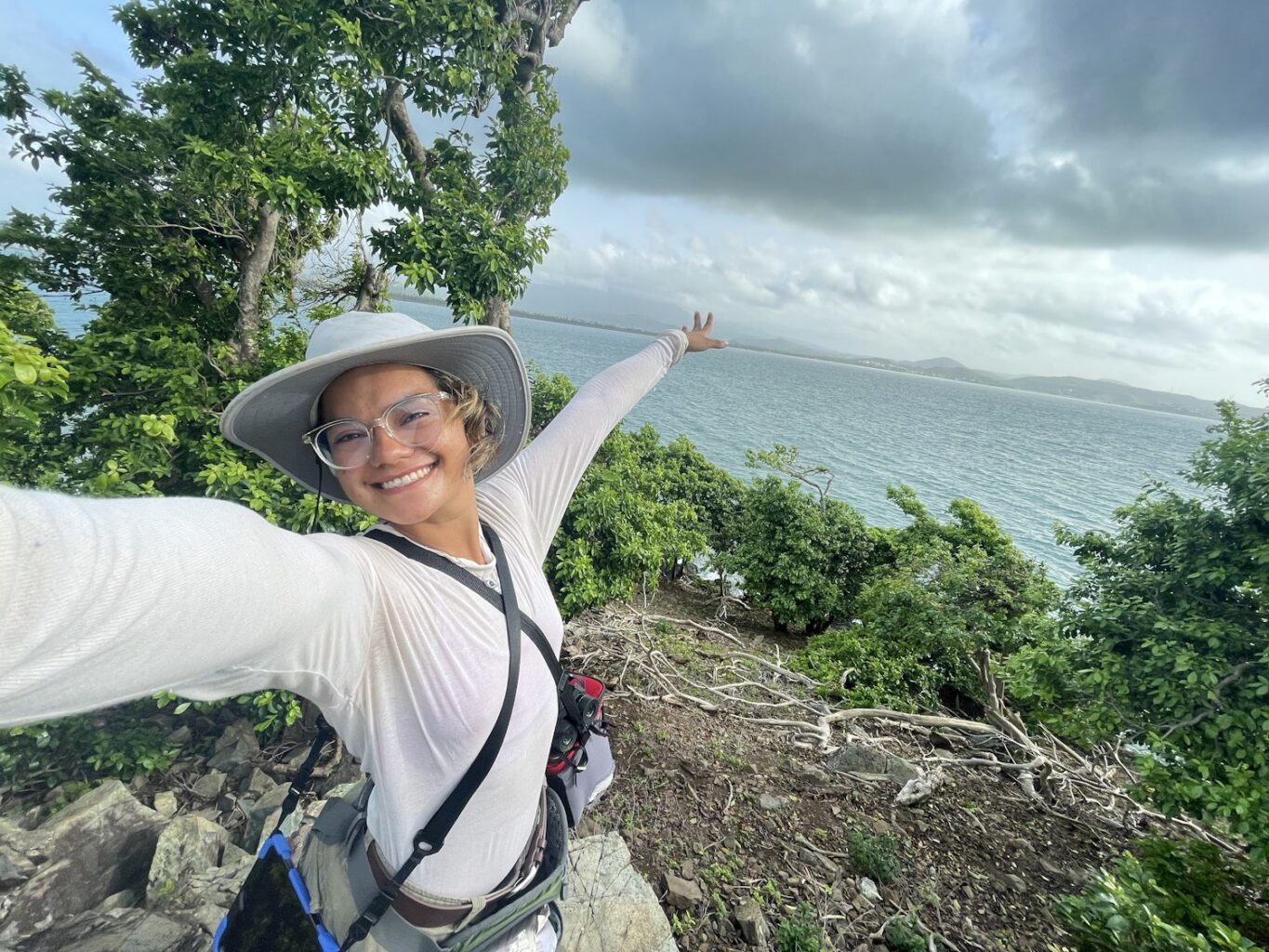
How did you feel when you learned you’d received a Leakey grant?
Honestly, when I received the email, I thought it was spam. After several grant rejections, I had prepared myself for another “no” and was already thinking about alternative ways to move the project forward. Funding has become increasingly competitive, and at that point receiving a grant felt almost impossible. When I realized the award was real, I was shocked, excited, and incredibly grateful.
This support will have a tremendous impact on both my dissertation and my career. The Leakey Foundation grant will allow me to analyze the biomarkers that are central to answering my research questions about reproductive energetics and aging in female rhesus macaques. Without this funding, I would have had to substantially reduce the scope of the project, limiting the questions I could address and the impact of the work. Beyond the financial support, receiving funding from an organization with such a long history of supporting groundbreaking research in human origins is deeply meaningful. As a first-generation scientist who discovered anthropology almost by accident, receiving support from The Leakey Foundation feels especially meaningful because it represents an investment not only in my research, but also in my growth as a scientist.
Why do you think human origins research matters today?
For me, one of the greatest lessons from studying human origins is realizing that humans are not separate from nature; we are part of it. We often think of ourselves as fundamentally different from other animals, but the more I study primates, the more I see the continuity between humans and the rest of the natural world. In many ways, humans are simply another primate species navigating the same challenges of survival, reproduction, cooperation, and aging. Understanding our evolutionary past is like looking into a mirror: it reveals where we came from and helps explain why we are the way we are today.
I also believe human origins research fosters empathy. The closer we look at other species, the more we recognize pieces of ourselves in them. That perspective can deepen our appreciation for biodiversity, strengthen our connection to the natural world, and remind us that humans are one branch of a much larger evolutionary story.
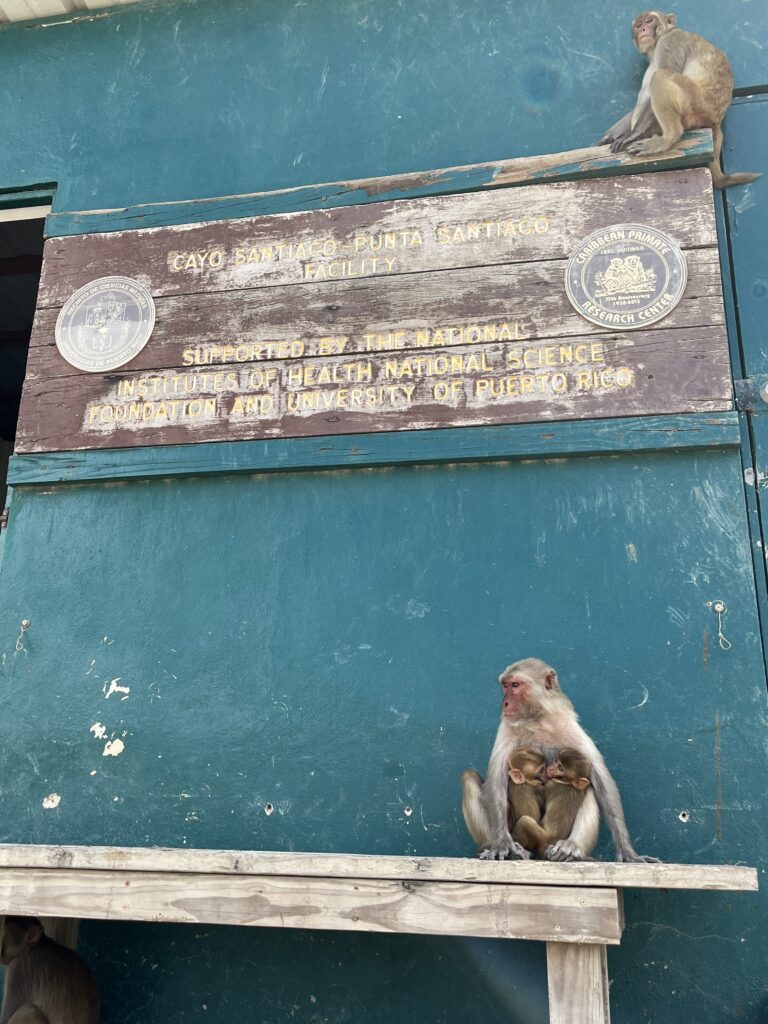
Can you share your favorite mind-blowing fact about primates?
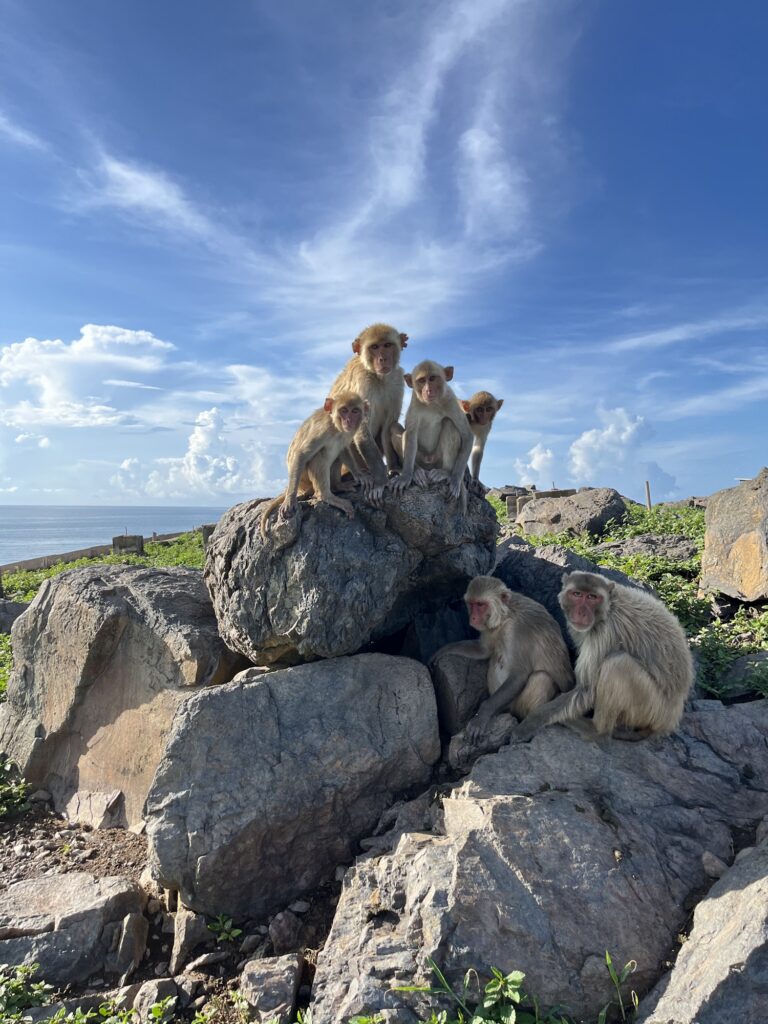
One of the most mind-blowing things I’ve learned about primates is how much of what we consider uniquely human isn’t actually unique at all. Primates form lifelong friendships, support family members, reconcile after conflicts, grieve losses, and build complex social relationships. As someone who studies female macaques, I’m especially fascinated by matrilines—mothers, daughters, sisters, aunts, and grandmothers often remain together for life, supporting and protecting one another across generations. The more time I spend watching monkeys, the more I realize that humans are not as separate from nature as we often think.