
Grantee Spotlight
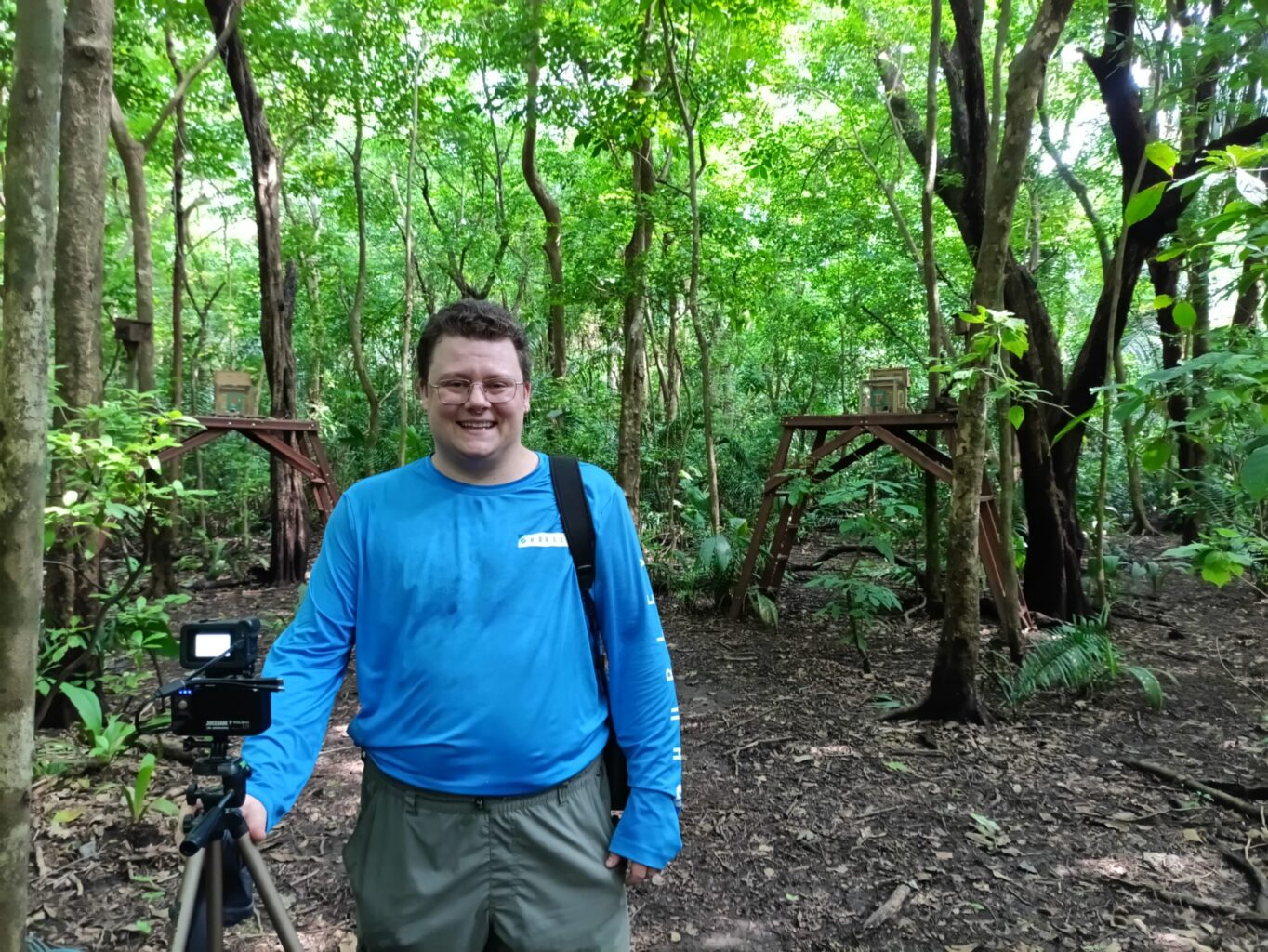
Evan Cunningham is a PhD candidate at Emory University whose research investigates the hormonal mechanisms behind social behaviors and social learning. He’s interested in how the evolution of prosocial traits may shape the emergence of complex social systems like language and culture. He’s also interested in how evolutionary research into primate behavior can be applied to understanding and predicting how animals adapt to changing, human-dominated habitats.
He received a Leakey Foundation grant in 2025 to study how wild capuchins solve problems.
Questions and Answers with Evan Cunningham
What are the big questions you hope to answer with your research?
How do wild capuchins solve new problems? How do dynamics of competition and social tolerance affect opportunities for learning? What motivates capuchins to take risks? How do complex foraging skills develop in a lifetime? How are skills transmitted amongst generations?
Why study capuchins to answer these questions?
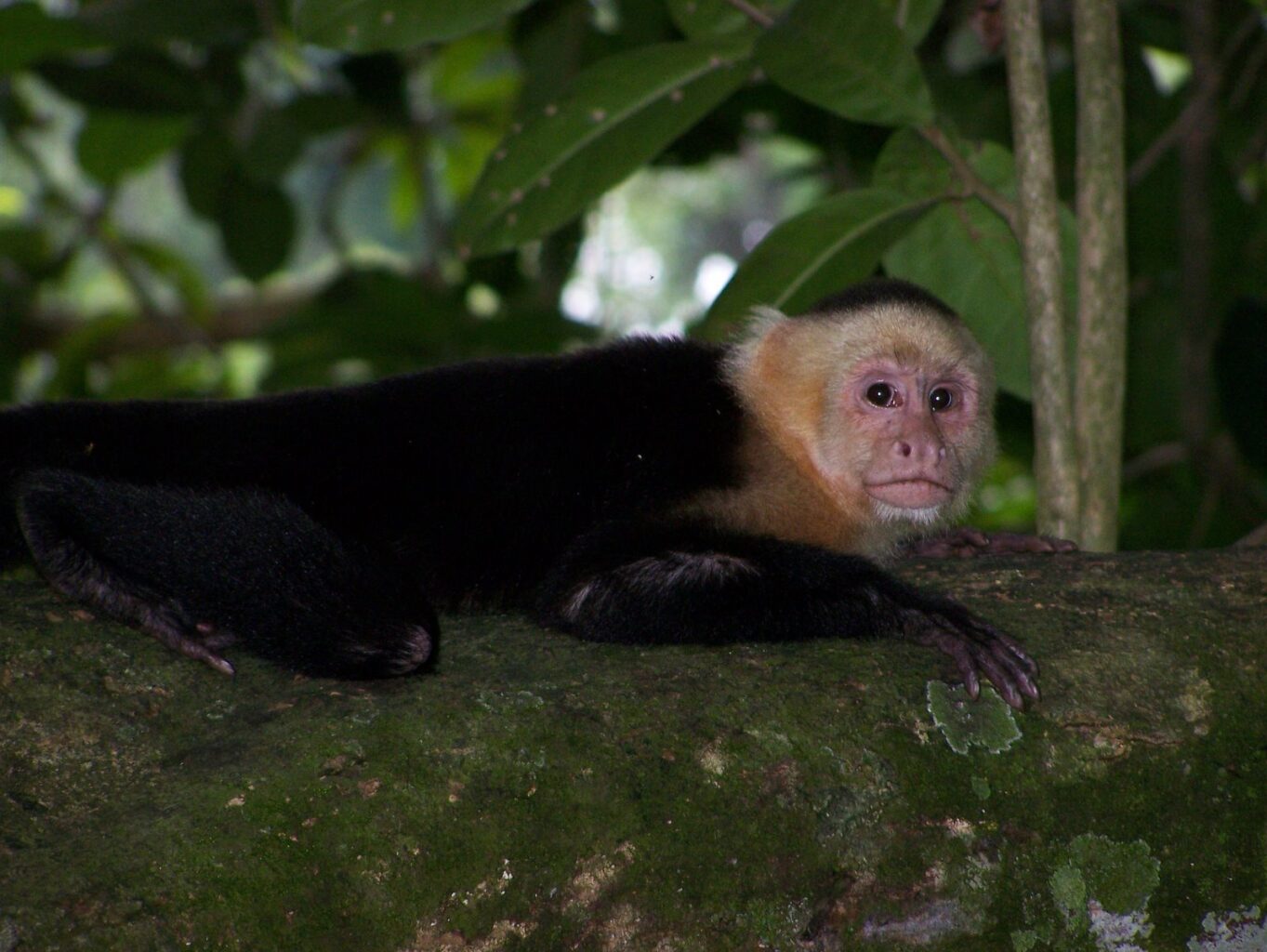
This research focuses on wild white-faced capuchins to answer questions about how learning happens in the context-rich environment of the wild, using experimental methods traditionally only used in captivity. Capuchins are masters of extractive foraging in the tropical dry forest of Costa Rica where they consume not only hard to access fruits, but they also peel back bark for termites, extract wasp larvae from nests, steal birds’ eggs, and eat a variety of vertebrates, even snakes.
Research from long-term observational studies show that younger individuals closely watch adults when they’re foraging, and that some of these foraging skills take many years to develop; however, not all individuals are always tolerant of each other and chances to learn or even access certain foods may be limited by competitive dynamics. Using an experimental foraging task that allows capuchins to access a food reward in a variety of ways, we test how they learn to forage new foods, whether they learn from others, and how their social relationships with each other, whether friendly or competitive, affect these processes.
How did you come to be studying primate behavior?
Before I studied monkeys, I studied human biology and health, where I learned how the boundary between social and environmental conditions and the biological processes happening under the skin is actually not very clear. With a lifelong love for ecology and an interest in how animals adapt to rapidly changing and increasingly fragmented and human dominated habitats, I came to study baboons, and then capuchins!
How did you feel when you learned you received your Leakey Foundation grant?
I felt incredibly honored to receive this grant, and to know that researchers whose work I’ve long looked up to felt these questions were important to research and support. This dissertation grant will allow me to conduct not just my own dissertation research, but to continue to contribute to long-term data on capuchin ecology and cognition as well as to mentor and collaborate with new generations of field scientists interested in understanding the big questions of evolution. In the current funding climate of the US, this grant in particular has made it possible for the science to continue, for years of painstaking work and accumulated knowledge to not be lost, and for future generations of scientists to continue to learn.
While I’m the recipient of this grant, this research is only possible because of a large team of dedicated researchers who come from communities all over the world. As I’m lucky enough to conduct research in Costa Rica, I am also dedicated to considering how this research can contribute to questions of conservation and sustainability – not just for capuchins, but in building strong communities of scientific collaboration.

What are some challenges you face in your research?
When designing a foraging experiment for a capuchin, you have to think like a capuchin. In a recent iteration of the experiment we tested how they would respond to a locked solution, and after just a few minutes of frustration the big alpha male ripped the door right off the experimental apparatus! It’s an important reminder that while these monkeys are very smart, they’re also very strong, and there may be more than one way to solve a problem.
Why is human origins research important for our lives today?
Research on human origins can be seen as looking backwards or a focus on history, but any historian will tell you that history teaches us not just about the past but about the future. Living in a moment of rapidly changing climates and habitats, evolutionary pressures will be major drivers of change for not just humans but all other organisms. Humans evolved hundreds of thousands of years ago under intense ecological pressures, and understanding how these forces affected evolutionary dynamics may offer us important insight into current questions. Understanding how animals face these challenges will not only equip us to better plan for a future of co-existence, but will also answer key evolutionary questions.