
Human Origins
How a gene passed from Denisovans to Neanderthals and then to modern Homo sapiens helped people adapt and survive in new environments.
by Evan Hadingham
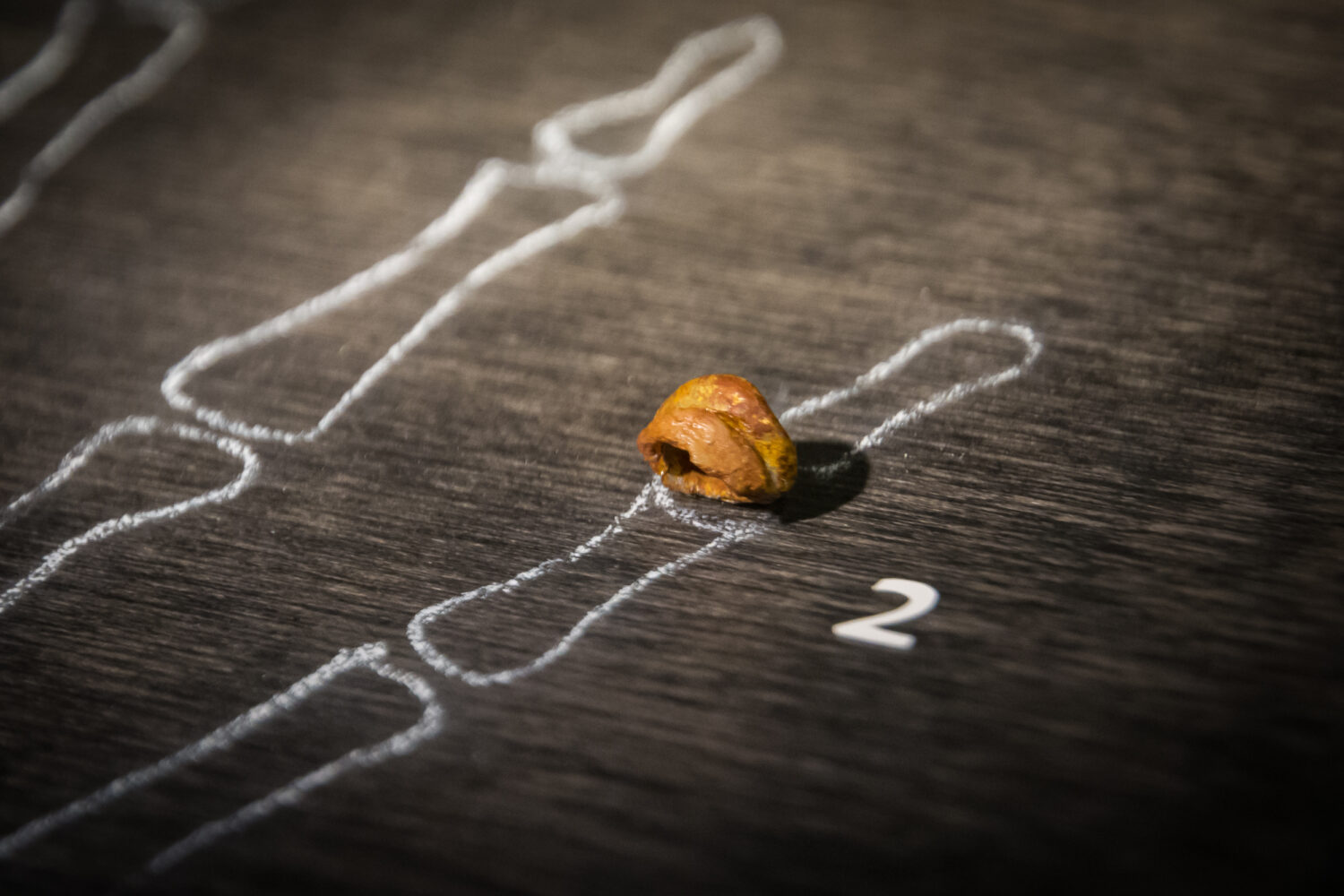
In 2010, the scientific community was stunned by the announcement of an entirely unknown ancient branch of humanity—the Denisovans—revealed by studies of ancient DNA. Since then, genetic research and fossil finds have delivered one surprising discovery after another about this elusive extinct ancestor. In the latest twist, an international team led by Leakey Foundation grantee Fernando Villanea of the University of Colorado at Boulder has traced the extraordinary evolutionary journey of a Denisovan genetic variant called MUC19. Their research was published in the journal Science.
Denisovans occupied a vast area for nearly 400,000 years until they became extinct about 30,000 years ago. Their distinctive DNA has been identified in today’s populations living in regions ranging from subarctic Siberia to high-altitude Tibet and from the tropical forests of Southeast Asia to the Pacific islands of Melanesia. Remarkably, the Denisovan MUC19 variant has now been detected at unusually high levels in the genomes of today’s Indigenous peoples in the Americas.
That doesn’t mean the Denisovans embarked on an epic prehistoric trans-Pacific voyage to colonize the North and South American continents. But Villanea’s research indicates that the transmission of their DNA may have played a crucial role in the survival of the First Americans.
MUC19 is one of over twenty genes related to the production of mucus, the stuff in our noses that makes us miserable when we’re sick. How did the Denisovan variant regulating this annoying substance get from Asia to the Americas, and why was it so important?
Decoding the Denisovans
Villanea’s investigation of the mystery of the mucus variant was made possible by a recent wave of advances in deciphering ancient and modern DNA. Researchers can now probe huge databases of contemporary genetic variation, such as the 1000 Genomes Project. They can also apply powerful new analytical tools such as “long-read sequencing,” which helps to pin down the precise structure of genetic variants and the differences between them.
Of special interest in these structures are “repeats”—repetitive regions of code, some of which may have played such an important role that they have been amplified by natural selection. Using published data on the genomes of living humans, the team found some 800 repeats in one zone of the MUC19 variant, more than twice the number compared to genomes in other regions, such as Central Europe. Moreover, only 1% of Central Europeans carry the variant today, compared to 1 in 3 people in Mexico and Peru. These findings made its special role in the evolutionary past of Indigenous Americans dramatically clear to Villanea’s team.
Where had the variant come from? The same advances that help resolve details of modern genomes are also enhancing the precision of ancient DNA analysis, in which samples are often fragmentary, degraded, or contaminated. Long-read sequencing has proven particularly useful in hunting for variants that were the targets of natural selection and for signals of inbreeding between Denisovan, Neanderthal, and modern human ancestors.
The Denisovan-Neanderthal gene sandwich
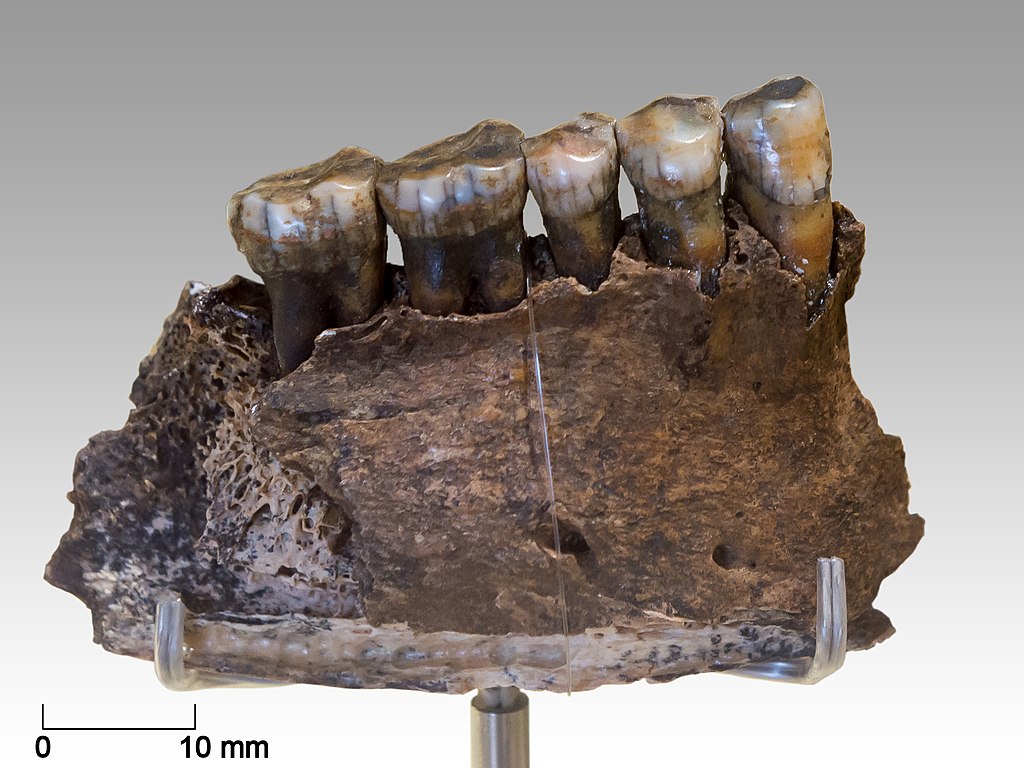
A previous study had already identified the Denisovans as a likely source for the MUC19 variant, but Villanea wondered if it was also present in Neanderthals. He first checked the genome of a Neanderthal that had been found in the cave of Denisova in the Altai Mountains of southern Siberia. It was DNA extracted from a child’s tiny pinkie bone from the cave that had led to the sensational first announcement of the Denisovans in 2010 and given them their name. From time to time, Neanderthals as well as Denisovans had successively occupied the cave. However, disappointingly, when Villanea analyzed the Neanderthal genome from the cave, there was no sign of the variant.
“I spent about two years convinced that the archaic MUC19 was just a Denisovan variant,” Villanea says. “Then my colleague David Peede looked at two other Neanderthal genomes just for comparison, and there it was.” The other samples came from Chagyrskaya Cave, also in the Altai, and dating to around 80,000 years ago, and Vindija Cave, Croatia, from around 40,000. “So we found it in two Neanderthals—one from a Siberian lineage and the other from a European one. The fact that it was present in different times and in different Neanderthal ancestries means that it must have been pretty widespread and really useful.”
Challenging new environments
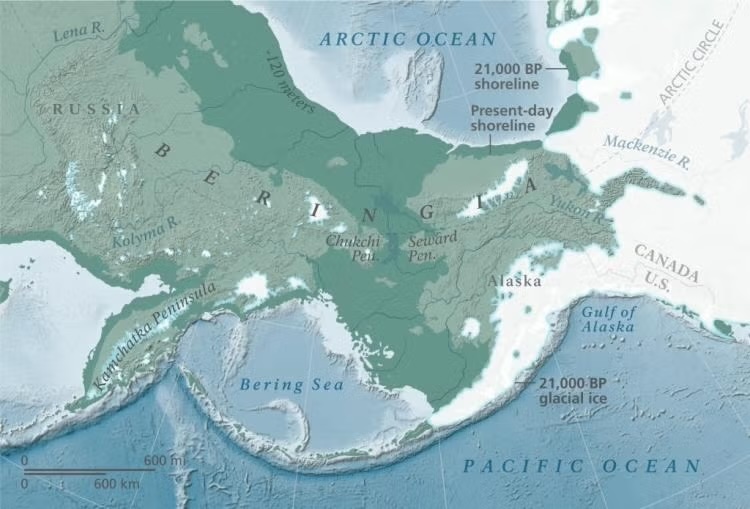
After lengthy analysis, Villanea reconstructed a scenario that best fits the data. It appears that sometime before the Denisovans became extinct around 30,000 years ago, they interbred with our close cousins, the Neanderthals, and passed the MUC19 variant on to them. Then, Neanderthals interbred with modern humans, who would eventually venture from Asia across the Bering Strait and enter the Americas more than 20,000 years ago, spreading rapidly down the Pacific coast.
The genes that modern humans inherited from the Denisovans and carried with them to the Americas reflect a vast variety of landscapes and environments to which the Denisovans had adapted over hundreds of thousands of years. Their DNA has been identified in fossil remains and living humans, ranging from the boreal forests of Siberia to Tibet’s high-altitude plateau and Southeast Asia’s subtropical jungles and islands. Each setting presented its own unique survival challenges, from tick-borne diseases in the grasslands of Siberia to malaria, parasites, and toxic venoms in Laos and Papua New Guinea.
The Denisovans’ exposure to this vast array of environmental and disease threats in Asia and the Pacific must have armed the First Americans as they first entered the Americas. A number of Denisovan variants are known for their role in boosting immunity: for instance, one related to HLA alleles that help our bodies recognize viruses, bacteria, and parasites. Another, a P450 cytochrome gene, aids in metabolizing plant and animal toxins, potentially providing protection from snakebites and poisonous plants. And yet another was MUC19, one of more than twenty genes that regulate the production of mucus.

Why mucus mattered
Mucus is a sticky secretion that coats many organs in the body as well as our nose and throats. It’s the body’s essential first line of defense. Like flypaper, mucus traps viruses, bacteria, and pollen invaders and prevents them from reaching vulnerable organs such as delicate lung tissues. Fine hair-like structures in the throat called cilia beat back against the invaders, sending them in a kind of conveyor belt up to our sinuses and nose, where, as we know all too well, abundant discharges of mucus flush them away when we’re sick.
Since mucus is so important in defending the body, it’s highly likely that the Denisovan variant played a crucial role in the survival of the First Americans long after the Denisovans themselves had become extinct. To Villanea, this was evident in the explosion of copy numbers of the variant his team identified in Mexico and Peru today. But precisely how it worked—which diseases it protected them against— is still unclear. “Something about this gene was clearly useful for these populations and maybe still is or will be in the future. We hope that medical research leads to additional study of what this gene is actually doing and may be able to connect it with some specific condition.”
Meanwhile, Villanea is excited about the research for a number of reasons—one of them personal. “I’m particularly interested in the adaptations of American populations, being Latin American myself. What Indigenous American populations did was really incredible; they went from a common ancestor, living around the Bering Strait, to adapting biologically and culturally to this new continent that has every single type of biome in the world.” The team’s work makes a strong case that the long-vanished world of the Denisovans played a key role in the peopling of the Americas and in shaping our modern resistance to disease.
Read the research 🔓
Fernando A. Villanea et al., The MUC19 gene: An evolutionary history of recurrent introgression and natural selection. Science (2025). https://doi.org/10.1126/science.adl0882

Evan Hadingham is the author of Discovering Us: 50 Great Discoveries in Human Origins. He is a writer, documentary producer, and science communicator who worked for decades as Senior Science Editor for the PBS science series NOVA.