
Grantee Spotlight
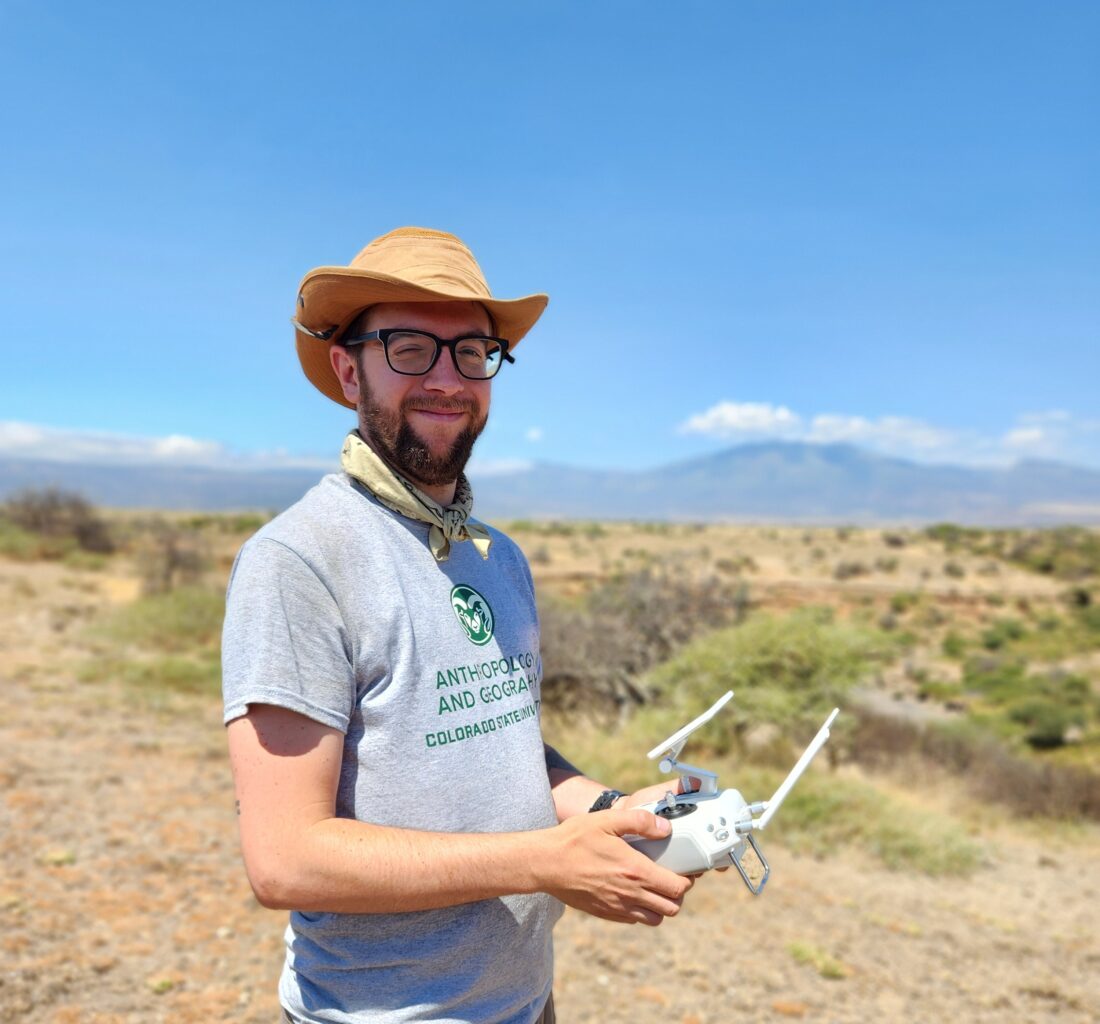
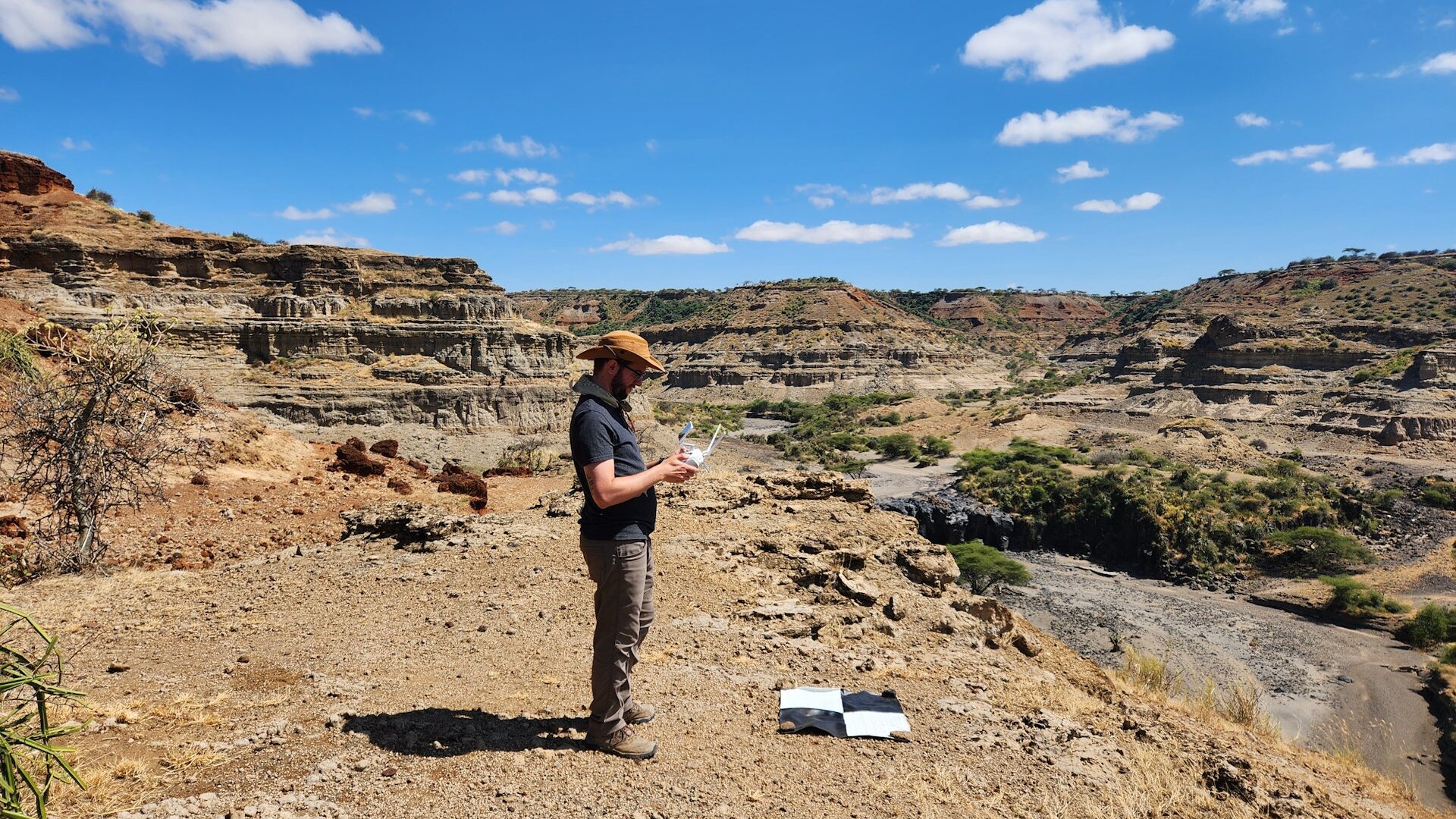
Alex Pelissero is a graduate instructor and PhD candidate in biological anthropology at Colorado State University. In 2024, he received a grant from The Leakey Foundation for his project, “The distribution of hominin activities at Olduvai Gorge: A geospatial approach.” Alex is using drones to make high-resolution maps of Oldupai Gorge and working to learn how ancient humans lived and moved across the landscape.
Questions and answers with Alex Pelissero
Can you describe your research project?
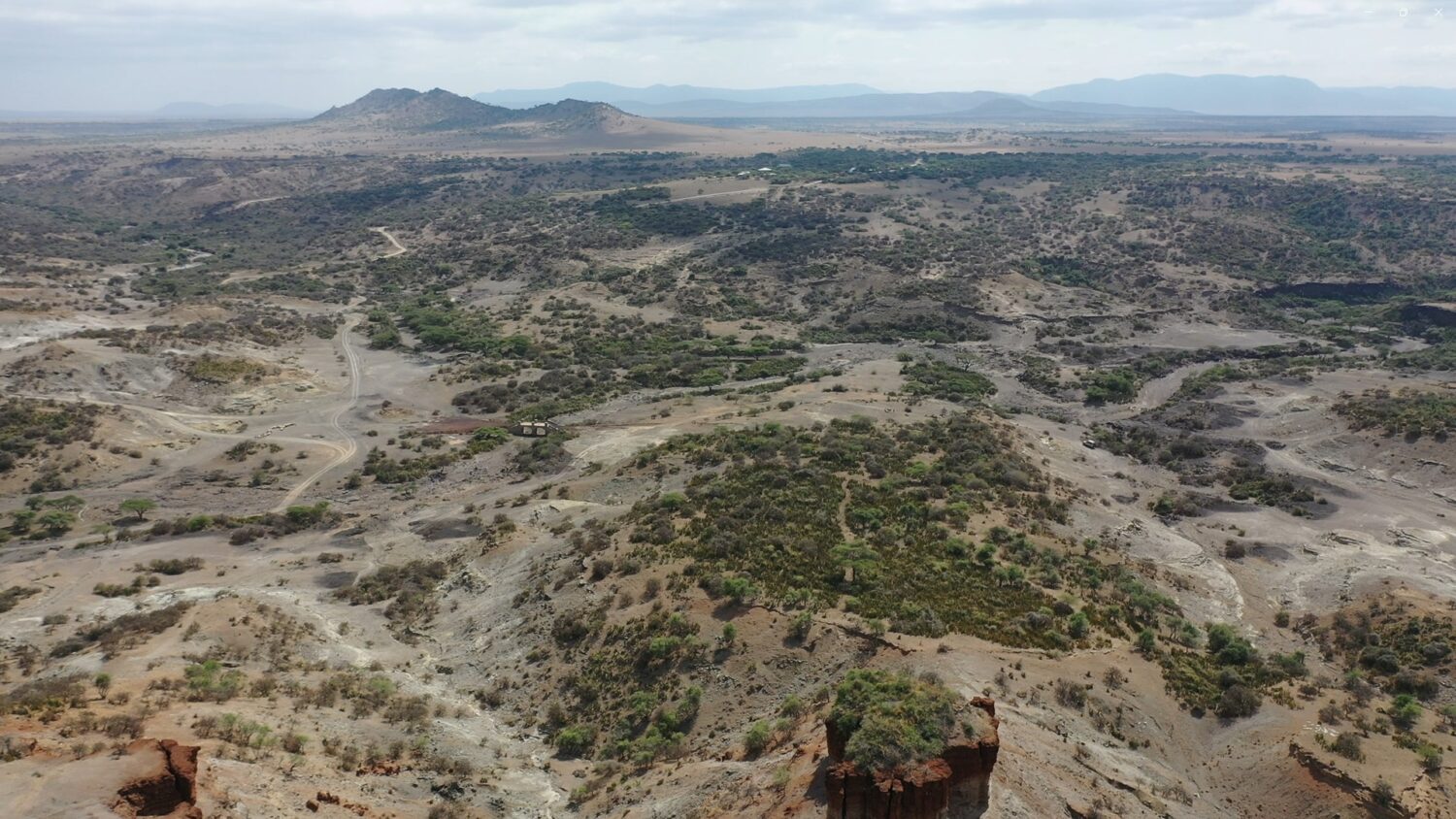
My project centers around mapping where our ancestors at the site of Oldupai Gorge, Tanzania, were concentrating their activities. I want to learn how these areas changed through time, and how large carnivores may have impacted where our ancestors left traces of their presence. A key part of my research is also investigating how the underlying geology of the area impacts where we look for fossils and stone tools, and how this then impacts our understanding of our ancestors’ activity patterns. To do this, I am using an aerial drone to create high-resolution maps of the outcrops at Oldupai Gorge.
How did you become interested in human evolution?
I have loved paleontology and history since I was a child. When I did my undergraduate degree, I fell in love with anthropology and human evolution. I got interested in photogrammetry and drone mapping during my master’s work. When I joined my current department for my doctoral studies, I realized how incredibly useful these tools could be for big research questions at big sites!
What big question do you hope to answer with your work?
I want to understand how our ancestors moved across the landscape, where they hung out, and what ecological and behavioral factors impacted their decisions. My research focuses on a very transitional time period at Oldupai, when you have the emergence of new tool technologies and new human species like Homo erectus. I am keenly interested in what differences we may see before and after these transitions. Since this is also a period where we see increased evidence of animal butchery, likely leading to increased conflict with carnivores, I want to know to what extent avoidance of these predators/competitors played a role in where our ancestors were most active.
How did you feel when you learned you got your Leakey Foundation grant?
I was incredibly excited! It’s hard to describe the feeling of knowing other researchers have confidence in your research questions and ability to carry out a project. I was honored to receive a grant from the foundation for research at the same site where Mary and Louis Leakey did some of their greatest and most enduring work. It feels really cool and like you are part of a long legacy of scholarship in the area. Receiving the grant will provide me with opportunities, both financially and career-wise, that I would not have had otherwise.
Why does understanding evolution matter for people today?
One of the reasons humans have been so successful is our ability to adapt to almost any environment and situation on Earth. This is the product of a long, long evolutionary history that has its roots in times and places like Oldupai Gorge. Understanding how our ancestors adapted to changing environments and climates is important for knowing how we can continue to adapt and thrive in the future.
What is your favorite mind-blowing science fact?
I don’t know if it’s mind-blowing, but I love the fact that multiple hominin species coexisted at the same time and in the same places across Africa. How would they have seen each other? It is so alien to us today, as the only hominin species left for the last 40,000 years!