


Workshop: Creative Approaches to Education and Community Engagement
August 27 @ 10:00 am – 12:00 pm
Biological anthropology builds thinking skills, evidence evaluation, careful observation, and claims analysis that extend well beyond the discipline. Join us for a free workshop with three short talks exploring how these tools can be brought into the classroom: centering community voices in primate conservation education, evaluating evolutionary health claims, and separating observation from interpretation using primate communication video.
This workshop is presented in collaboration with the Education Committee of the American Association of Biological Anthropologists.
What to expect
This online workshop consists of three 20-minute presentations, each followed by live audience Q&A, and a closing group discussion. Attendees join off-camera during presentations, then turn on cameras or mics for Q&A and the final discussion to ask questions directly.
Who is this for?
Designed for college-level biological anthropology instructors, with ideas and approaches useful to anyone involved in biological anthropology education or outreach.
Presenters
Florence Aghomo
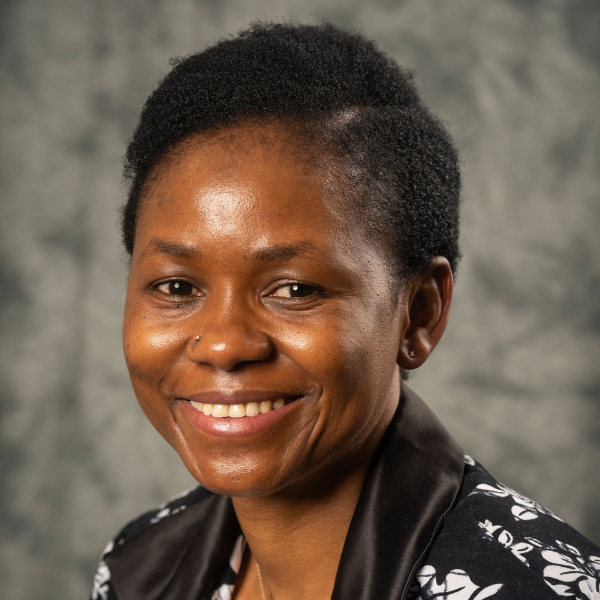
Florence Aghomo is from Cameroon and is a Leakey Foundation Baldwin Fellow and PhD candidate at the Interdepartmental Doctoral Program in Anthropological Sciences (IDPAS) at Stony Brook University. Since June 2019, she has served as coordinator of the Red Colobus Conservation Network project under IUCN/SSC/PSG, Re:wild, and the African Primatological Society. Driven by her passion for primate well-being and conservation, she began working with primates in Cameroon in 2011 and helped found the Cameroon Primatological Society in 2020; she now serves as its President. With a global vision, she established an Environmental and Language Center (ENLACE) in Ranomafana, Madagascar, under the Flor’ Foundation to promote education and conservation. The center operates with support from The Safina Center.
Frances Forrest
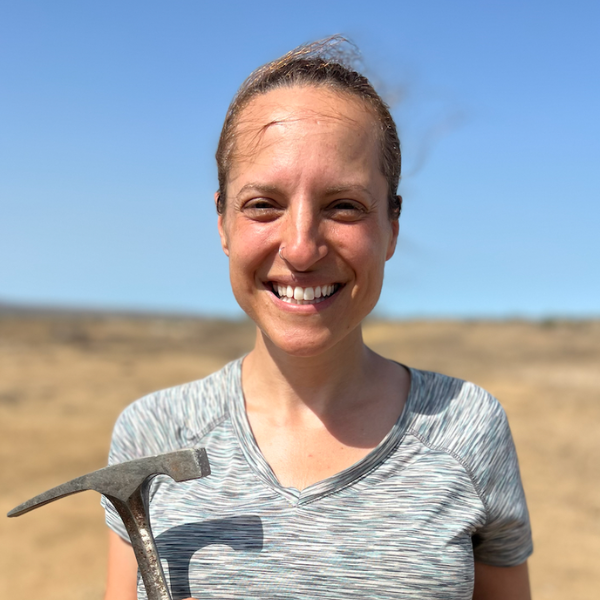
Dr. Frances Forrest is a Leakey Foundation grantee and an Assistant Professor of Biological Anthropology at Fairfield University. Her research focuses on the evolution of meat-eating and the role that animal resources played in shaping early human behavior and ecology. She is particularly interested in how environmental conditions influenced access to these resources and how early humans responded to changing landscapes. Her work draws on fossil and archaeological evidence from East Africa. In her teaching, she emphasizes science as a process of evaluating evidence rather than a fixed body of facts, using active learning to help students develop conclusions from data and apply those analytical skills beyond anthropology.
Joe Califf
Joe Califf is a Clinical Associate Professor in New York University’s Expository Writing Program. He teaches courses (e.g., Science & Society, Thinking Across the University, The Neuroscience of Being Human) that investigate how science and technology are used to characterize, evaluate, influence, and politicize human values—such as particular notions of love, intelligence, or truth—and how varied forms of media represent, perpetuate, simplify, and (sometimes) complicate these perspectives. His academic interests range from behavioral endocrinology and human evolution to science education and pedagogy. He has also taught and conducted research at Princeton University, the American Museum of Natural History, Hunter College, and the Texas Biomedical Research Institute.
Schedule and Session Details
African primates, including the Critically Endangered Preuss’s red colobus (Piliocolobus preussi), face increasing threats from illegal hunting for bushmeat and habitat loss. Addressing these challenges requires more than in situ protection; it depends on informed and engaged local communities. This presentation will highlight a community-centered approach to primate conservation through education and outreach. I will showcase educational materials developed for the Red Colobus Conservation Network and adapted to local contexts, as well as the Youth Wildlife Workshops we regularly conduct in Cameroon to empower children and young adults as conservation advocates. This red colobus initiative aims to foster knowledge, awareness, and long-term stewardship of primates and their habitats.
Evolutionary explanations are increasingly used to support claims about human health, diet, and behavior, but these claims often extend beyond the available evidence. This lesson presents a way for students to evaluate those claims rather than simply accept them because they sound scientific. It focuses on the difference between using evolutionary ideas in an argument and showing that the argument is actually supported. The lesson is interactive and gives students a clear way to think more carefully about how health claims are presented, how conclusions are justified, and whether the available information is sufficient to support them.
Everyday exchanges are typically conducted through statements. Whether conversing with a friend, scrolling through social media, or listening to an “expert,” information is usually communicated as a series of claims (for example, this sentence and the one preceding it!). In this session, I will present an approach that requires students to slow down, notice details, and articulate their observations in the form of evidence and questions rather than claims and assertions. Using a one-minute primate communication video as their object of analysis, participants practice describing evidence, moving from reactions to observations to questions to “against-the-grain” interpretations, thus developing transferable skills for evaluating problems beyond biological anthropology.
Open conversation connecting themes across all three talks.
FAQ
This workshop is designed primarily for college-level biological anthropology instructors. It is also relevant to graduate students, teaching assistants, and anyone involved in biological anthropology education, science communication, or public outreach.
The three speakers will share creative approaches to biological anthropology education and engagement, including community-centered primate conservation education, evaluating evolutionary health claims, and using primate communication to teach observation and interpretation.
The workshop is live on Zoom and lasts two hours. It includes three 20-minute presentations, Q&A after each presentation, and a closing group discussion connecting ideas across the sessions.
Both. The workshop combines short presentations with opportunities to ask questions, discuss teaching approaches, and exchange ideas with the speakers and other participants.
Yes. Each session focuses on an approach, activity, or framework that can be adapted for college-level teaching or other educational settings.