
Grantee Spotlight
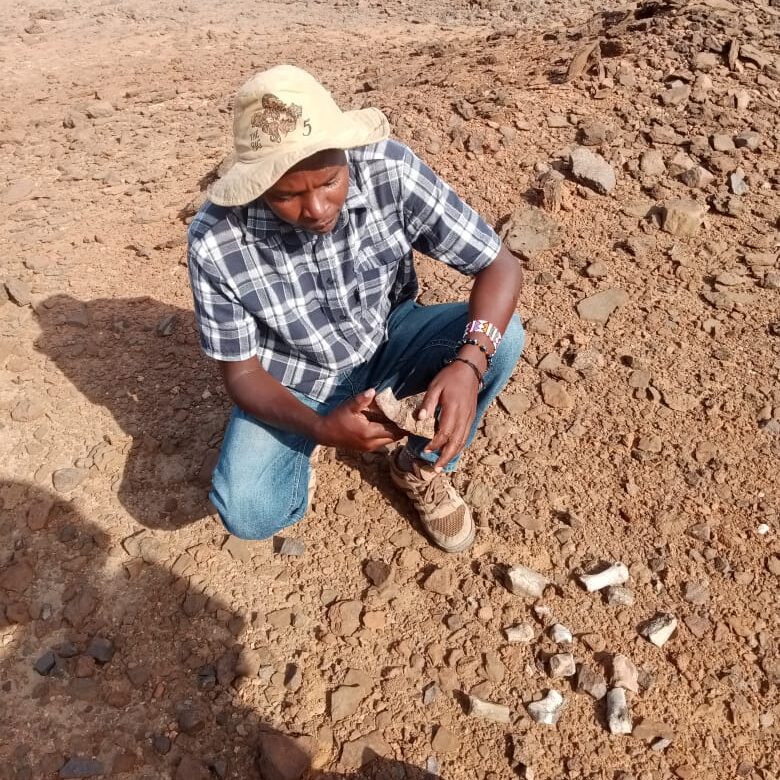
Sylvester Musyoka is a 2025 Leakey Foundation Baldwin Fellow whose research reconstructs past environments to understand how climate change shaped human evolution over the past million years. Sylvester is a graduate student at Moi University in Kenya and an assistant research scientist and fossil preparator at the National Museums of Kenya.
He has done extensive fieldwork in the Olorgesailie Basin, Homa Peninsula, and France, which has helped him develop expertise in archaeological field methods, paleontology, and fossil curation.
His master’s research uses fossil antelope teeth to infer what ancient vegetation looked like and how it changed over time. This work will help us learn more about the past environment of the Olorgesailie Basin, a region critical to understanding early hominin adaptation and survival. It will also shed light on how humans and other mammals adapt to today’s changing environment.
Questions and Answers with Sylvester Musyoka
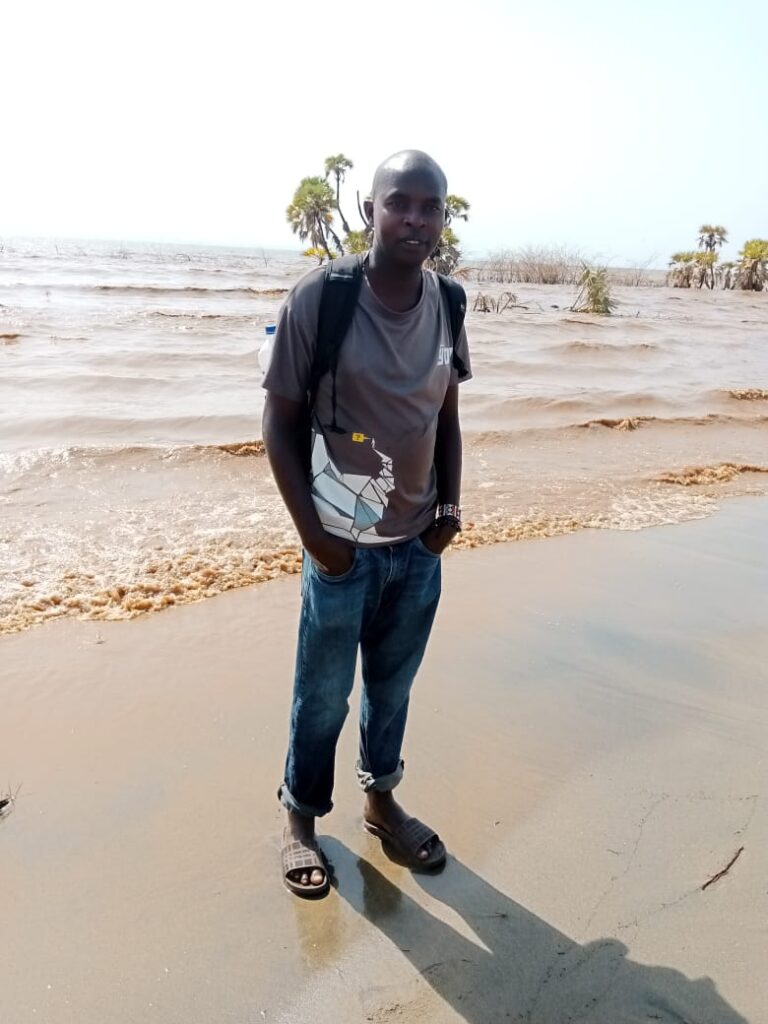
Can you tell us about your Leakey Foundation-supported research?
This grant support will help me investigate how past environments influenced early human evolution in the Olorgesailie Basin, Kenya. I am studying fossil bovid (antelope) teeth using mesowear analysis and the hypsodonty index to reconstruct their diet and infer vegetation structure in the past. This study is very significant because it will help us understand the past environment and how climate change has shaped human evolution in the basin.
My study aims to reconstruct the Early to Middle Pleistocene paleoecology of the Olorgesailie Basin. Recent studies that analysed stable isotopes (δ¹³C and δ¹⁸O) from tooth enamel show that the diet of bovids mainly consisted of C₄ grasses, with only a small amount of C₃ plants. The dental proxies I am using in this study remain underutilized. These methods are very critical in the dietary reconstructions and provide deeper insight into faunal responses to long-term environmental change.
What sparked your interest in using fossil teeth to reconstruct environments?
In the field, I was inspired by Dr. Richard Potts and his team. They work in research areas such as climate, environment, and human evolution in the Olorgesailie Basin and Homa Peninsula, Kenya. Their work demonstrated the deep relationship between environmental change and human adaptation, motivating me to explore how bovid fossil teeth can tell us about diet and past environments.
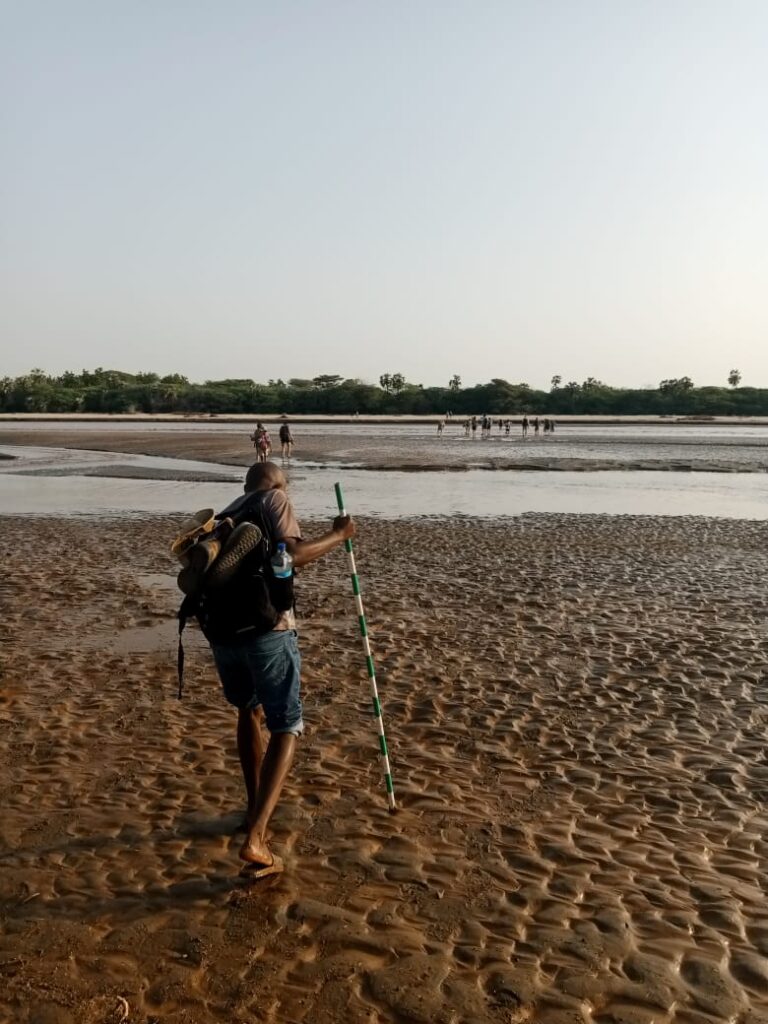
How did you feel when you learned you received your Leakey Foundation funding?
Receiving a Baldwin Fellowship was an honor that affirmed the value of my research and deepened my commitment to paleoecology and human origins. It will support payment of school fees and laboratory analysis to increase our understanding of the Olorgesailie basin environment in the past 1 million years.
What surprising discovery or challenging obstacle have you experienced in your work so far?
One big challenge we have in Kenya is that we lack professors to review our work and guide us in paleo sciences research. Most of the time we rely on external supervisors from America and Europe for research guidance and mentorship. If the number of African scholars increased, it would help many younger generations pursue this course of study.
What is your favorite mind-blowing fact related to human origins and evolution?
One of my favorite mind-blowing facts is how the wear patterns and teeth crown height of the bovids can reveal not only their diet but also provide clues about vegetation and ecological settings. In this way, teeth serve as a good element for understanding past environment.