
Grantee Spotlight
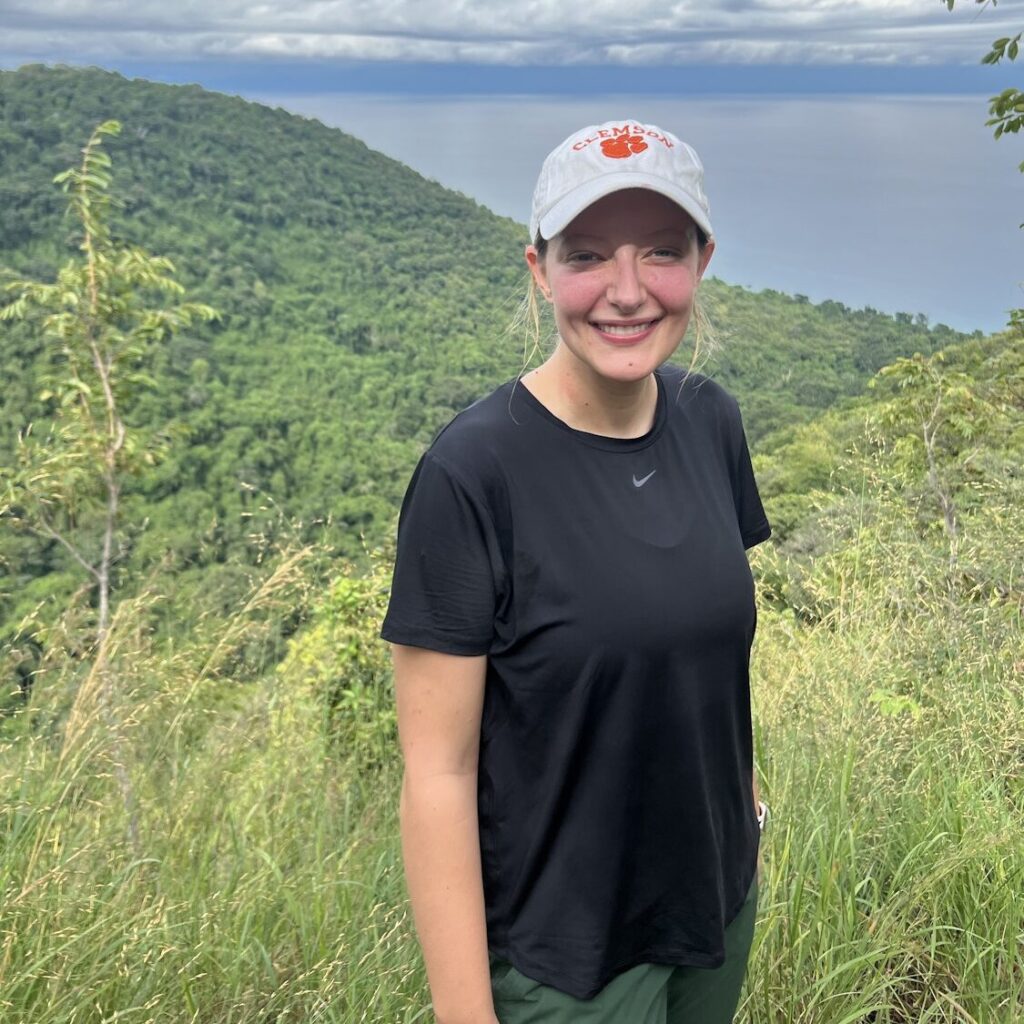
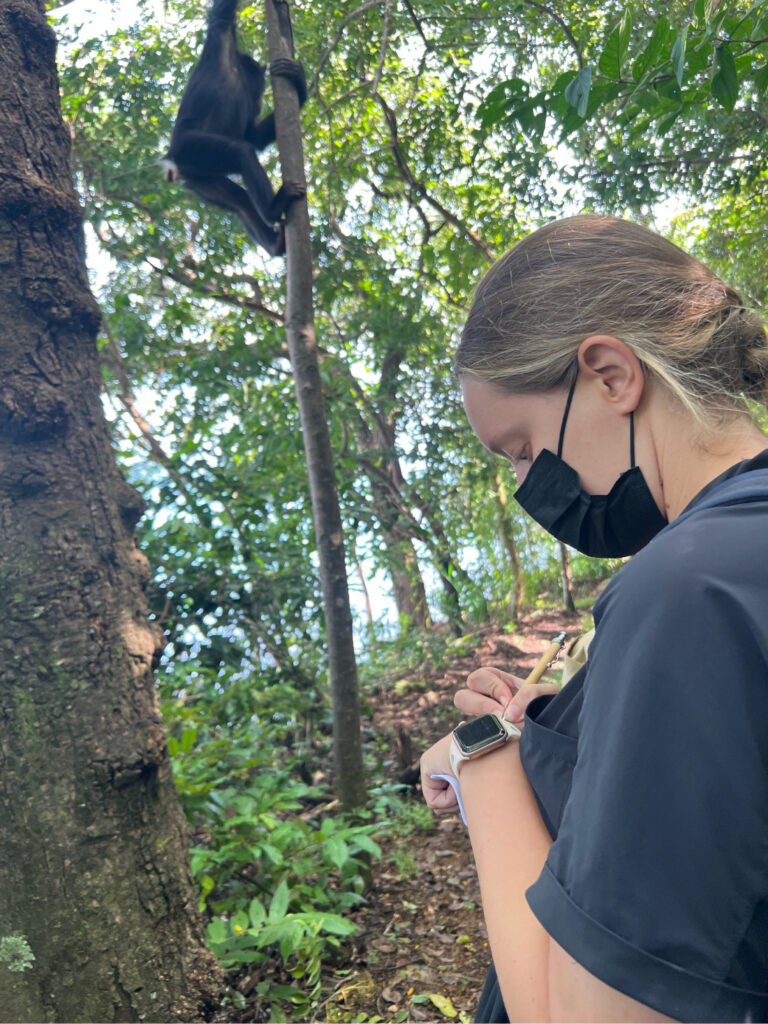
Sims Patton didn’t set out to become a primatologist. She started college aiming for veterinary school, but an internship at Riverbanks Zoo and Gardens, where she worked with a gorilla who had been raised as a pet, changed her direction entirely. Now a PhD candidate at The George Washington University, she conducts research at Gombe National Park. Her research asks a question that has rarely been explored in chimpanzees: does witnessing lethal violence early in life leave a lasting mark on health and behavior?
You can follow along with Sims and her collaborator and fellow Leakey Foundation grantee Abby McClain in their “Day in the Field” blog post.
Questions and answers with Sims Patton
Tell us about your Leakey Foundation-supported research project
My project is focused on chimpanzee early life adversity and stress physiology. Because chimpanzees engage in lethal aggression on a semi-regular basis, I hope this project will help us to understand whether increased exposure to aggression during chimpanzee early life impacts adult health and behavior. In human populations, repeated exposure to violence in childhood can cause negative health and behavior outcomes as adults. Can these same impacts be seen outside of human populations?
What questions are you most interested in answering with your research and why?
Does exposure to lethal aggression in early life impact chimpanzee long-term health and behavior outcomes?
Following at internship at Riverbanks Zoo and Gardens in South Carolina where I worked with a captive western lowland gorilla who was raised as a pet, I became interested in early life impacts and how critical the early environment is to adult success. Experiences that humans and other animals have while they are developing can have lasting impacts as they age.
I want to explore a previously understudied form of early life adversity outside of humans, exposure to violence. Because primates are generally social, there are times when they experience or witness lethal aggression within their communities. How do these events, if at all, impact their development, health, and behavior? We know that repeated exposure to violence has negative impacts for human children but this topic has yet to be explored in other taxa.
What sparked your interest in studying primates?
I have always been interested in science, particularly animal science, and started college with the intention of becoming a veterinarian. It was not until an internship working with gorillas in a captive setting that I became interested in animal behavior and primatology. The zoo veterinarians only got to interact with the primates while they were under anesthesia!
I loved collecting behavioral observations and thinking about how to engage the gorillas in species specific behaviors. After college, I worked in various zoo and laboratory settings to gain more experience with primates and to develop my own research questions. I love working with primates because they are so easy to connect with our own behaviors and lives.
How did you feel when you learned you received your Leakey Foundation grant?
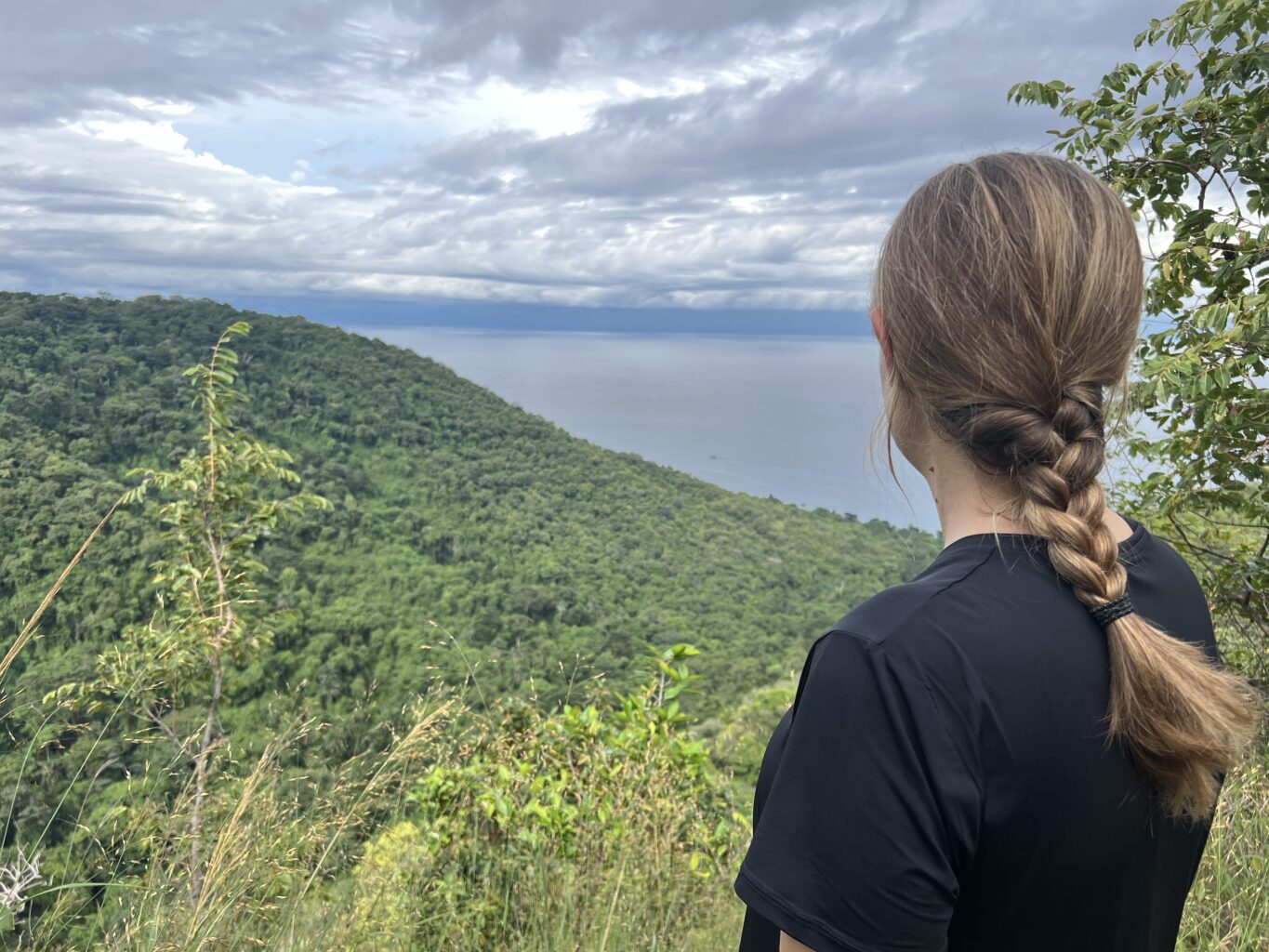
When I learned I received the Leakey Foundation grant, I was actually in Gombe National Park collecting preliminary urine data for my project! It was so wonderful to be surrounded by other primate enthusiasts and researchers and to share my good news with them. It gave everyone a tremendous boost of motivation to get the project up and running!
This grant will allow me to analyze chimpanzee urine samples for not only cortisol concentrations but inflammatory biomarkers as well – something I was unable to do before receiving funding support from The Leakey Foundation. After I complete my dissertation, I plan to dedicate my career to engaging the public in scientific and primate-specific research.
What surprising discovery or challenging obstacle have you encountered in your work so far?
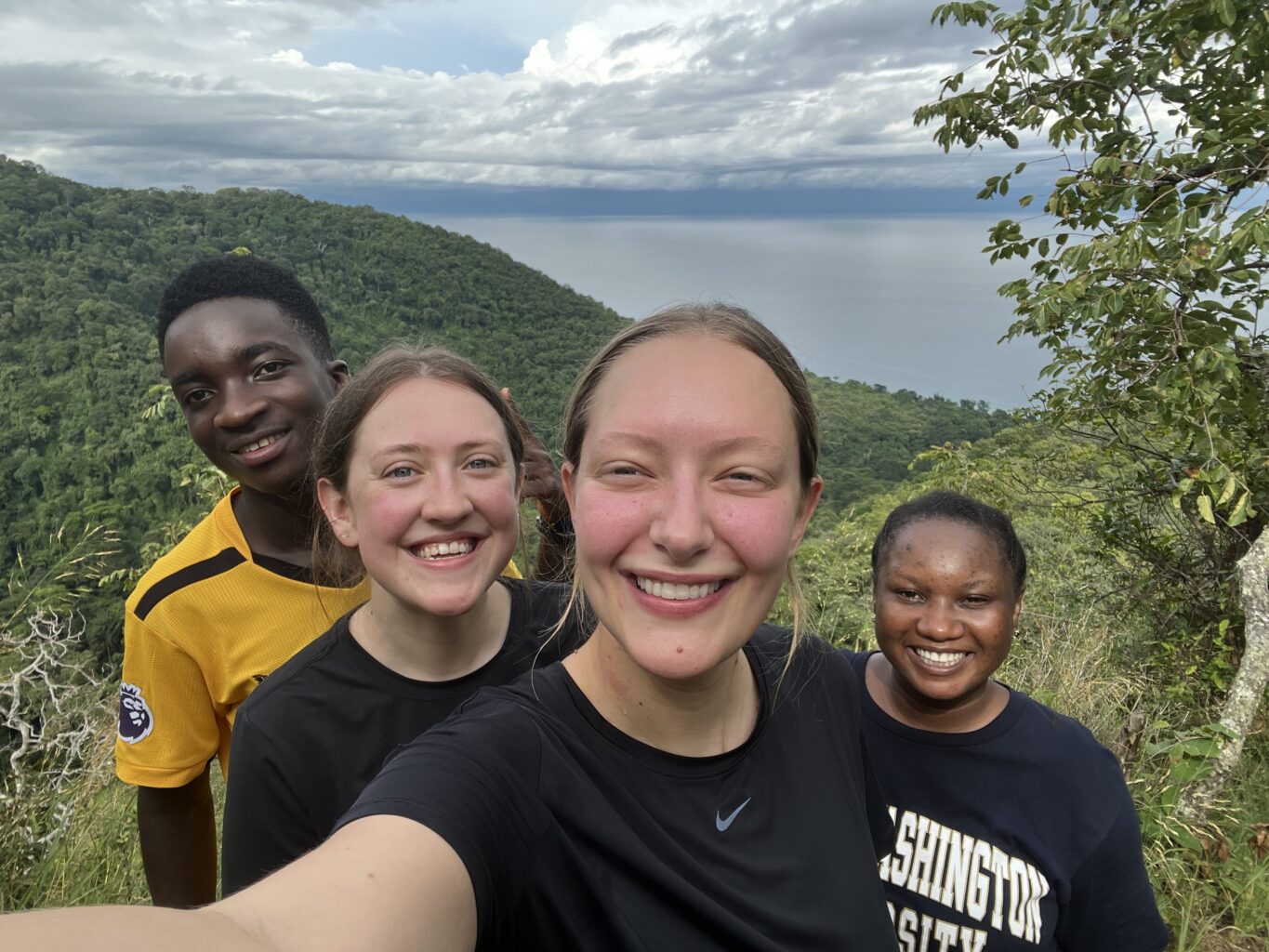
As someone who has never been camping, I was extremely nervous to embark on my first field season! While Gombe is an incredibly well established field site, I had never experienced such remoteness. Getting a handle on the physical nature of field work was quite a challenge at first but I had wonderful help from the other field researchers and guides.
It surprised me to learn how quickly the chimpanzees move through the dense forest. Moving on two legs is much harder! I am very lucky to have an amazing research assistant who has collected chimpanzee urine samples previously. She has given me great advice and encouragement along the way!
Why should people care about human origins research and chimpanzee research?
How can we look forward to the future of humanity if we do not understand our past and place in the natural world?
Research on chimpanzees, some of our closest living relatives, helps connect humans to the natural world. By understanding chimpanzee behavior and how it is similar and different to our own, people can be more inspired to care about chimpanzee conservation and protection of natural habitats. Currently, non-human primate habitats across the world are rapidly disappearing due to human acts like deforestation, pollution, and climate change. I hope that research projects like my own can remind people of how close and related we are to other creatures. And that we have a duty to care about them and their habitats.
Is there anything we haven’t asked that you’d like our readers to know about you or your work?
Other than primates, I am most passionate about public outreach and engagement. I have been serving as a volunteer at the Smithsonian’s National Zoo and Conservation Biology Institute for over 5 years now. I love getting to interact with the general public and share stories of scientific research and conservation.
Making my research accessible to the general public is something I will be prioritizing as I complete my analysis. Connecting the general public with chimpanzee research can inspire them to care even more about their safety and conservation. I have planned talks at both the National and Baltimore Zoo to share stories of my research with zoo guests. My talks will also show how they can impact chimpanzee conservation in their daily lives. I also participate in the Letters to a Pre-Scientist program. This matches me with an elementary or middle school student interested in a career in science. We exchange letters throughout the academic year where I give advice and encouragement on pursuing a career in STEM.
What’s your favorite mind-blowing fact related to human origins, evolution, or your field?
Orangutans have the longest nursing period of any mammal on earth – up to 9 years! That is a long time for orangutan mothers to be lactating!