
Grantee Spotlight
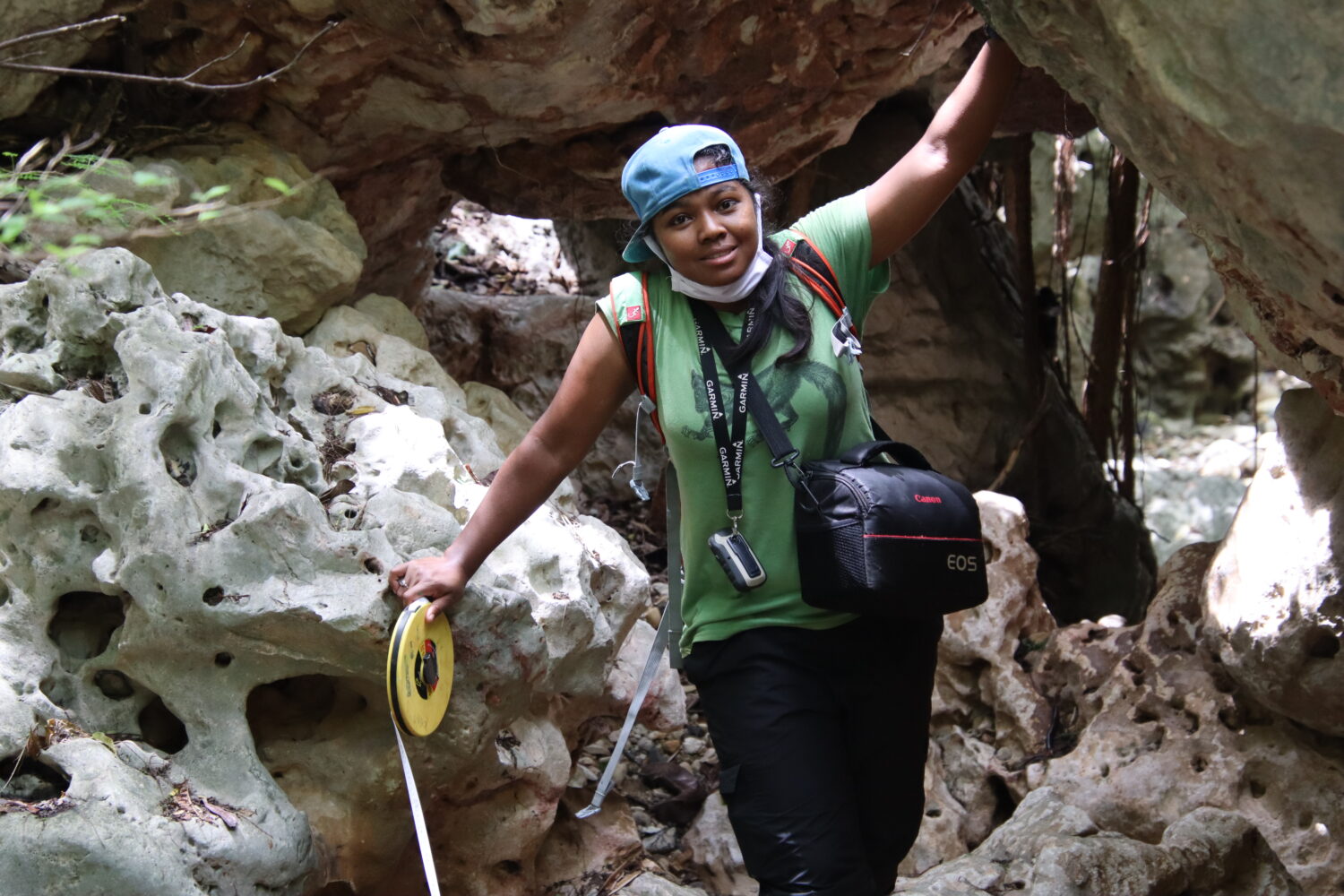
Most primates are hard to study. Nocturnal ones, active high in the trees after dark, are harder still. Eva Stela Nomenjanahary grew up in Madagascar, one of the most biodiverse countries on Earth. Now a PhD student in anthropology at the University of Colorado Boulder, she’s recording and analyzing the vocalizations of fork-marked lemurs to understand what their calls mean and how they change as habitat becomes fragmented.
She received a Leakey Foundation Baldwin Fellowship in 2025 to support her doctoral training in bioacoustics, ecological modeling, and conservation science. After completing her PhD, she plans to return home to lead conservation programs, train future Malagasy scientists, and work with local communities to protect Madagascar’s unique biodiversity.
Tell us about your Leakey Foundation-supported research project
With support from the Leakey Foundation, I will pursue my PhD in Anthropology at the University of Colorado Boulder, where I will deepen my research on primate communication and conservation. My work focuses on nocturnal lemurs in Madagascar‚ specifically Phaner pallescens, also known as fork-marked lemurs. These small, rare primates are active at night and communicate using distinct vocal calls.
By recording and analyzing their vocalizations, I aim to understand the different meanings and functions of their calls‚ such as keeping in touch with group members, avoiding predators, or attracting mates. I’m especially interested in how these calls change in response to human disturbances like habitat loss and climate change. This research is important because it can help conservationists monitor endangered species using non-invasive tools like sound recordings.
The Leakey Foundation’s support is vital for completing my studies in the U.S. and gaining advanced training in bioacoustics, ecological modeling, and conservation science. These tools will allow me to develop effective, research-based strategies for protecting primates and their habitats. After completing my PhD, I plan to return to Madagascar to lead conservation programs, train future Malagasy scientists, and work with local communities to safeguard our country’s unique biodiversity.
This opportunity will not only advance science but also contribute to long-term, locally led conservation efforts in Madagascar.
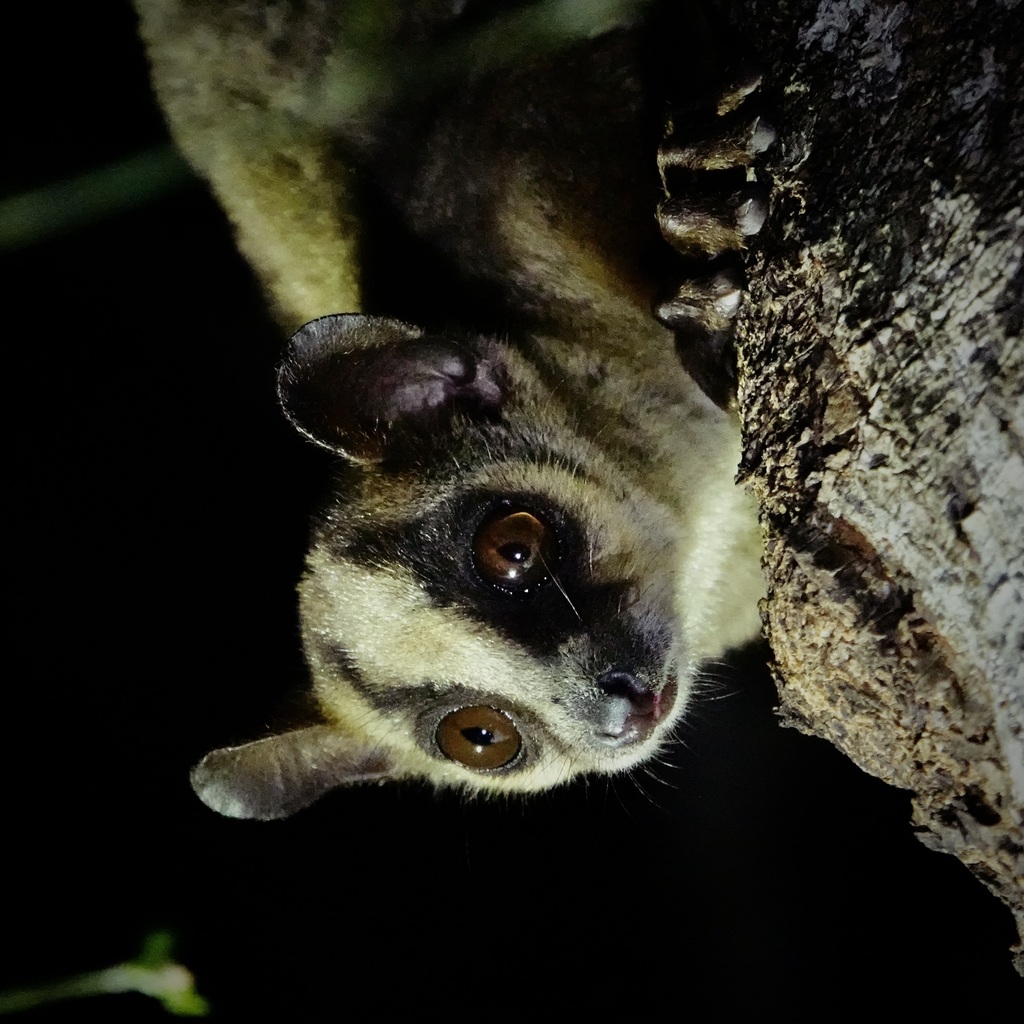
Pale Fork-marked Lemur Phaner pallescens Simon M Bell (CC BY-NC) via iNaturalist
What questions are you most interested in answering with your research and why?
I am most interested in understanding how primates‚ particularly nocturnal lemurs like Phaner pallescens‚ use vocal communication to navigate their environment, maintain social relationships, and respond to human-induced changes such as habitat fragmentation.
My research asks:
- What types of vocalizations do these primates produce, and what do these sounds communicate?
- How do environmental factors, such as forest disturbance or fragmentation, affect their calling behavior?
- Can vocal patterns be used as reliable indicators of population health and habitat quality?
These questions are important because many primate species in Madagascar are endangered and difficult to monitor using traditional methods, especially those that are nocturnal and live high in the trees. By using passive acoustic monitoring, I aim to develop non-invasive tools that can help researchers and conservationists detect the presence of species, understand their behavior, and assess the impact of environmental change.
Answering these questions will not only advance our scientific knowledge of primate communication and adaptation but will also provide practical tools for conservation planning in Madagascar. It’s critical to develop effective, affordable methods for monitoring primates in the wild, especially in remote or threatened habitats. It’s also important for informing conservation efforts so they can be more responsive and impactful.
What sparked your interest in lemurs and conservation? Was there a specific moment that set you on your path?
My interest in primatology and conservation began with a deep curiosity about nature and a desire to understand the living world around me. Growing up in Madagascar, one of the most biodiverse countries on Earth‚ I was surrounded by extraordinary wildlife. But I also witnessed firsthand how quickly that biodiversity was disappearing. This contrast between natural beauty and environmental degradation sparked a sense of urgency and responsibility in me from an early age.
A defining moment came during my undergraduate studies, when I had the opportunity to observe lemurs in their natural habitat for the first time. Watching these animals move through the forest and communicate with one another was a powerful experience‚it made me realize how much we still don’t know about their lives, especially those of the more elusive nocturnal species. I was particularly fascinated by their vocalizations and the possibility of using sound to study animals that are difficult to see. That experience solidified my desire to become a primatologist and use scientific research to support conservation efforts in Madagascar.
Over the years, I have continued to build on that passion through hands-on fieldwork, research in primate behavior, and community-based conservation projects. Today, I am motivated not only by scientific discovery, but also by a strong commitment to protecting Madagascar’s unique biodiversity and training the next generation of Malagasy conservationists.
How did you feel when you learned you received your Baldwin Fellowship? What impact will this support have on your life and career?
When I learned that I had been awarded the Leakey Foundation Baldwin Fellowship, I was overwhelmed with gratitude and joy. It felt like a powerful validation of all the hard work, challenges, and dreams that have guided my journey into science. As a student from Madagascar preparing to pursue a PhD in the United States, I knew that this support would be life-changing, not only for me, but also for the communities and ecosystems I aim to serve.
This fellowship relieves a significant financial burden and allows me to focus fully on my doctoral studies in primatology at the University of Colorado Boulder. It also strengthens my commitment to return to Madagascar and contribute to research, teaching, and conservation from within my home country. The Leakey Foundation’s support is not just funding, it is a vote of confidence in my potential to make a lasting impact in science and conservation. It inspires me to push forward with even more determination, knowing that I am not alone in this journey.
What surprising discovery or challenging obstacle have you encountered in your work so far?
One surprising discovery in my research has been the complexity and richness of primate vocal communication, especially among nocturnal lemurs. Using passive acoustic monitoring, I realized that these animals use a diverse range of calls to interact, much more than I initially expected. This has opened up exciting new possibilities for non-invasive monitoring of elusive species, which is crucial for their conservation.
On the other hand, a significant challenge I have faced is overcoming the logistical and technical difficulties of conducting fieldwork in remote and understudied areas like Madagascar’s forests. Equipment can fail, weather conditions can be harsh, and gaining the trust and collaboration of local communities takes time and sensitivity. These obstacles have taught me the importance of patience, adaptability, and building strong relationships with local partners, skills that are as vital as scientific knowledge for successful conservation work.
Why should people care about human origins research?
Understanding human origins helps us learn where we come from and what makes us uniquely human. It connects us to the natural world and to other living beings, especially our closest relatives, the primates. This research sheds light on how humans have evolved over millions of years‚ how our bodies, behaviors, and cultures have changed‚ and helps us appreciate the long journey that shaped who we are today.
Beyond satisfying curiosity, studying human origins also teaches us about adaptation, survival, and the impacts of environmental changes. This knowledge is important for addressing today’s challenges, such as climate change and biodiversity loss. By understanding our evolutionary past, we can better protect the ecosystems we depend on and make more informed decisions for the future of both humans and wildlife.
How can research related to human evolution help us understand or solve a significant challenge we face today?
Research in human evolution helps us understand how humans and other primates have adapted to changing environments over millions of years. By studying primate behavior, communication, and ecology‚ like I do with lemurs‚ we gain insight into how animals respond to habitat loss, climate change, and human disturbance. These insights can guide effective conservation strategies to protect endangered species and preserve biodiversity.
My work, especially using bioacoustic monitoring to study primate vocalizations, offers a non-invasive way to track animal populations and detect environmental stressors early. This helps conservationists act before species become critically endangered. Ultimately, understanding our evolutionary connections with other primates highlights the importance of maintaining healthy ecosystems, which are vital not only for wildlife but also for human well-being.
Is there anything we haven’t asked that you’d like our readers to know about you or your work?
One thing I’d like readers to know is how deeply connected my research is to my home country, Madagascar. Madagascar is a global hotspot for biodiversity, with many unique primate species found nowhere else on Earth. My work is not just about advancing science‚it’s about helping to protect these incredible animals and their habitats, which are under constant threat from deforestation and human activity.
I am passionate about combining rigorous scientific research with community engagement and education to build local capacity for conservation. Ultimately, I hope my work will support both wildlife preservation and sustainable livelihoods for the people who live alongside these primates. This holistic approach is essential for long-term conservation success.
What’s your favorite mind-blowing fact related to human origins, evolution, or your field?
One of the most fascinating facts about human origins is that humans share a significant amount of DNA with all primates, including lemurs‚ some of the most ancient primates native to Madagascar. Although lemurs are more distantly related to us than great apes, this genetic connection highlights how all primates share a common evolutionary history. Studying these animals can reveal important clues about our own biology, behavior, and evolution.