
Grantee Spotlight
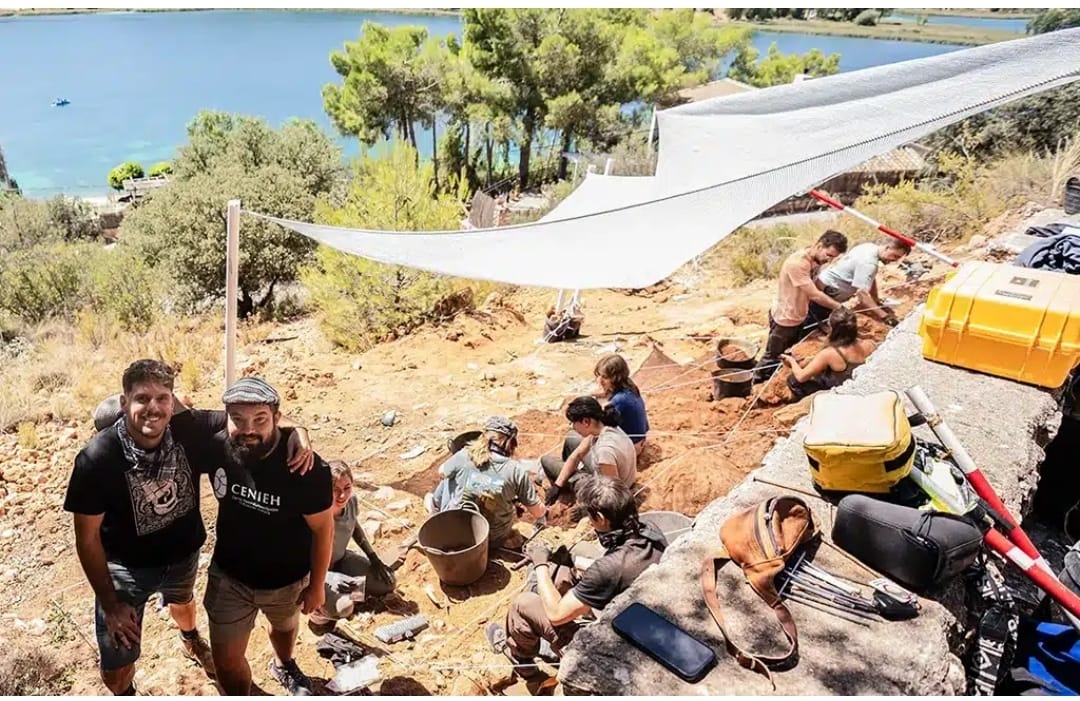
Daniel García Martínez is a Leakey Foundation grantee and a professor at Universidad Complutense de Madrid. He is a paleoanthropologist and the director of several research sites, such as Cueva de los Toriles and Ruidera-Los Villares site in Castilla La Mancha, Spain. His Leakey-funded work focuses on excavating the Ruidera-Los Villares site (dated at 300,000-400,000 years ago) to learn whether the hominin fossils found there belong to the Neanderthal lineage or an older Homo erectus-like lineage, helping clarify human evolutionary pathways in Middle Pleistocene Western Europe.
Daniel García Martínez’s research combines geochronological analysis, faunal and lithic study, and fossil interpretation to build a clearer picture of the lifestyles and environment of early humans in the Iberian Peninsula. He is especially interested in how early humans adapted to changing landscapes and how their technological and anatomical traits varied across regions.
Questions and answers with Daniel García Martínez
Tell us about your Leakey Foundation-funded project
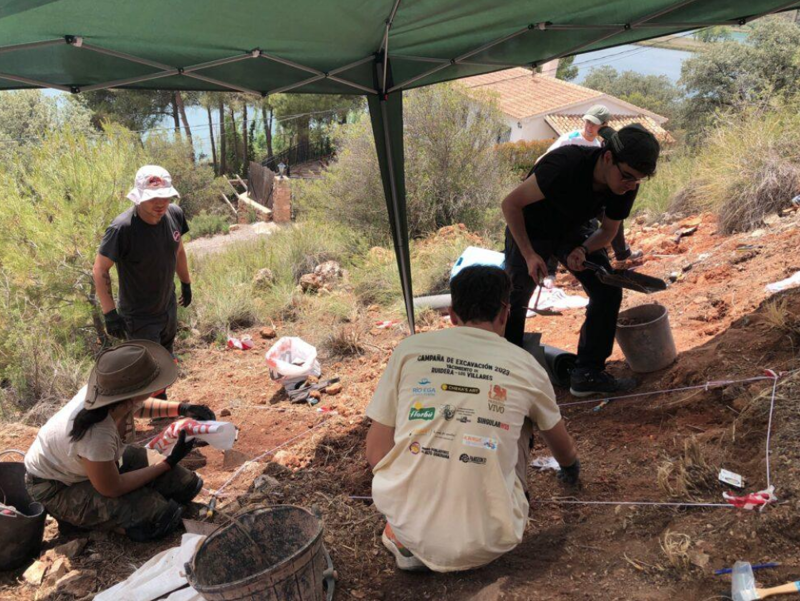
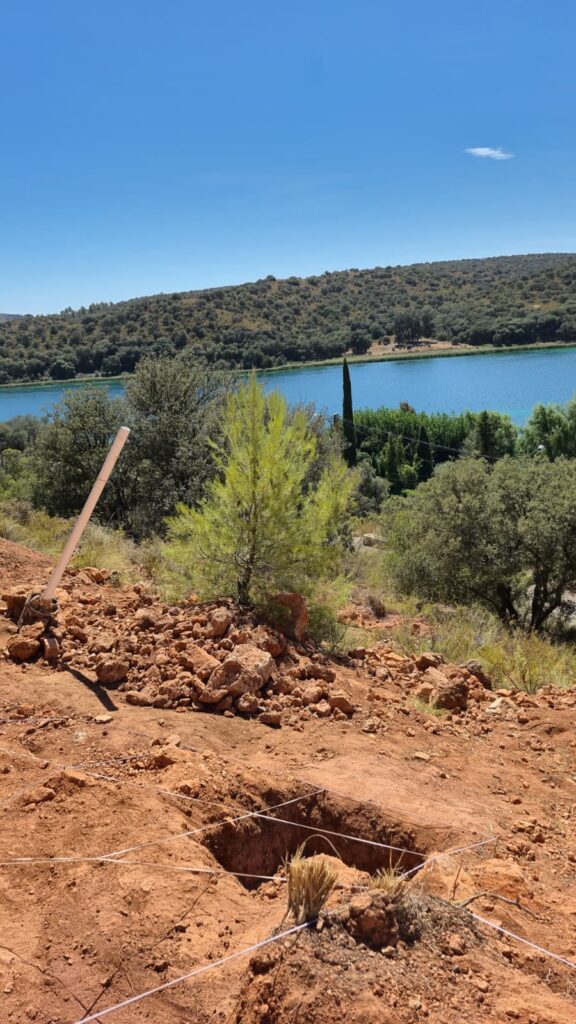
Our Leakey Foundation-funded project investigates the “Ruidera-Los Villares” site in Castilla-La Mancha, Spain, a key location for understanding human evolution during the Middle Pleistocene. This site, discovered in 2018, is near the Ruidera lakes and features an exceptional karstic landscape formed by Mesozoic carbonates. Initial findings, including a diverse assemblage of over 50 Caprinae fossils, date back to 300,000-400,000 years ago, underscoring its potential to fill critical gaps in the archaeological record.
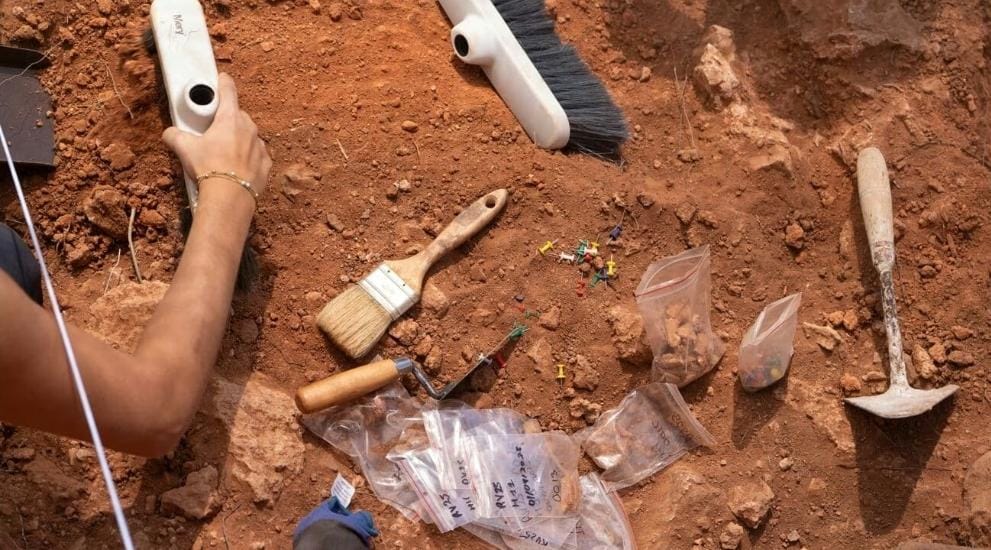
In 2023, a crowdfunding campaign enabled a second excavation, yielding significant results: more than 900 well-preserved faunal remains, numerous manufactured lithic artifacts, and over 15 hominin fossils. These findings are pivotal in piecing together the region’s paleoanthropological narrative.
Key areas of investigation include:
- Stratigraphy and geophysics: The site’s shelter, formed by erosion, contains Middle Pleistocene sediments. Geophysical surveys suggest the potential to expand the excavation area, doubling its current size.
- Faunal analysis: Dominated by small bovids, the faunal assemblage includes species like Equus sp., Panthera spelaea, and Lynx pardinus, indicating a rocky ecosystem with sparse vegetation.
- Evidence of human activity: The lithic industry at the site, primarily quartzite cores and flakes, suggests ancient manufacturing processes. Potential cut marks on some faunal fossils are being analyzed with advanced techniques.
- Human remains: Among the 2023 findings are hominin fossils, including upper molars, a partial parietal bone, and various postcranial elements. Preliminary analysis suggests a taxonomy more akin to the archaic-like fossils from Arago Cave rather than pre-Neanderthals from Sima de los Huesos.
Our project aims to conduct two additional excavation campaigns in 2024 and 2025, supported by comprehensive geochronological analyses. We hypothesize that the assemblage forms a unified stratigraphical unit dating to 300-400 thousand years ago and that the Iberian Peninsula during this period hosted two distinct human lineages. This research will significantly advance our understanding of human evolution and regional variations in Western Europe during the Middle Pleistocene.
How did you become interested in paleoanthropology?
My interest in paleoanthropology and archaeology began in childhood. I was always fascinated by stories of ancient civilizations and the mysteries of our origins. Books about dinosaurs, ancient human ancestors, and the evolution of life on Earth sparked this curiosity. My passion for science was nurtured by supportive teachers and family members who encouraged me to explore and ask questions.
As I grew older, this fascination turned into a more focused interest in human evolution. I was captivated by how our ancestors lived, adapted, and evolved over millions of years. The idea that we could uncover clues about our past through fossils, artifacts, and ancient landscapes was thrilling. This passion led me to pursue studies in anthropology and archaeology, where I could delve deeper into these questions.
Fieldwork opportunities during my undergraduate and graduate studies solidified my dedication to this field. Excavating sites, analyzing fossils, and piecing together the lives of early humans gave me a profound appreciation for the scientific process and the stories embedded in the earth. Each discovery, no matter how small, felt like a step closer to understanding the intricate puzzle of human evolution.
Ultimately, my journey into paleoanthropology and archaeology was driven by a lifelong curiosity and a deep desire to uncover humanity’s roots. This Leakey Foundation-funded project at the Ruidera-Los Villares site is a continuation of that journey, offering an incredible opportunity to contribute to our understanding of human history and evolution.
What questions are you most interested in answering with your research and why?
My research at the Ruidera-Los Villares site is driven by several key questions that aim to deepen our understanding of human evolution during the Middle Pleistocene. Answering these questions helps us piece together the complex puzzle of human evolution, shedding light on how our ancestors lived, adapted, and evolved over time. It also contributes to our broader understanding of human diversity and the evolutionary processes that shaped our species. By exploring these aspects, we can better appreciate the rich tapestry of our shared history and the remarkable journey of human development.
- What was the lifestyle and environment of early humans in the Iberian Peninsula?
Understanding the daily lives, survival strategies, and environmental contexts of early humans is fundamental. By analyzing faunal remains, lithic tools, and sediment layers, we can reconstruct the habitat and behaviors of these populations. This helps us understand how they adapted to their surroundings and interacted with other species, offering insights into their survival strategies and cultural practices. - How did early human populations in Western Europe vary regionally?
A significant aspect of my research is testing the hypothesis that there were two distinct human lineages in the Iberian Peninsula during the Middle Pleistocene. One lineage, the pre-Neanderthals, is associated with the Sima de los Huesos site in Northern Spain, while a more archaic-like population might have existed in the Southern region, similar to the Arago Cave fossils in France. Exploring regional variations can reveal patterns of migration, adaptation, and interaction among early human groups. - What can the lithic tools tell us about technological and cognitive development?
The lithic industry at the site, including cores and flakes crafted from quartzite, provides clues about the technological capabilities and cognitive skills of early humans. By studying these tools, we can infer how these populations developed and transmitted knowledge, highlighting their problem-solving abilities and cultural evolution. - What is the chronological framework of the Ruidera-Los Villares site?
Establishing an accurate timeline for the site is crucial. Using techniques like Radiocarbon, Uranium-Thorium, and Electron Spin Resonance (ESR) dating, we aim to confirm that the assemblage of faunal and human fossils, along with stone tools, forms a unified stratigraphical unit dating between 300-400 thousand years ago. This chronological framework is essential for placing the site within the broader context of human evolution in Western Europe. - How do the human remains contribute to our understanding of early human anatomy and taxonomy?
The human fossils found at the site, including teeth, skull fragments, and postcranial elements, are invaluable for studying the anatomical features and taxonomic classification of early humans. By comparing these remains with other known fossils from the Upper and Middle Pleistocene, we can gain insights into the evolutionary relationships and physical characteristics of these populations.
How did you feel when you learned about your Leakey Foundation grant?
When I learned that I had received a Leakey Foundation grant, I felt an overwhelming sense of excitement and gratitude. It was a moment of validation for the hard work and dedication my team and I had invested in our research at the Ruidera-Los Villares site. The grant represented not just financial support but also recognition from a prestigious organization dedicated to advancing our understanding of human origins.
This grant is a significant milestone in my career, providing the resources needed to conduct two additional excavation campaigns in 2024 and 2025. It will enable us to undertake comprehensive geochronological analyses, essential for accurately dating the faunal and human fossils as well as the surrounding sediments. These analyses are crucial for testing our hypotheses about the presence of distinct human lineages in the Iberian Peninsula during the Middle Pleistocene.
Beyond the immediate research goals, the grant will enhance my professional development. It offers opportunities for collaboration with leading experts in paleoanthropology, access to cutting-edge technologies, and the ability to present our findings at international conferences. This exposure is invaluable for establishing my reputation in the field and opening doors to future research opportunities and funding.
Moreover, the grant alleviates the financial constraints that have previously limited our research. It ensures that we can expand our excavation efforts, validate our hypotheses, and contribute meaningful insights to the scientific community. The support from The Leakey Foundation will undoubtedly accelerate our progress and help us make significant contributions to our understanding of human evolution.
In summary, receiving this grant has been a transformative experience. It not only fuels our current research but also shapes my future in paleoanthropology, enabling me to pursue my passion with renewed vigor and expanded possibilities.
Why should people care about human evolution?
Research like mine is crucial because it helps us understand the deep history of humanity, shedding light on where we come from and how we have evolved over millions of years. This knowledge is fundamental to our sense of identity and our understanding of what it means to be human. By studying ancient sites like Ruidera-Los Villares, we uncover the lifestyles, behaviors, and environments of our early ancestors. This helps us understand the evolutionary processes that shaped modern humans, including physical adaptations, social behaviors, and cognitive developments.
Discovering and analyzing ancient tools, fossils, and artifacts provides insights into the cultural and technological advancements of early humans. It shows how our ancestors solved problems, created tools, and developed social structures, contributing to our knowledge of human ingenuity and resilience.
Examining past climates and environments where early humans lived can inform us about how they adapted to changing conditions. This is particularly relevant today as we face significant environmental challenges. Understanding past human responses to climate change can offer valuable lessons for contemporary society.
Research into human evolution also highlights both the diversity and unity of the human species. It reveals the varied paths our ancestors took and the commonalities that unite us all. This fosters a greater appreciation for the rich tapestry of human heritage and promotes a sense of global connectedness.
And finally, paleontological and archaeological discoveries captivate the public imagination and inspire curiosity about science and history. This research engages people of all ages, encouraging interest in STEM fields and the pursuit of knowledge.
What’s your favorite mind-blowing fact related to human origins?
One of the most mind-blowing facts about human evolution is that all modern humans can trace their ancestry back to a single population that lived in Africa approximately 200,000 years ago. This concept, known as the “Out of Africa” theory, is supported by genetic evidence that shows a remarkable similarity in the mitochondrial DNA of people from diverse geographical regions. Mitochondrial DNA is passed down from mothers to their offspring, and by analyzing these genetic markers, scientists have been able to map the journey of early humans as they migrated out of Africa and spread across the globe.
What makes this fact truly astonishing is the implication that despite the incredible diversity we see among human populations today, we all share a common origin. This shared heritage underscores the interconnectedness of the human species and emphasizes that the genetic differences among us are relatively recent and superficial.
Furthermore, the “Out of Africa” migration was not a single event but rather a series of waves over tens of thousands of years. As these early humans moved into new environments, they adapted to different climates and ecological conditions, which eventually led to the rich tapestry of cultures and physical characteristics we observe today.
This profound connection to a common ancestral population highlights our unity as a species and offers a powerful reminder of our shared journey through time. It also emphasizes the importance of understanding and preserving our collective history, as it holds the key to understanding who we are and how we have come to inhabit every corner of the planet.