
Baldwin Fellows | Grantee Spotlight
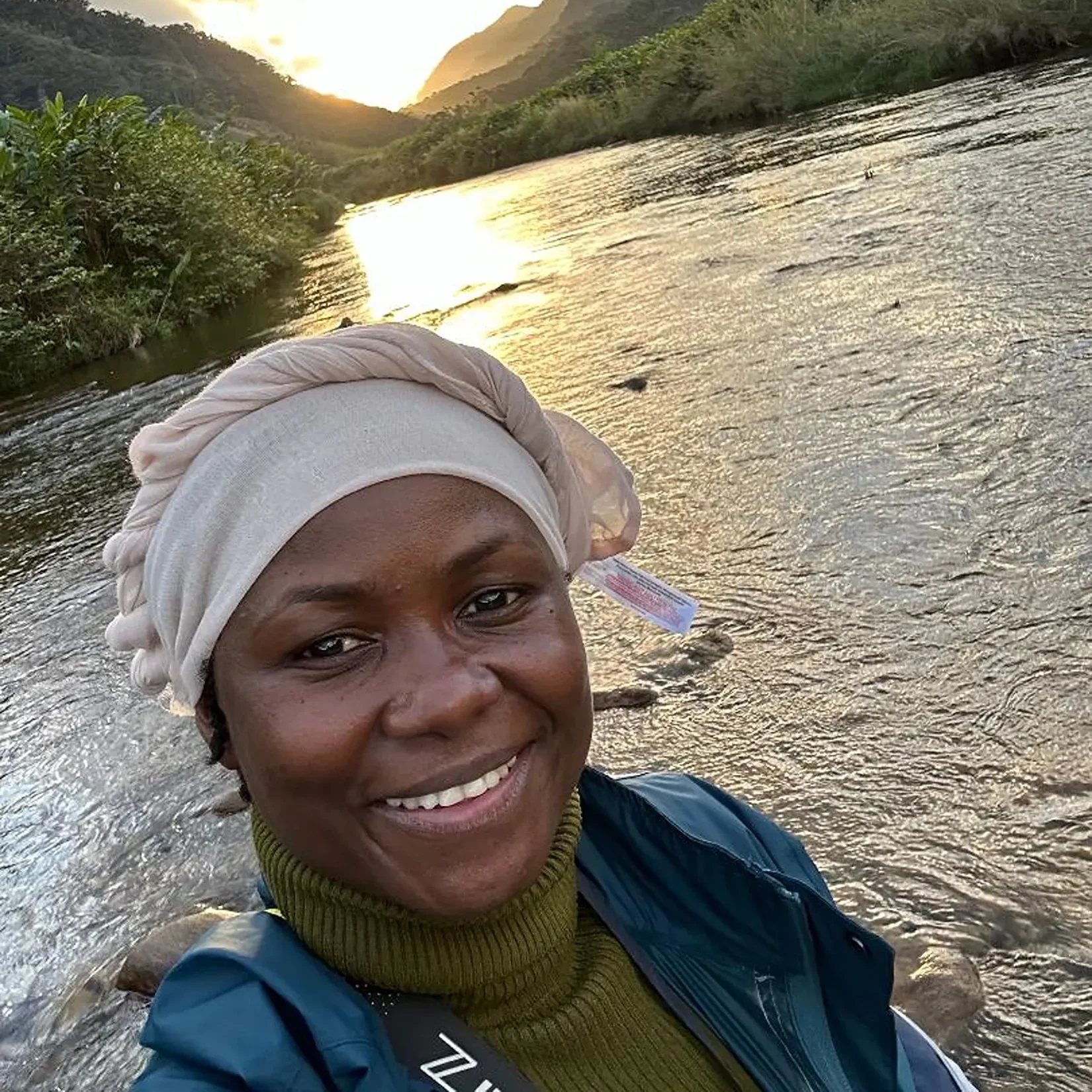
Florence Aghomo is a primatologist from Cameroon, a Leakey Foundation Baldwin Fellow, and a PhD candidate in the Interdepartmental Doctoral Program in Anthropological Sciences (IDPAS) at Stony Brook University. After earning an engineering diploma in forestry and wildlife from the University of Dschang and a master’s in inland water quality assessment from the Autonomous University of Madrid, she spent years building a conservation career, conducting wildlife surveys and ethnozoological studies in Cameroon.
Driven by her passion for primate well-being and conservation, she began working with primates in Cameroon in 2011. Since 2019, she has served as coordinator of the Red Colobus Conservation Network project under IUCN/SSC/PSG, Re:wild, and the African Primatological Society. She helped found the Cameroon Primatological Society in 2020, and she now serves as its President. With a global vision, she established an Environmental and Language Center (ENLACE) in Ranomafana, Madagascar, under the Flor’ Foundation to promote education and conservation. The center operates with support from The Safina Center.
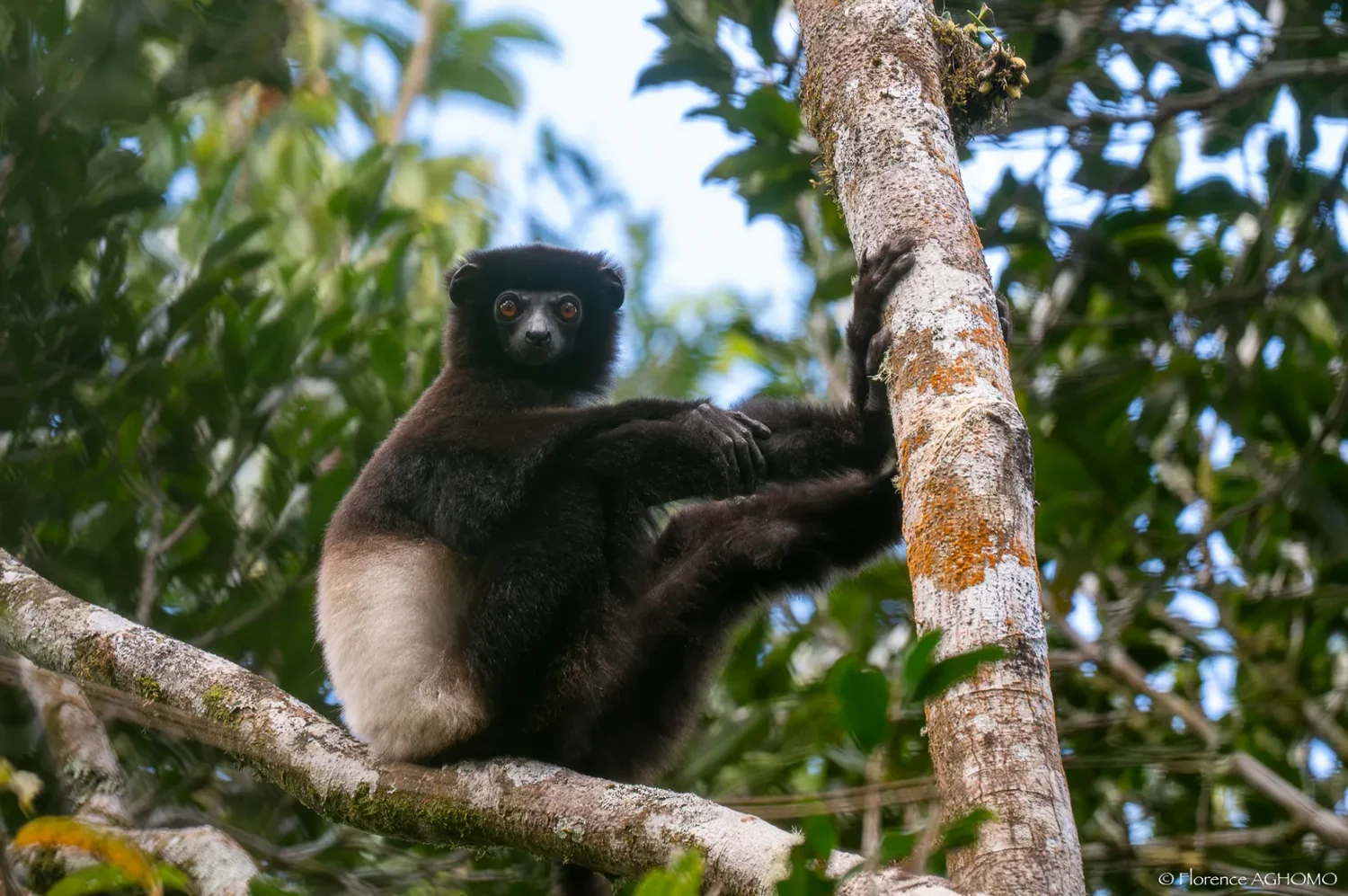
A moment of quiet balance in the canopy – this Propithecus edwardsi sits comfortably on a branch, using its upper limbs to grasp its lower limbs. Florence Aghomo
Now, Florence studies a species of endangered lemurs called Propithecus edwardsi. These lemurs live only in a small area of rainforest in southeastern Madagascar, and nearly half of their total population is estimated to be in Ranomafana National Park.
Questions and answers with Florence Aghomo
Tell us about your Leakey Foundation-supported research
Gene flow is a major conservation concern because the transfer of genes between populations affects genetic diversity, adaptability to environmental change, and survival. For strictly or partially arboreal primates, whose movement depends on continuous canopy cover for foraging and escaping predators, even small gaps in forest cover can become barriers that impede smooth arboreal movement and dispersal, isolating populations and leading to genetic erosion.
Many species are threatened today because of habitat fragmentation and loss. This is the case for Propithecus edwardsi, classified as Endangered by the IUCN Red List. Its habitat is limited to a small area of rainforest in the montane region of southeastern Madagascar, where nearly half of its total population is estimated to reside in Ranomafana National Park (RNP). Within RNP, the central part underwent selective logging between 1986 and 1989, and the entire park is periodically impacted by anthropogenic activities (such as road creation and illegal mining). In addition, the park is crossed by large rivers that may have led to isolated patches.
In this species, both males and females disperse, but dispersal is restricted in fragmented habitats, consequently limiting gene flow. To develop an appropriate conservation strategy for P. edwardsi, my project aims to assess the demographic and genetic status of the P. edwardsi population in RNP and determine whether the population represents a single genetically connected unit or genetically differentiated management units.
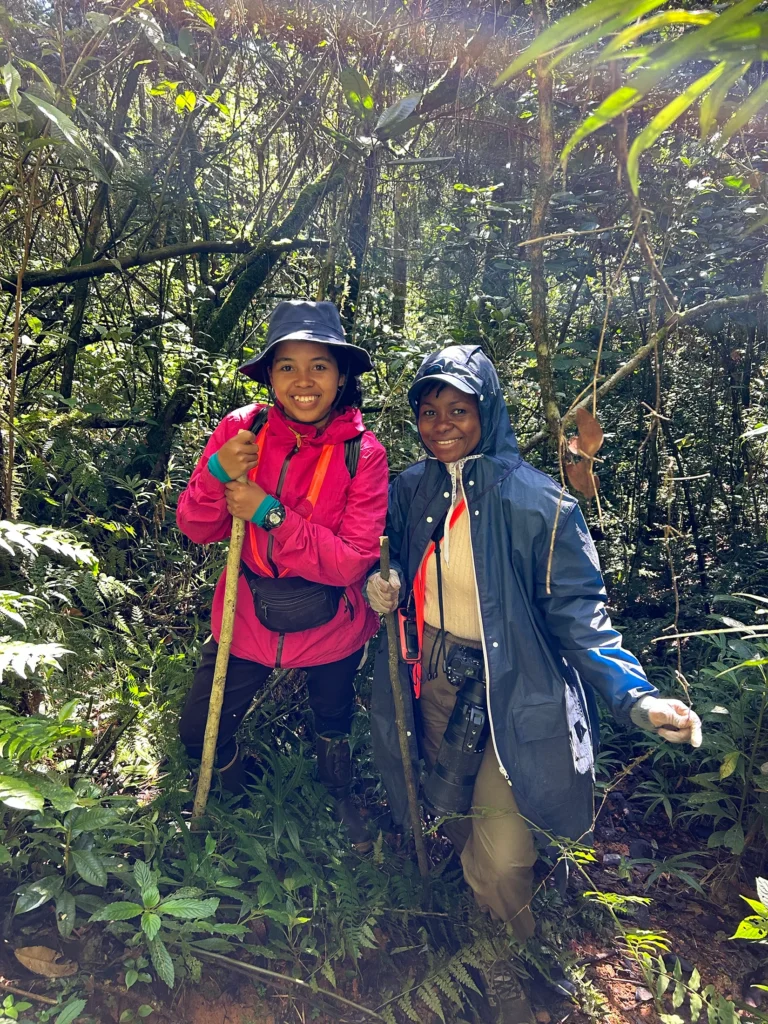
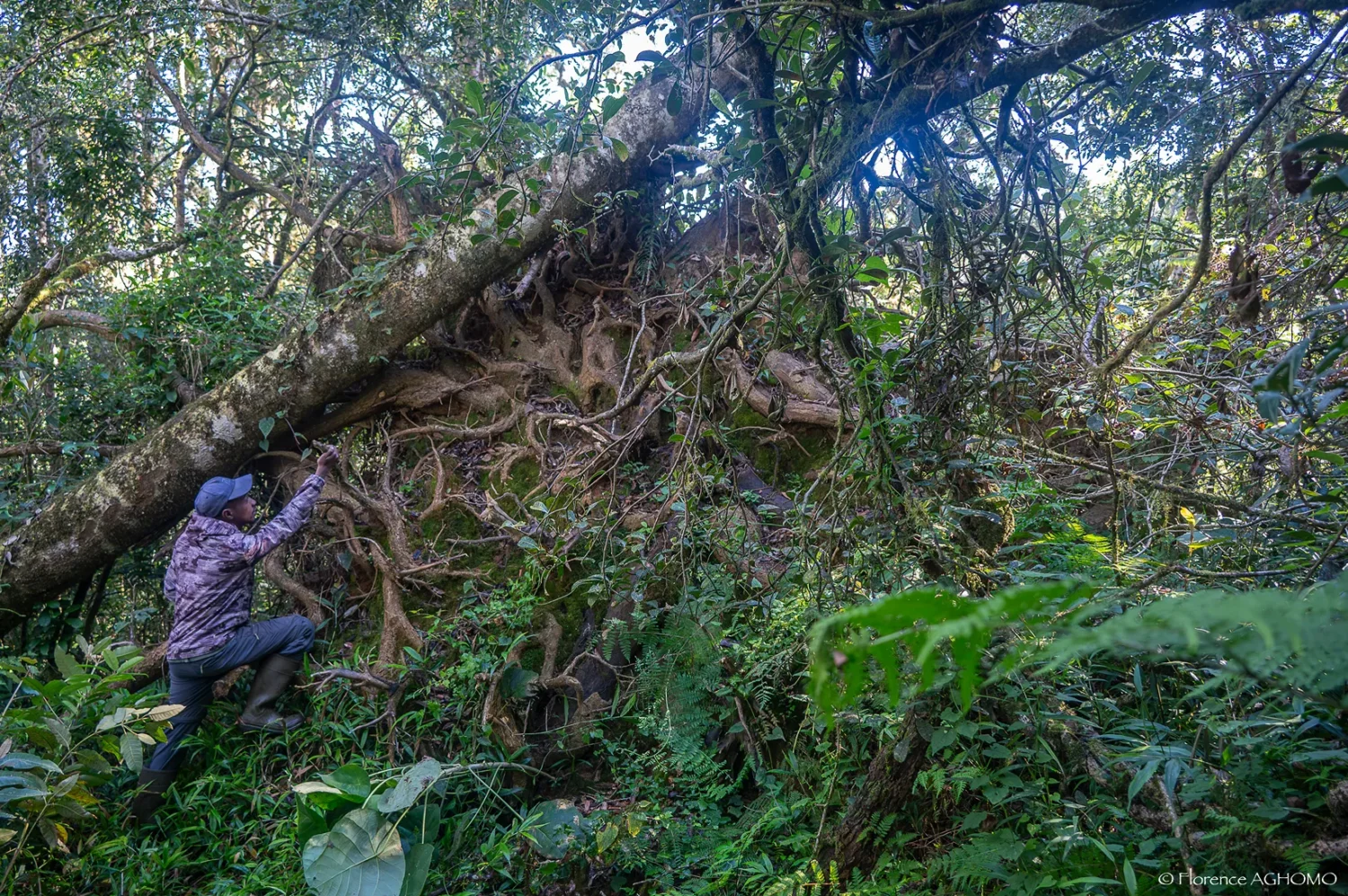
Florence Aghomo and her field assistant, Mirana Falitiana Randrianaivo, from the University of Antananarivo, Madagascar.
What questions do you hope to answer with your research, and why?
Although P. edwardsi has been studied in Ranomafana National Park (RNP) over the past 40 years, its current density or abundance across the park remains unknown. It is classified as Endangered by the IUCN Red List, and its principal threats are habitat fragmentation and loss due to agriculture, bushfires, logging, gold mining, and illegal rum production.
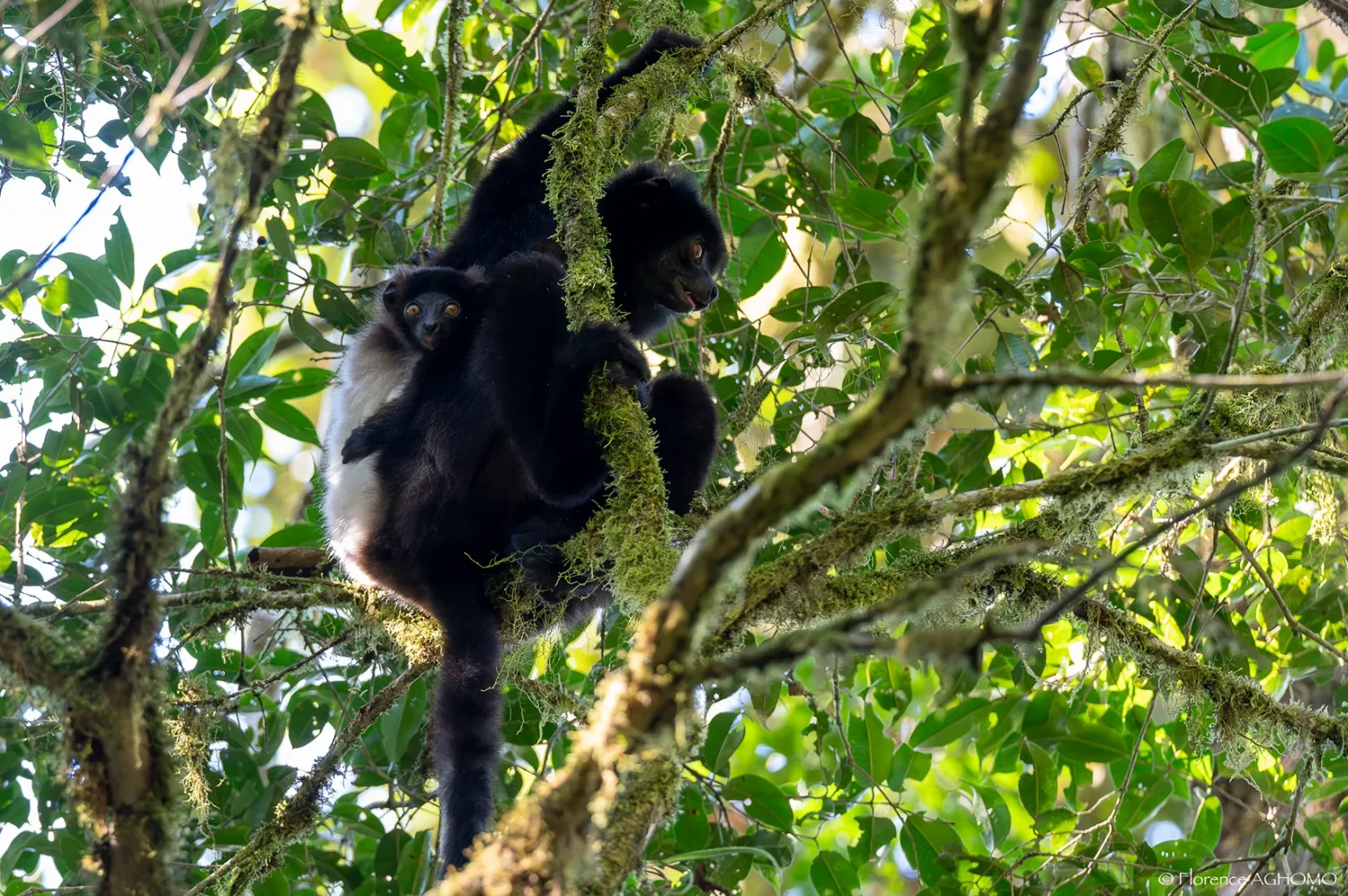
This species’ vulnerability is further intensified by its slow life-history strategy, characterized by producing a single offspring approximately every two years, combined with relatively high infant mortality rates, almost 50% before the age of one year. In addition, the impact of roads and rivers on this species’ dispersal and gene flow has not yet been assessed.
Therefore, to contribute to its long-term survival, further investigation is needed to better understand its population distribution, genetic diversity, and inbreeding depression. For this reason, my research will apply landscape genetics to answer this big question: How do landscape features affect population distribution, gene flow, and genetic structure in P. edwardsi across the Ranomafana National Park (RNP)?
More specifically, my research will address the following questions: What is the population density of P. edwardsi in the RNP, and does the density vary across the RNP? Does the P. edwardsi population represent a single genetically connected unit? If not, do rivers and roads constitute barriers to gene flow? Is the P. edwardsi population experiencing genetic erosion? And do P. edwardsi populations maintain effective population sizes and Ne/N ratios sufficient to ensure long-term genetic viability?
How did you become interested in studying primates?
In 2011, I was introduced to wildlife surveys and ethnozoological studies through my academic training to become a forestry and wildlife engineer. My main goal was to document wildlife presence and how local communities near the forest (Korup National Park, Cameroon) use it. During this training, I began working with primates and developed a particular interest in their behavior and well-being.
In 2018, I joined the IUCN/SSC/PSG as project coordinator of the Red Colobus Conservation Initiative. In this role, I monitored the implementation of the Red Colobus Conservation Action Plan and managed an international network of approximately 350 primatologists. I was responsible for promoting collaboration with conservation partners and organizations, fundraising, and supporting the professional development of young scientists through training and mentorship. Through this experience, I realized the need to do more.
In 2023, because Cameroon lacks an anthropology department specializing in biological anthropology, I enrolled in the Interdepartmental Doctoral Program in Anthropological Sciences (IDPAS) at Stony Brook University in the United States, with support from a scholarship. This program has allowed me to gain advanced training in techniques and methods used in primate behavior research, population studies, and primate conservation.
How did you feel when you learned you’d received a Baldwin Fellowship?
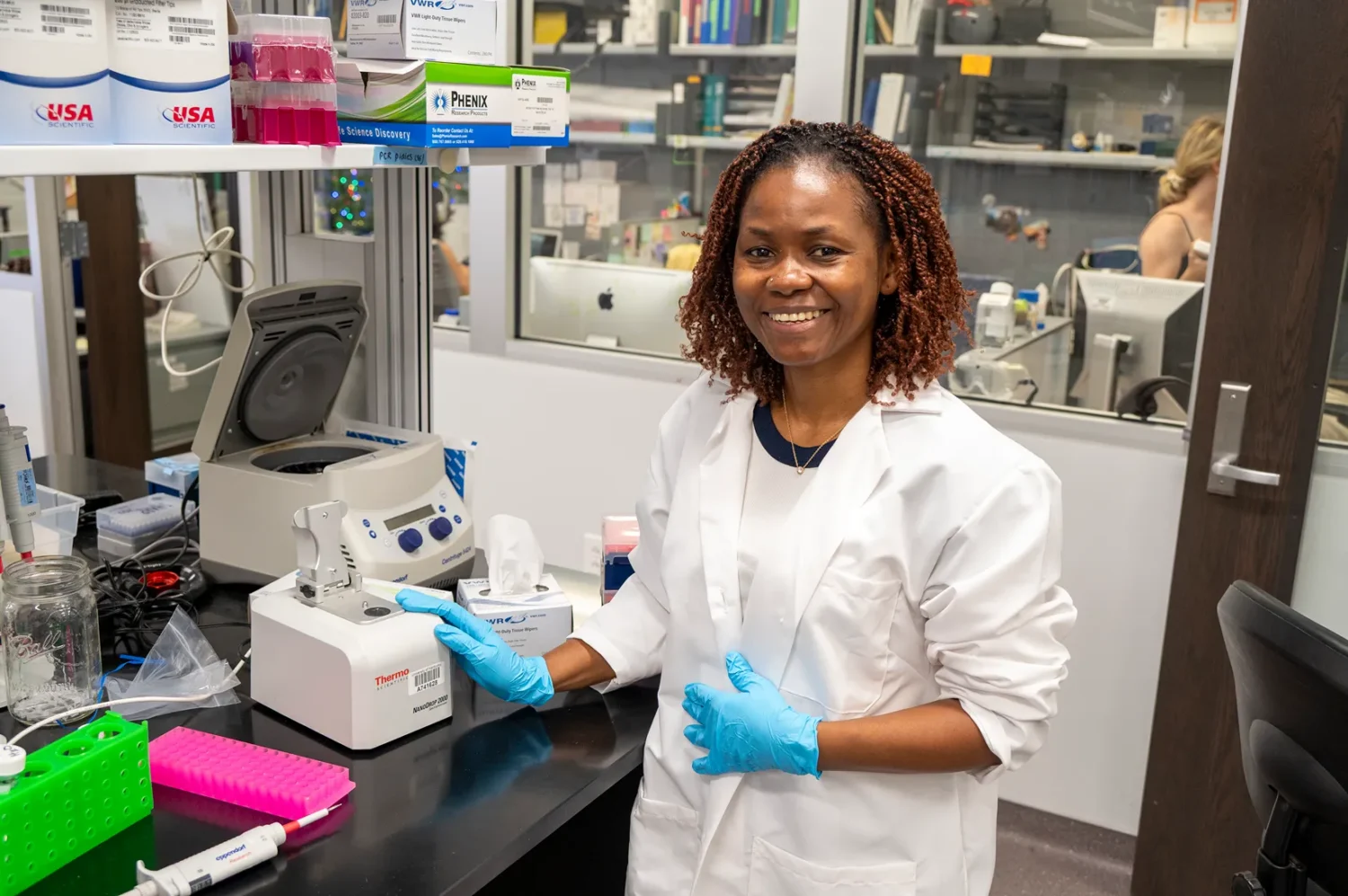
When I learned that I was a recipient of the Leakey Foundation’s Baldwin Fellowship, I was both excited and encouraged. It was a strong endorsement of my research and dedication to primate conservation. As an early-career researcher, I find it especially motivating to know that an organization with a long history of supporting scientific excellence believes in my potential. This fellowship will provide strong support for my Ph.D research and career. It will enable me to obtain specialized training in bioinformatics for DNA analysis and in Geographic Information Systems (GIS), both of which are crucial to successfully completing my doctoral research.
You’ve made a surprising and exciting discovery outside of primatology. Can you tell us about Florence’s Cave?
Stony Brook University offers advanced courses taught by highly experienced professors and lecturers. Thanks to their strong teaching skills, I learned about paleoanthropology and evolution.
During one of my field trips to a rainforest in Madagascar, I discovered a cave that was later explored and confirmed to contain hippo subfossils. This research is now funded by the Leakey Foundation. This achievement would not have been possible if I had not left my home country to pursue further education at Stony Brook University. Tropical rainforests seem like the last place where fossils could form because warm, wet conditions cause rapid decay. Yet fossilization is still possible; it simply takes the right organism, in the right place, at exactly the right time.
Welcome to Florence’s Cave!