


Dr. Clifford Jolly (1939- )
Brief biography
Oral history interview recorded January 23, 2026
Interviewer: Bernard A. Wood
Cliff Jolly spent over four decades in New York University’s Department of Anthropology. Born in Essex, England, Jolly excelled as an undergraduate at University College London, staying there for his graduate studies. Jolly’s PhD (jointly supervised by Nigel Barnicot and John Napier) on the systematics and functional anatomy of baboons initiated a distinguished career investigating the evolutionary biology of non-human primates, with an eye on its implications for early human evolution. Although less closely related to humans than the African apes, baboons thrived and diversified in the same habitats as early hominins, thus providing informative analogies that Jolly and his colleagues have exploited to help paleoanthropologists reconcile apparently conflicting behavioral, genetic, and anatomical evidence.
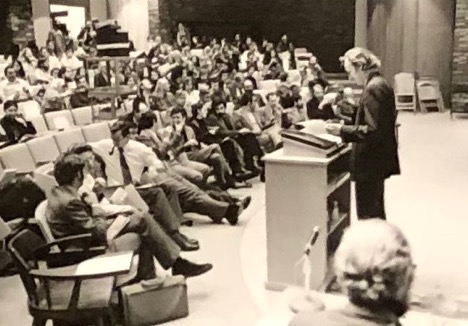
Jolly’s primate work with Napier and Barnicot encompassed molecular genetics (then in its infancy as a paleoanthropological tool), functional morphology, and paleontology. The latter centered on fossil Theropithecus, mostly collected by Louis and Mary Leakey at Kanjera, Olduvai (now Oldupai) Gorge and Olorgesailie. Interpreting Theropithecus‘ unique adaptations suggested a fresh, analogy-based perspective on the earliest known hominids (now hominins). Jolly’s novel scheme explained the basal hominins’ distinctive, derived, dentognathic, and postcranial features as adaptations to a habitat-based dietary shift, demoting stone tool use and bipedality to the later stages of hominization. When published in 1970, the theory attracted considerable paleoanthropological attention, most of it benign. In 1974, the Wenner-Gren Foundation brought together the ‘great and the good’ of early African hominin researchers in New York to discuss the fossil evidence and its context. The resulting Jolly-edited volume Early Hominids of Africa is deservedly influential.
Beginning in 1972, Jolly has investigated another area in which extant baboons provide informative analogies for interpreting early hominin biology, namely, the interactions between distinct but closely related species. This interest has involved decades of hands-on and observational field and lab work, much of it in collaboration with Jane Phillips-Conroy, on naturally hybridizing baboon species in Ethiopia and Zambia.
All this is reason enough to include Jolly in this series, but when you add textbook authorship and supervision of close to 30 graduate students, the case for his inclusion is a ‘slam dunk’. Cliff Jolly’s career is also a timely reminder that the most insightful and influential researchers are not always those most often in the public eye.
Cliff Jolly was awarded several Leakey Foundation grants throughout his research career. He has received lifetime achievement awards from the American Association of Biological Anthropologists and the International Primatological Society.
Clifford Jolly Oral History Video

Oral History Transcript
The transcript below is free to read and download.
Further Reading
Clifford J. Jolly. 2016. A Life in Evolutionary Anthropology. Annual Review Anthropology. 45:1-15. https://doi.org/10.1146/annurev-anthro-102215-095835
Delson, E. (2017). Jolly, Cliff. In The International Encyclopedia of Primatology (eds M. Bezanson, K.C. MacKinnon, E. Riley, C.J. Campbell, K.A.I. Nekaris, A. Estrada, A.F. Di Fiore, S. Ross, L.E. Jones-Engel, B. Thierry, R.W. Sussman, C. Sanz, J. Loudon, S. Elton and A. Fuentes). https://doi.org/10.1002/9781119179313.wbprim0434
Selected Research Publications
Jolly CJ. 1963. A suggested case of evolution by sexual selection in primates. Man 63:177–78 [Google Scholar]
Jolly CJ. 1967. The evolution of the baboons. See Vagtborg 1967 23–50
Jolly CJ. 1970a. Hadropithecus: a lemuroid small-object feeder. Man 5:619–26 [Google Scholar]
Jolly CJ. 1970b. The large African monkeys as an adaptive array. See Napier & Napier 1970 139–74
Jolly CJ. 1970c. The seed eaters: A new model of hominid differentiation based on a baboon analogy. Man 5:5–26 [Google Scholar]
Jolly CJ. 1972. The classification and natural history of Theropithecus (Simopithecus) (Andrews, 1916) baboons of the African Plio-Pleistocene. Bull. Br. Mus. Nat. Hist. Geol. 22:1–123 [Google Scholar]
Jolly CJ. 1973. Changing views of hominid origins. Yearb. Phys. Anthropol. 16:1–17 [Google Scholar]
Jolly CJ. 1978. Early Hominids of Africa London: Duckworth [Google Scholar]
Jolly CJ. 1993. Species, subspecies, and baboon systematics. Species, Species Concepts and Primate Evolution Kimbel WH, Martin LB 67–107 New York: Plenum Press [Google Scholar]
Jolly CJ. 2001. A proper study for mankind: analogies from the Papionin monkeys and their implications for human evolution. Yearb. Phys. Anthropol. 44:177–204 [Google Scholar]
Jolly CJ. 2009. Fifty years of looking at human evolution: backward, forward, and sideways. Curr. Anthropol. 50:187–99 [Google Scholar]
Jolly CJ. 2014. A Darwinian species definition and its implications. Evol. Anthropol. 23:136–38 [Google Scholar]
Jolly CJ, Barnicot NA. 1966. Serum and red-cell protein variations of the Celebes black ape. Folia Primatol 4:206–20 [Google Scholar]
Jolly CJ, Burrell AS, Phillips-Conroy JE, Bergey C, Rogers J. 2011. Kinda baboons (Papio kindae) and grayfoot chacma baboons (P. ursinus griseipes) hybridize in the Kafue River Valley, Zambia. Am. J. Primatol. 73:3291–303 [Google Scholar]
Jolly CJ, Gorton AT. 1974. Proportions of the extrinsic foot muscles in some lorisid prosimians. Prosimian Biology RD Martin, GA Doyle, AC Walker 801–15 London: Duckworth [Google Scholar]
Jolly CJ, Phillips-Conroy JE. 2003. Testicular size, mating system, and maturation schedules in wild anubis and hamadryas baboons. Int. J. Primatol. 24:1125–42 [Google Scholar]
Jolly CJ, Phillips-Conroy JE. 2006. Testicular size, developmental trajectories, and male life history strategies in four baboon taxa. Reproduction and Fitness in Baboons: Behavioral, Ecological, and Life History Perspectives Swedell L, Leigh SR 257–75 New York: Springer [Google Scholar]
Jolly CJ, Phillips-Conroy JE, Kaplan JR, Mann JJ. 2008. Cerebrospinal fluid monoaminergic metabolites in wild anubis (Papio anubis) and hamadryas (P. hamadryas) baboons are concordant with taxon-specific behavioral ontogeny. Int. J. Primatol. 29:61549–66 [Google Scholar]
Jolly CJ, Phillips-Conroy JE, Kaplan JR, Mann JJ. 2013. Monoamine neurotransmitter metabolites in the cerebrospinal fluid of a group of hybrid baboons (Papio hamadryas × P. anubis). Int. J. Primatol. 34:4836–58 [Google Scholar]
Jolly CJ, Phillips-Conroy JE, Mueller AE. 2003. Trapping primates. Field and Laboratory Methods in Primatology: A Practical Guide JM Setchell, DJ Curtis 110–21 Cambridge, UK: Cambridge Univ. Press [Google Scholar]
Jolly CJ, Phillips-Conroy JE, Turner TR, Broussard S, Allan JS. 1996. SIV-agm incidence over two decades in a natural population of Ethiopian grivet monkeys (Cercopithecus aethiops aethiops). J. Med. Primatol. 25:278–83 [Google Scholar]
Jolly CJ, Turner TR, Socha WW, Wiener AS. 1977. Human type A-B-O blood group antigens of Ethiopian vervet monkeys (Cercopithecus aethiops) in the wild. J. Med. Primatol 654–57 [Google Scholar]