
Primate Research Fund
At the end of January 2025, Dr. Cheryl Knott received a stop-work order from the United States government. The four-year grant from the U.S. Fish and Wildlife Service that had funded core operations at the Gunung Palung Orangutan Project in Indonesia was frozen, with no timeline for resolution. Without emergency funding, one of the longest-running studies of wild orangutans faced an uncertain future.
The Leakey Foundation stepped in with an emergency grant through its Primate Research Fund.
One of the world’s most important orangutan research sites
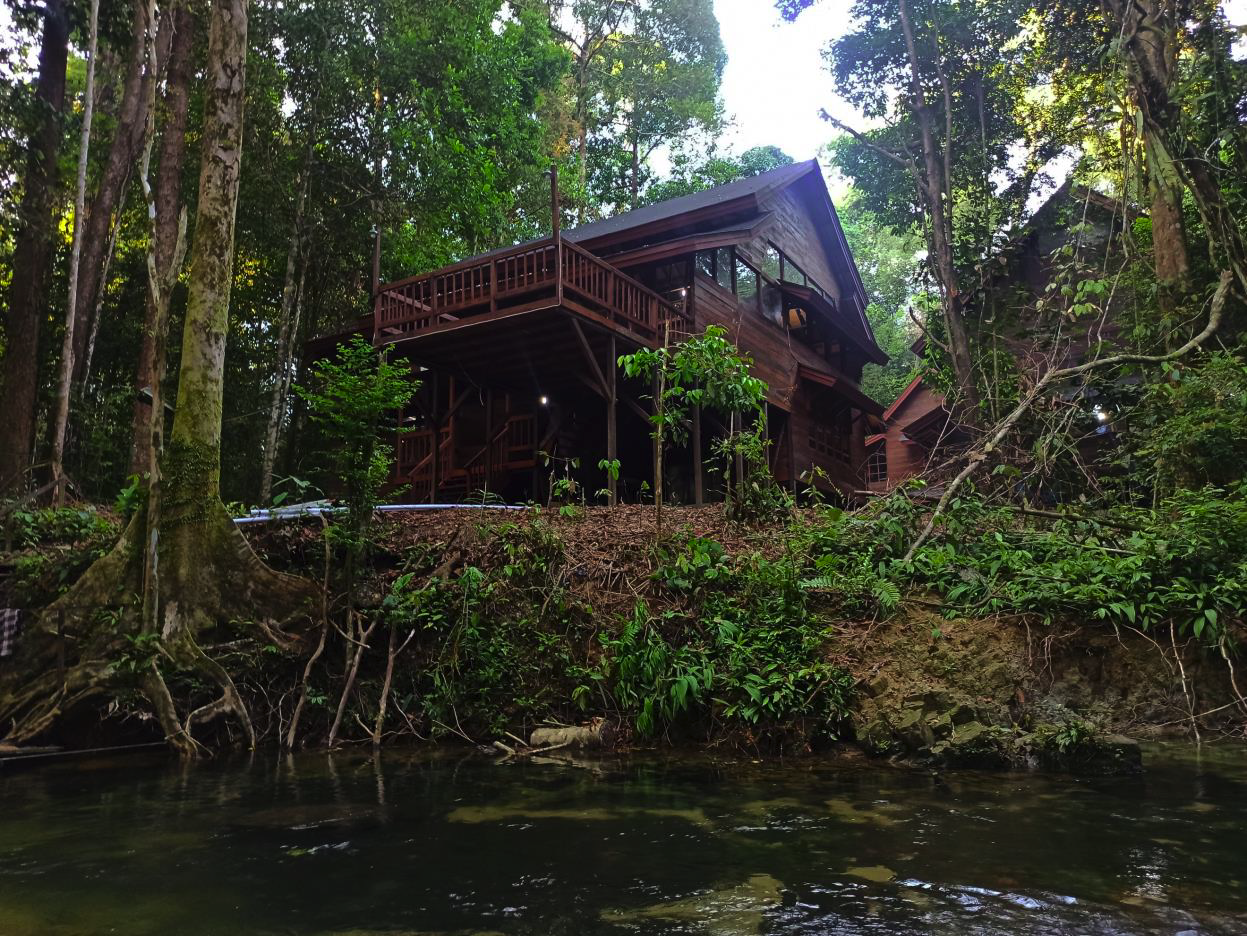
Cabang Panti Research Station. Provided by Cheryl Knott
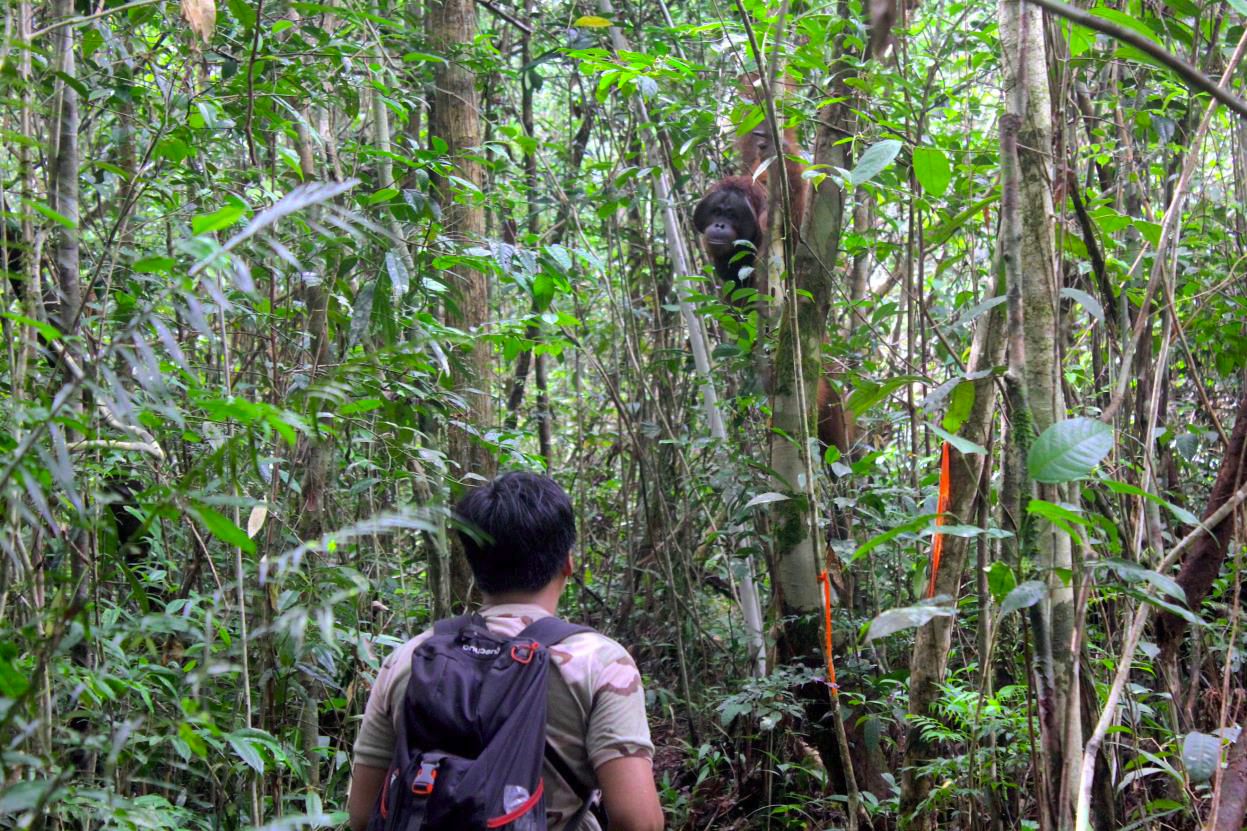
Gunung Palung National Park is a 108,000-hectare protected area located in West Kalimantan, Indonesia. It is also a United Nations Great Ape Survival Project conservation priority area that harbors one of the last viable orangutan populations. Deep within the park is the Cabang Panti Research Station, with a satellite station at the Rangkong River. The second station was added in 2021 to study how orangutans adapt to habitat disturbance. Together, these stations support the Gunung Palung Orangutan Project, which Cheryl Knott founded in 1994.
Nearly 40 years of irreplaceable data
“The Gunung Palung Orangutan Project is the only remaining research project at either site, thus bearing all responsibility for maintaining primate research and continuing long-term ecological monitoring,” Knott wrote. “Our long-term data derives from over 110,000 hours of observation on 300+ individual orangutans, many of whom have been followed since birth.” This long-term data documents their diet, health, reproduction, energetics, and adaptation to both pristine and degraded habitats.
The project also maintains one of the largest phenological datasets in primatology. Tracking the fruiting and flowering patterns that shape orangutan survival in a forest where food availability fluctuates dramatically. Researchers have tagged more than 100,000 trees and lianas fed on by orangutans and recorded data on over 78,000 feeding bouts. Climate data stretches back nearly 40 years, revealing long-term changes in this biodiversity hotspot. Their work has allowed them to develop novel methods that have now been replicated at primate sites across the tropics.
Why continuity matters for orangutans
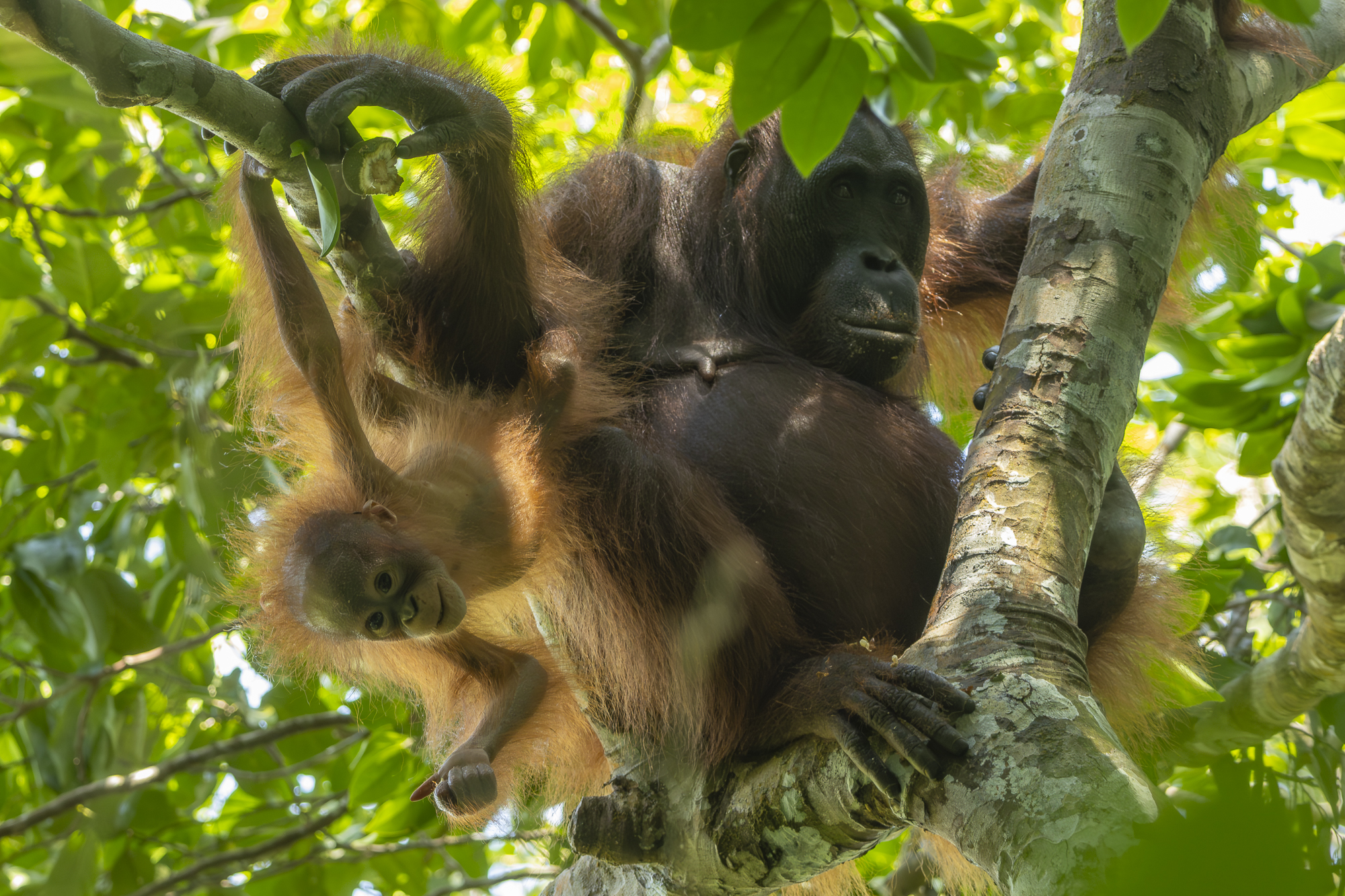
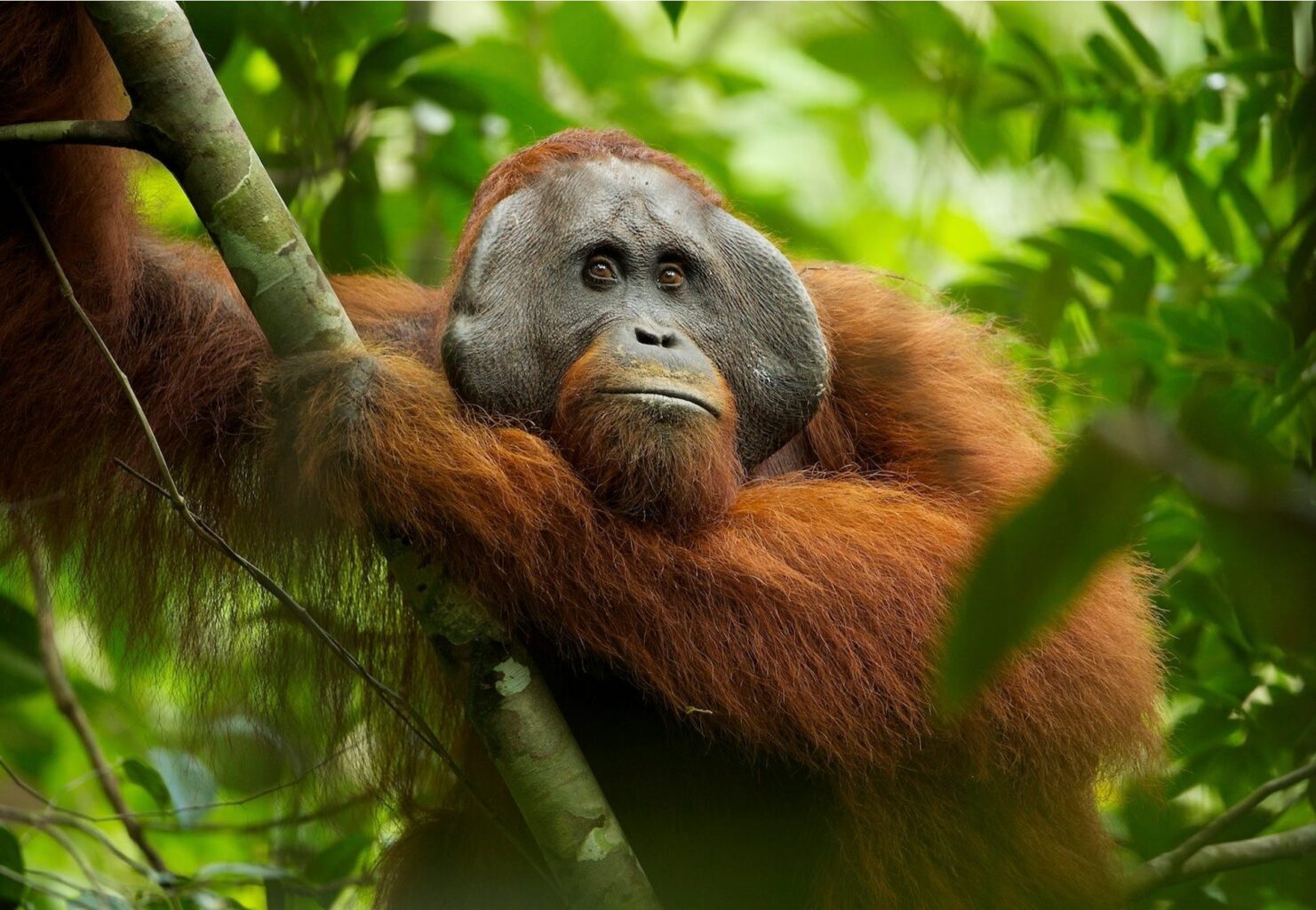
An estimated 2,500 Central Bornean orangutans (Pongo pygmaeus wurmbii) live within the park’s boundaries. This is approximately 14% of the remaining wild population of this subspecies, making the park one of the most important remaining strongholds for the species. Orangutans are particularly vulnerable to population decline since females don’t begin having babies until around age 15. They also have the longest interbirth interval of any land mammal, only giving birth about once every 7-9 years. Losing monitoring capacity at a site like this, even temporarily, can create gaps in long-term datasets that are impossible to recover.
What’s at stake
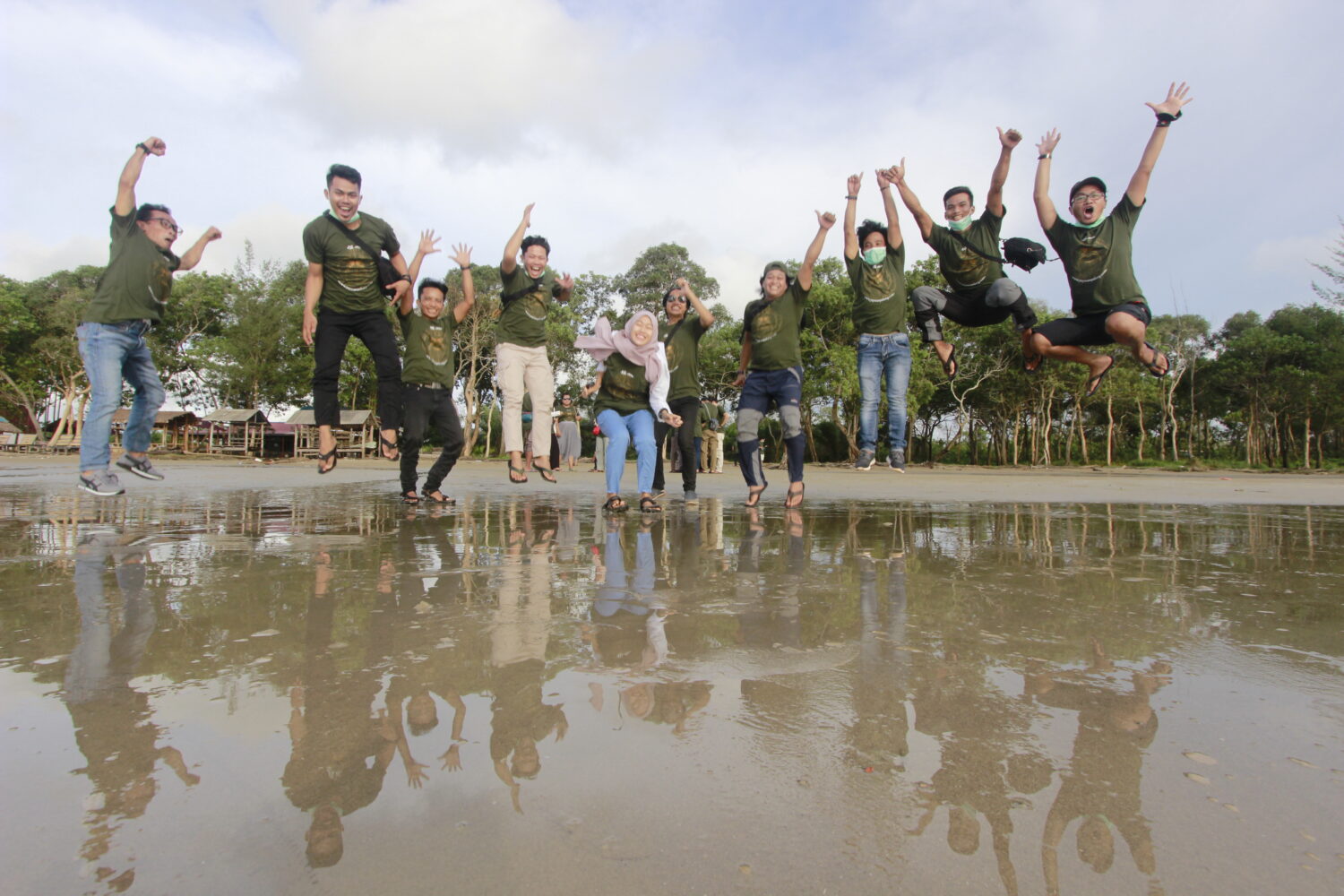
The freeze on grants like the one that had supported research at Gunung Palung was part of a broader executive order pausing foreign development assistance that disrupted conservation and research programs around the world. Without replacement funding, Knott faced the prospect of losing not just the research project but the staff members whose livelihoods depend on the stations. The staff includes 11 field assistants, 3 camp cooks, 2 camp assistants, 1 research director, 1 camp manager, 1 assistant manager, 1 botanist, 3 field lab assistants, and two national park counterparts.
11 field assistants, a research director, a botanist, lab assistants, camp staff, and national park counterparts.
The stakes extend beyond research. In 1999, Knott founded the Gunung Palung Orangutan Conservation Program, which now employs 27 full-time Indonesian staff running environmental education, sustainable livelihoods programs, wildlife crime investigation, and a village forest initiative that has helped secure over 11,000 hectares of critical forest land.
“If I am forced to close the station and the research project, it will inevitably lead to the closure of this long-term conservation project as well,” Knott stated.

How the Primate Research Fund is helping
The Leakey Foundation’s emergency award will keep the project going by covering staff salaries and operating costs until the team secures additional funding.
To learn more about the Gunung Palung Orangutan Project and or to support their work, visit savegporangutans.org.